This case study is based on real DRMS testing data and herd-level outcomes from a Midwest herd. While the farm is not identified, the scenario reflects actual analysis and results, showing how data management tools can surface key improvement areas and support confident, data-driven decisions.

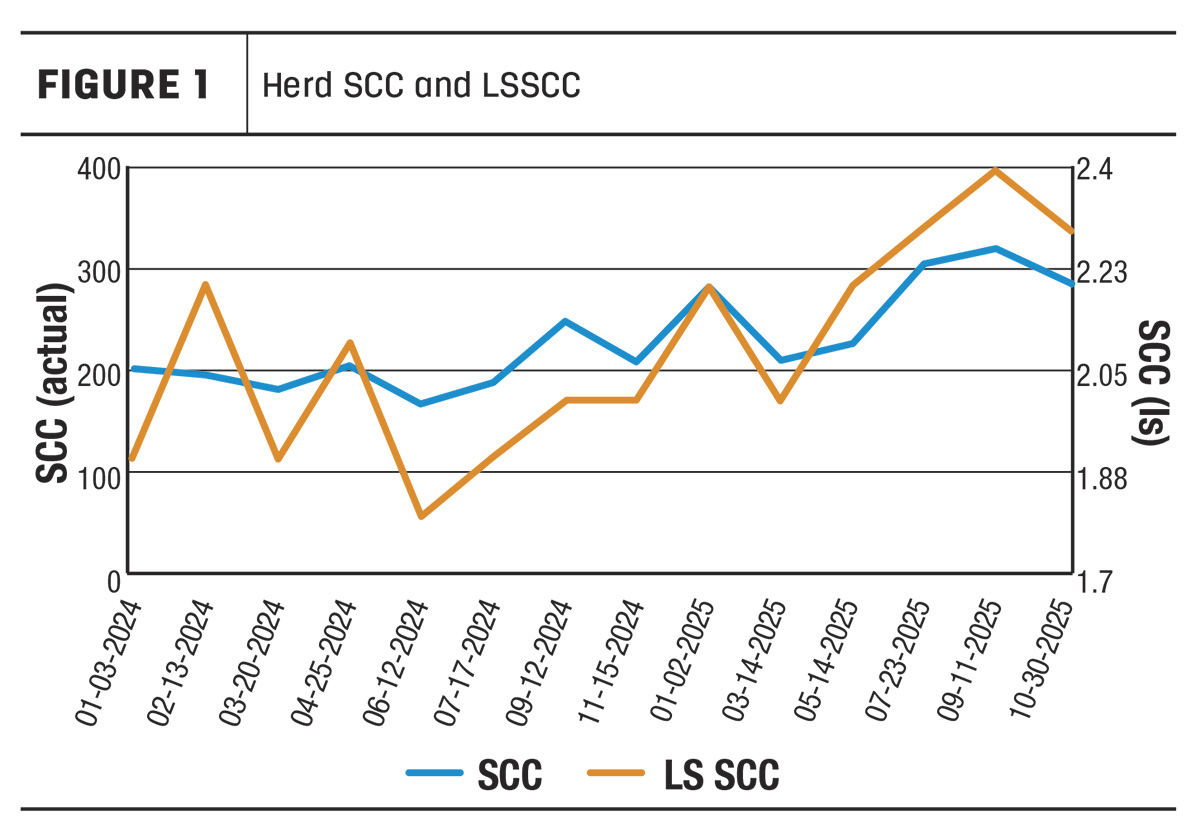
This 1,100-cow herd in the Midwest didn’t think they had a severe somatic cell count (SCC) problem, but they knew it needed to be monitored so it wouldn’t get out of control. The first step was to analyze the herd, understand where they stood and determine whether any trends were developing. Using a DHI Dairy records provider information system, they noticed that even though the most recent test had improved, the SCC had been progressively increasing – rising from 200,000 SCC 18 months earlier and steadily creeping toward 300,000 SCC (Figure 1).
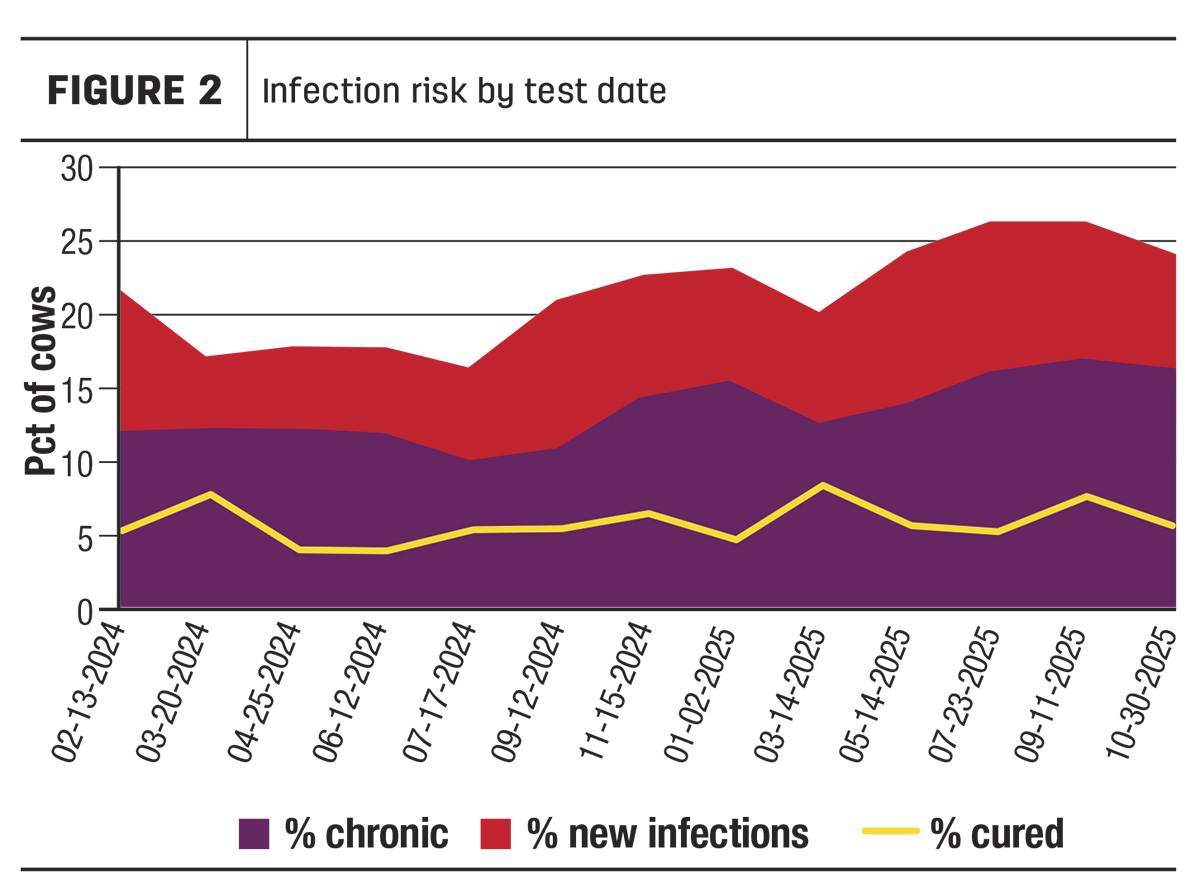
The percent of chronic cows had also been increasing, as had the percent of new infections, while cure rates remained steady (Figure 2).
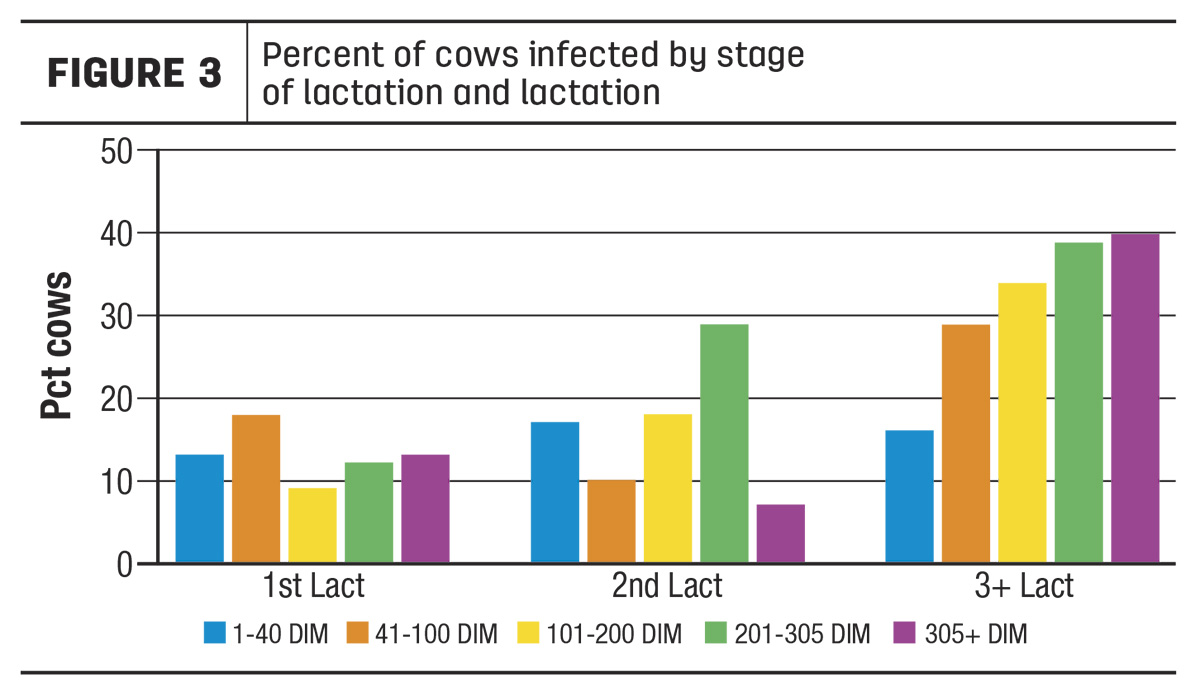
To better understand what was driving these infections, the team reviewed the most recent test to identify which groups of cows were contributing most to the SCC and at what stages of lactation. As expected, 3+ lactation animals were the most concerning, but the data also pointed to fresh infections in younger cows that needed attention (Figure 3).
It became clear that the herd did, in fact, have an SCC problem. The team recognized that if monitoring tools had been in place earlier, they could have addressed issues sooner and minimized the progression. They also needed to identify chronic offenders that were causing repeated infections and costly milk losses.
Using data to compare, benchmark and detect problems early
The team used a herd benchmarking tool to compare their herd to Midwest herds ranging from 750 to 3,000 cows. They also wanted to establish alerts to quickly identify areas of concern. The following alerts were created:
- SCC above 200,000 and a second color alert above 250,000
- Herd percentile ranking in the bottom 10%
- Positive alert if SCC improves by more than 25,000
- Infection rates above 20%
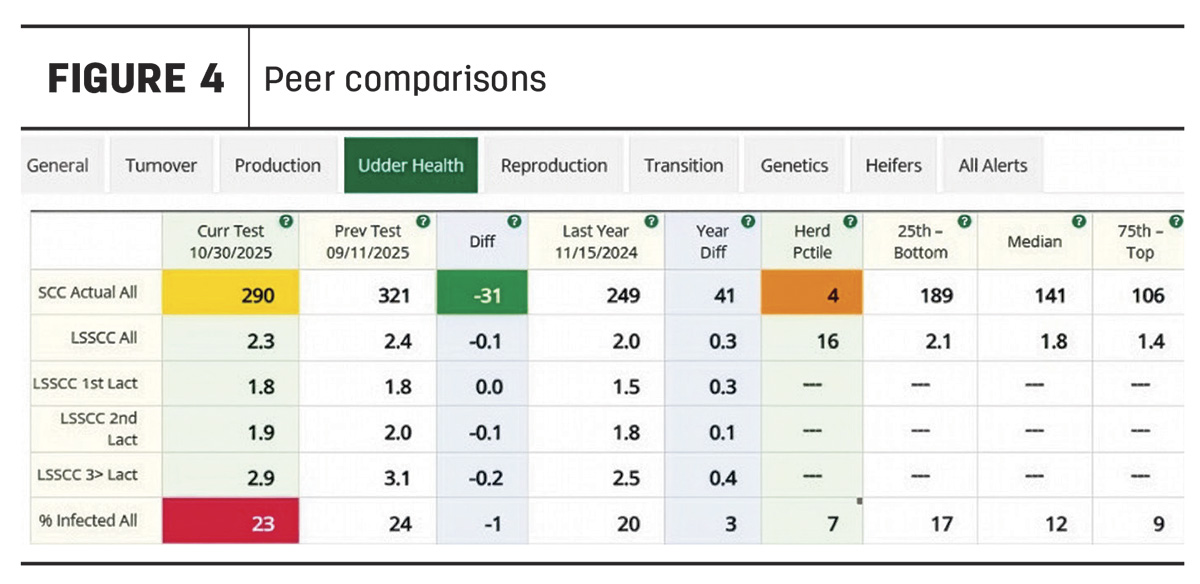
When benchmarked against 161 other herds in their established peer group, several issues became immediately apparent. They ranked in the bottom 4% of the herds for SCC, averaging 290,000. Although their SCC had improved from the prior test, the infection rate remained high at 23% (Figure 4).
Identifying the cows driving SCC
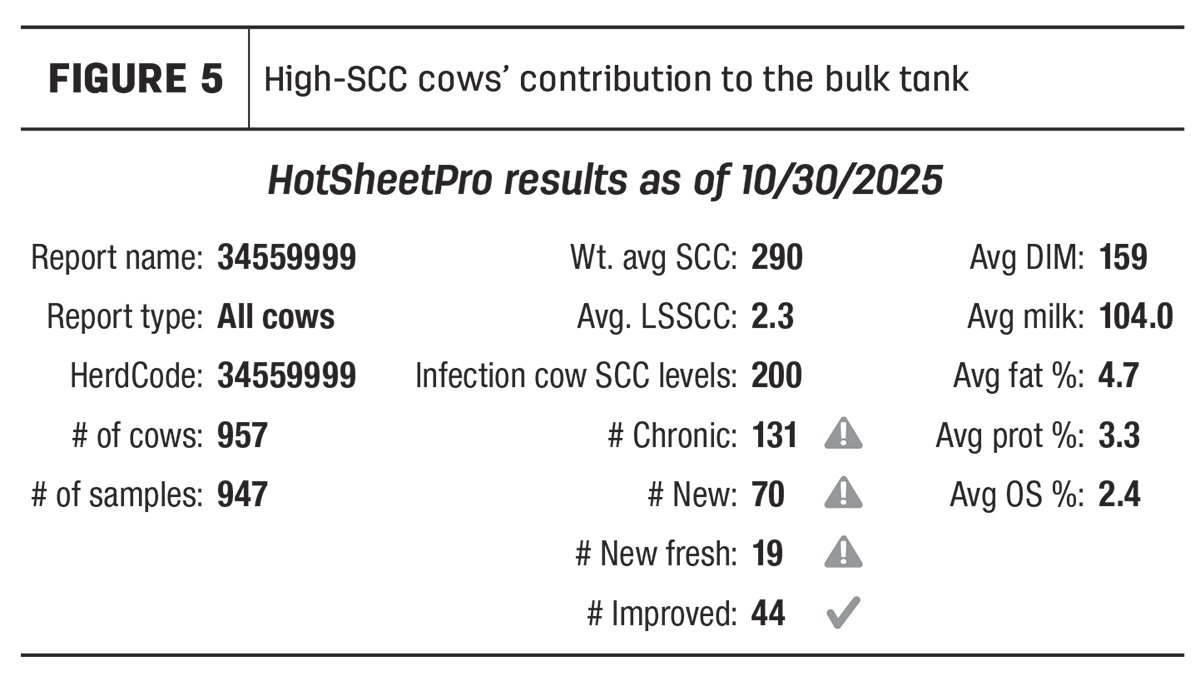
Once the alerts were triggered, the team identified the top contributors to the bulk tank SCC. The most recent test (Figure 5):
- 957 cows were in milk
- 947 cows were sampled
- 131 were chronic cases
- 70 were new infections
- 19 were new fresh infections
- 44 cows had improved
Despite some improvement from the previous test, a significant problem remained. The herd wanted to reduce SCC below 250,000 to maintain milk-quality premiums. A deeper look revealed that just six cows were contributing over 15% of the cells in the tank. Removing them, even though they produced roughly 715 pounds of milk per day, would bring the herd below the 250,000 threshold and allow them to qualify for additional premiums.
Using data to guide individual cow decisions
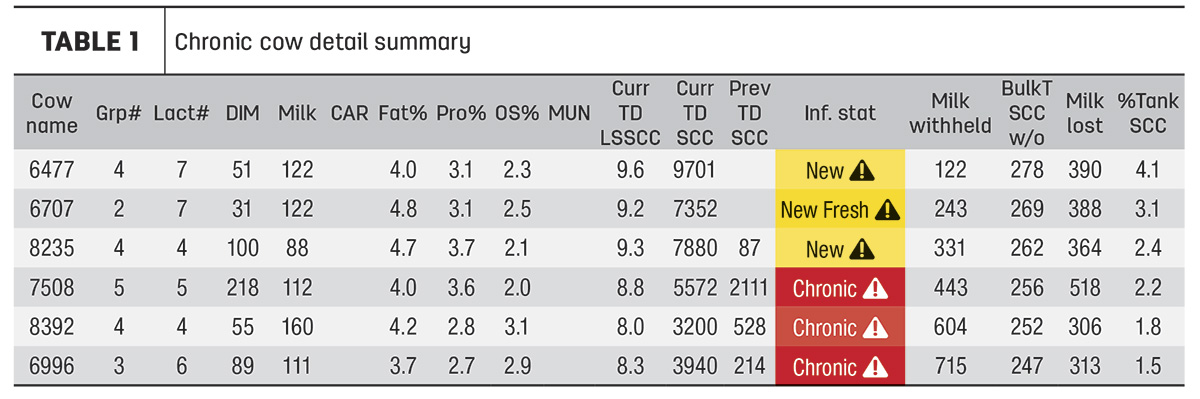
To better understand how to manage the problem cows, the team used individual cow lookups for further investigation (Table 1).
- One cow was flagged as a new fresh infection. Given her historically lower-than-herdmate production, she was monitored closely and treated. If no improvement occurred, she would be culled.
- Two cows were identified as new infections on their second test. These cows were also monitored and treated.
- Three cows had chronic infections.
One chronic cow had nearly 6 million SCC on her current test and four consecutive tests over a million in the same lactation. At 218 days in milk, with production below herdmates in both her current and previous lactations, she was culled.
The other two chronic cows were recently fresh and on their second test. Despite their chronic status, both had prior lactations of over 40,000 pounds of milk in 305 days or less, so the team opted to treat them, hoping for improvement.
The financial and management impact
After identifying and addressing problem cows, the results were immediate.
- The bulk tank SCC dropped by 15%.
- The SCC returned to below 250,000.
- The herd qualified for an additional 30-cent-per-hundredweight (cwt) milk-quality premium.
With 951 cows and a daily shipment of 98,800 pounds, this resulted in an additional premium of $296 per day, more than $9,000 for the month.
Beyond the financial gain, the new alerts and reports saved time, helping the team act before production dipped or premiums were lost. Early detection and cow-level detail allowed them to intervene before issues escalated.
For this herd, the biggest shift wasn’t a new treatment protocol; it was a clearer view of what was happening inside the tank. By organizing their data in a way that highlighted trends, pinpointed high-impact cows and made follow-up decisions straightforward, the team was able to protect milk quality and stabilize income. When SCC issues build slowly over time, tools that connect test-day data with practical decision-making can make all the difference.