All reports indicate that the nation’s cow herd is growing very slowly, if at all. Bred heifers and cows are selling at prices that question the sanity of the buyer. It has been said that the cheapest ranch you can buy is to improve the capacity of the one you already own. I would also suggest that the cheapest cow you can buy is to efficiently breed the one that already carries your brand.

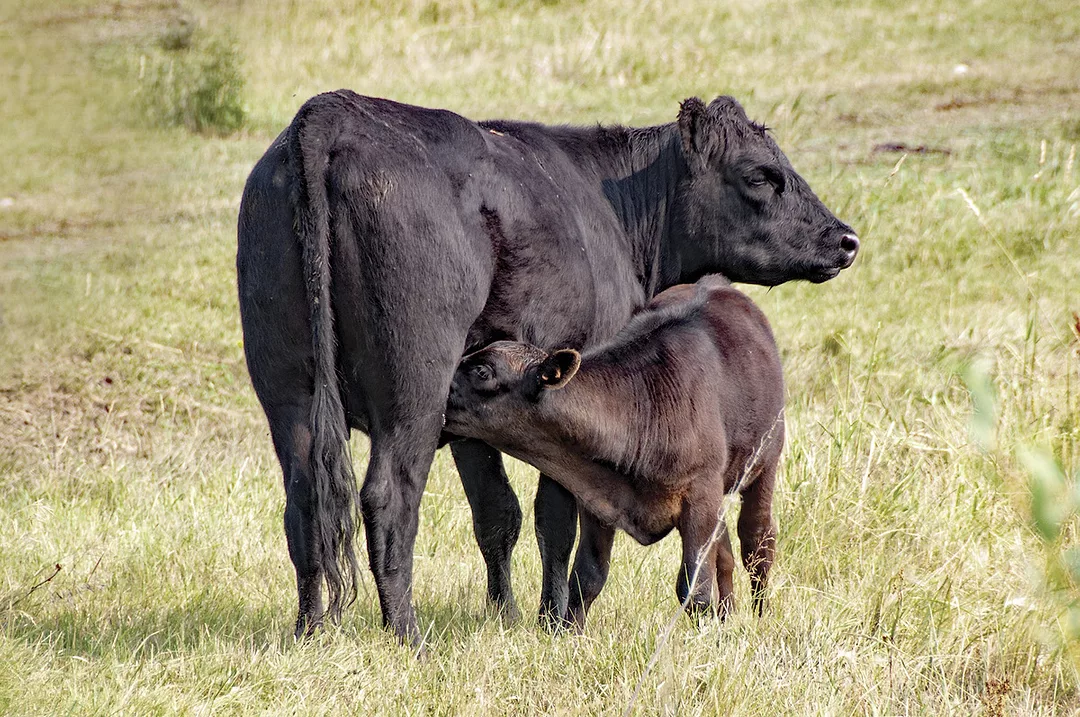
Coming back to the ranch, many of you are in the midst of calving out and cussing out first-calf heifers. Market reports shed some light on how valuable those young, first-time mothers are. Keeping those heifers in the herd has never been more critical than it is today.
Reproductive efficiency is the most important factor in ranch profitability. Heifers are the leading indicator of long-term ranch financial health. Reproductive success or failure will set the stage for their lifetime productivity or lack thereof. Cows that calve annually and early in the breeding season wean heavier calves and stay in the breeding herd longer than those that calve later. Improved longevity will reduce culling rate, thereby driving down the cost of female replacements.
Monitoring body condition is not a new concept, but sometimes the frantic pace of ranch life in the early spring can prove to be a distraction. However, body condition score (BCS) at calving has been shown to be the greatest indicator of reproductive success. This is especially true for first-calf heifers. A study conducted at Oklahoma State University clearly demonstrates the importance of maintaining heifers in good condition before and after calving (Figure 1).
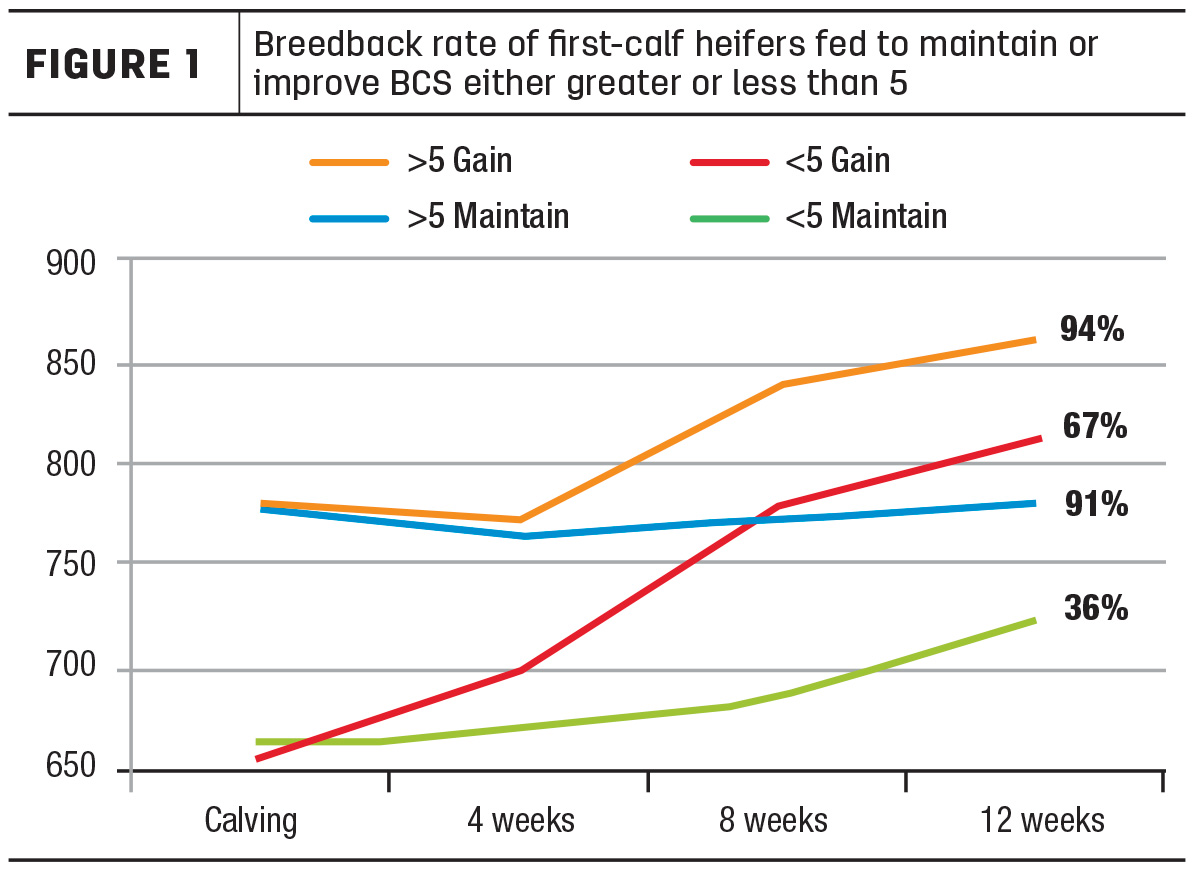
Heifers that calved in BCS 5 or greater bred at a much higher rate than thinner heifers. Even if they were fed to improve their condition, thinner heifers bred at a lower rate than BCS 5 heifers that were fed to maintain weight (67% versus 91%).
The message is clear: Get and keep your heifers in BCS 5 or greater to maximize their opportunity to breed back. In a day when a heifer is worth $4,000 and her calf will easily bring back over $2,000, you can’t afford to drop the ball now.
Thinner cows are not only more likely to be open in the fall, but those that do get bred will likely calve later in the breeding season next year. For cows to calve every 12 months, they must conceive between 80 and 85 days postpartum. A healthy calf will gain 2 pounds per day of age or more. Every day that a thin cow doesn’t cycle and get bred after 85 days postpartum will reduce the calf’s weaning weight by at least 2 pounds. At that rate, the calf conceived on the first day of bull exposure will be 180 pounds heavier than the calf conceived on day 90. Furthermore, the cost of keeping the two cows for the entire year is the same, but the additional revenue from the early calver is well over $400 per head based on fall 2025 prices.
One can examine this effect across the entire herd by monitoring the number of females calving early in the season. At today’s market, a herd that calves 70% of the females in the first 21 days of the calving season will return $75 more for every cow than a herd that calves at half that rate. If you want to improve your weaning weight, get your cows bred early in the breeding season. The most effective method to accomplish this is to have them in a BCS of 5 or better at calving.
There are a few things you can do to make life easier on your heifers. First, feed them separately from your older cows, if possible. They need higher-quality feed and often don’t compete well with older cows. Secondly, now is the time to use your best-quality forage. Have the forage tested and supplement with protein if needed. Protein can be provided in the form of commercial supplements or good-quality alfalfa. When you have the energy and protein bases covered, a high-quality mineral can fill the gaps. Trace mineral blocks have their place, but a loose mineral will provide a greater quantity and quality of trace and macrominerals and vitamins needed between calving and breeding.
In summary, first-calf heifers are the lifeblood of the ranch. Calving in adequate body condition is the best indicator for long-term reproductive success. It is very difficult to move cows or heifers up in the breeding season once they have slipped back. Late-calving cows tend to be a gift that keeps on giving, until they are eventually culled for being open. Monitor body condition and wisely utilize feed resources to keep all your females in good body condition.