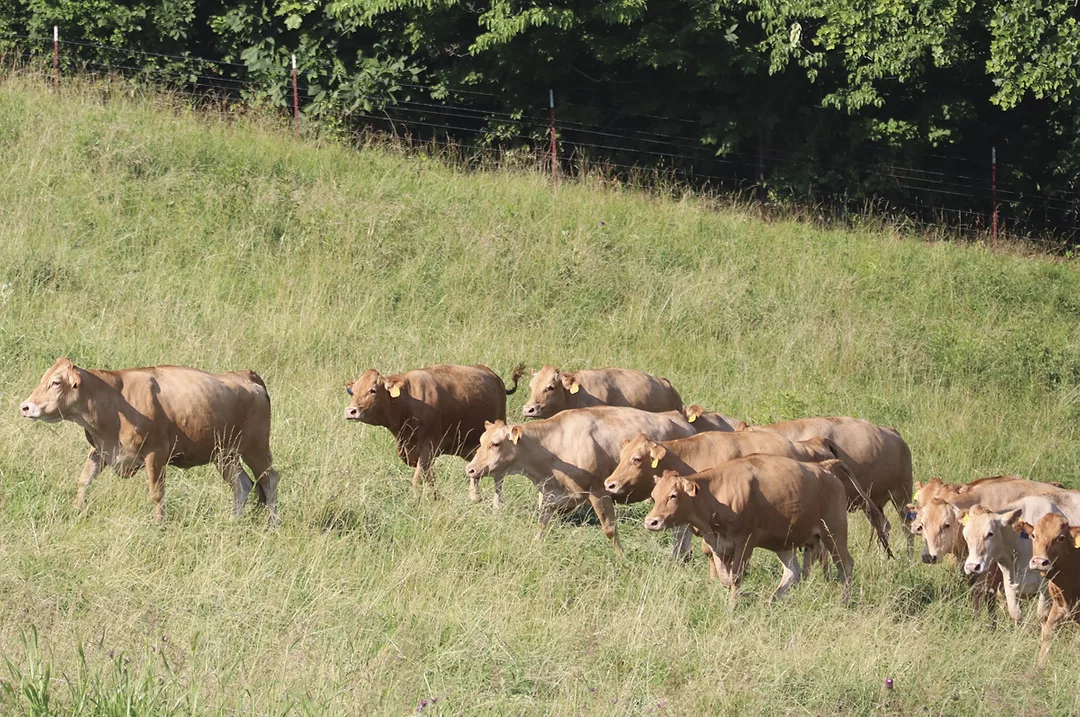
An extensive area of the southeastern U.S. is widely known among cattle producers as the Fescue Belt, where most pastures are dominated by endophyte-infected tall fescue. This forage shares a relationship with an endophytic fungus that produces ergot alkaloid compounds. While these alkaloids help the plant tolerate drought, frost, pests and heavy grazing pressure, they cause a disease in livestock known as fescue toxicosis. Symptoms include decreased feed intake and growth rate, reduced reproductive performance, elevated respiration and body temperature, and reduced blood flow to the extremities. Retention of the winter hair coat is another negative effect that increases susceptibility to heat stress during the summer.

Considering these challenges, it pays for producers to periodically evaluate the performance of their herd, set minimum production standards and use clear selection strategies to move their herd in the right direction.
Most beef operations in the Fescue Belt are commercial cow-calf farms that market weaned calves as their primary product. For these operations, selection strategies should be designed around three goals: stronger performance, higher productivity and improved profitability. These goals should be supported by accurate and reliable records, as the decisions will only be as good as the information upon which they are based. An effective record-keeping system clearly defines the production and financial data to track, how often to collect it, and how to keep it consistent and accurate over time. When records are well organized and user-friendly, they not only guide day-to-day decisions but also improve decision-making during challenging conditions, such as drought or high feed costs, and help producers obtain greater profits on favorable cattle markets.
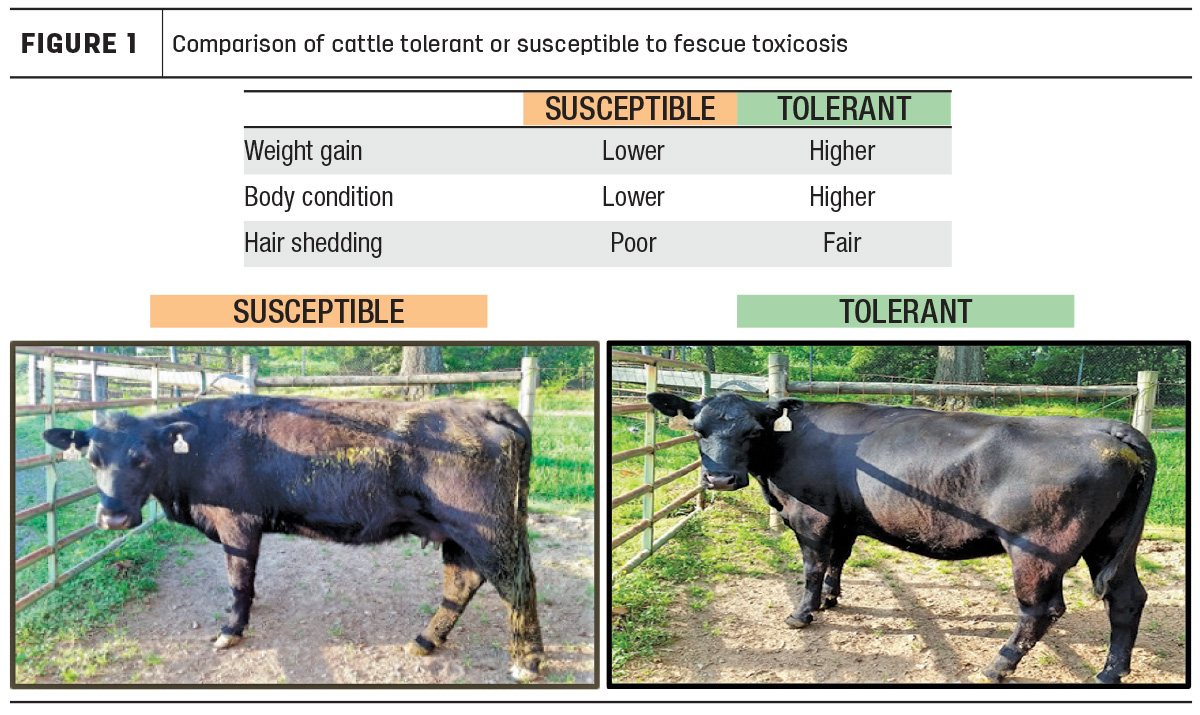
For cattle to thrive in the Fescue Belt, they need traits that improve tolerance to heat stress and fescue toxicosis, maximizing their adaptability and productivity. At North Carolina State University, researchers developed and promoted a data-driven approach called the "fescue toxicosis selection method" (FTSM) to classify animals as either tolerant or susceptible to fescue toxicosis. The FTSM focuses on monitoring changes in bodyweight, body condition scores and hair shedding scores in grazing cattle throughout the spring, when exposure to higher concentrations of ergot alkaloids in fescue pastures typically occurs.
During this period, susceptible cattle often show lower bodyweights and body condition scores, along with higher hair shedding scores because they retain more of their winter hair coat. In contrast, tolerant animals stand out in the herd with greater weight gains and body condition scores, and lower hair shedding scores compared to susceptible cows (Figure 1). Research has also shown that cows that begin shedding their winter hair coat earlier in the spring tend to wean heavier calves. For this reason, producers should start recording these traits early in the spring and continue monitoring them into the summer. Cows that do not begin shedding until the summer, as well as those that fail to shed at all, should be removed from the herd.
For selecting cows and replacement heifers, reproductive efficiency is one of the primary factors to consider. Fescue toxicosis reduces blood flow to the ovaries and uterus, which may lower progesterone concentrations, complicating pregnancy establishment and increasing the risk of abortion. Regular estrous cycles and acceptable pregnancy rates serve as good indicators of cows that are better adapted to the fescue environment. In practical terms, every female retained in the herd should conceive early in the breeding season, deliver a live and healthy calf, rebreed within 80 to 90 days after calving and wean a calf weighing roughly half of her own bodyweight. Females that fail to meet these parameters should be closely evaluated because they raise maintenance costs, complicate herd management and raise daughters that may inherit similar deficiencies.
Functionality traits should also be included in selection criteria because they directly impact both the productivity and longevity of cows in the herd. In endophyte-infected pastures located on steep slopes or extensive areas, cows should have strong feet and legs to support movement during grazing periods. The soundness of eyes, mouth and udder should be carefully examined, as problems in any of these areas can reduce a cow’s ability to raise a calf, as well as increase management needs and production costs. Disposition and docility should also be considered, as cows with aggressive behavior complicate routine management tasks and pose a risk to the people involved in these activities.
The same selection mindset should carry over to bulls and artificial insemination (A.I.) sires. Whether using A.I. or natural service, sires should be registered, backed by reliable pedigrees and supported by complete expected progeny differences (EPDs). For operations in the Fescue Belt, Calving Ease (CE), Weaning Weight (WW) and Yearling Weight (YW) EPDs remain important because they influence both weaned market calves and replacement heifers. For producers using Angus genetics, Hair Shed (HS), Foot Angle (Angle) and Claw Set (Claw) EPDs are additional tools that support structural soundness and heat and fescue adaptability in the Southeastern environment.
In conclusion, implementing effective selection strategies in beef operations located in fescue environments can significantly improve both productivity and profitability. Adopting a data-driven approach, such as the FTSM, helps identify cattle that maintain high performance and productivity despite exposure to fescue toxicosis, while also increasing the likelihood that their offspring will inherit traits that promote adaptability to these conditions. For these efforts to succeed, ensure the decisions rely on accurate record-keeping systems, as outcomes are only as reliable as the data behind them.