Choosing beef replacements is a foundational decision that affects herd productivity, profitability and long-term genetic progress. Whether you raise replacements on-farm or purchase them, understanding the economic, genetic and management implications is key to making informed decisions.

Raise or purchase? Evaluating the options
The decision to raise or buy replacements depends on several factors:
- Market conditions: Current and projected cattle prices, along with cyclical or countercyclical strategies, influence timing and cost-effectiveness. As a producer, it’s tempting to hold back high-quality heifers or purchase replacements when cattle prices are strong, thinking it’s the right time to expand the herd and capitalize on the market. However, this approach often backfires. Historically, when many producers do the same, herd sizes grow, beef supplies increase and prices inevitably fall. That means the calves from those high-priced replacements will likely hit the market during a downturn, reducing profitability. From a business standpoint, expanding during high-price periods goes against sound economic principles. Instead, strategic herd rebuilding during low-price cycles can position a producer to benefit when the market rebounds.
- Herd size and scale: Economically, smaller producers often find it more cost-effective to purchase replacements due to the lack of economies of scale. Raising a small number of heifers can be labor-intensive and expensive. In contrast, larger operations are generally better positioned to raise their own replacements more efficiently. However, it’s important to note that even some large-scale producers choose to buy replacements to save time and allocate labor and resources to other areas of their operation. Ultimately, the best choice depends on the specific goals, resources and management style of each operation.
- Resources: Availability of pasture, facilities, labor and management expertise are critical considerations. Raising heifer replacements requires adequate pasture, facilities, labor and management skills. Nutrition is often the most significant limitation, and if forage is short or costly, replacements may compete with the cow herd for resources. Operations with plentiful, high-quality pasture or affordable feed sources are better positioned to raise replacements profitably.
- Health and genetics: Raising replacements allows for better control over herd health and genetic quality, while purchased replacements may carry higher health risks and variable genetics. To reduce the risk of introducing disease when purchasing cattle, it’s important for producers to follow a few key biosecurity practices. First, only buy animals with verified health records from reputable sources. Consulting with a local veterinarian can help ensure that any purchased females meet the necessary health standards for your area. Second, always quarantine new arrivals before integrating them into the herd to monitor for signs of illness. Finally, maintaining a consistent and comprehensive vaccination program is essential for protecting herd health and minimizing disease transmission.
- Economics: Each operation is unique. Tools like the KSU beef replacement spreadsheet from Kansas State University and the replacement heifer calculator from Canada’s Beef Cattle Research Council can help producers compare their own costs of raising versus purchasing replacements and make data-driven decisions.
Selection objectives: What makes a good replacement?
A successful replacement female should:
- Improve herd genetics: Enhance traits like fertility, calving ease and maternal performance.
- Fit the environment: Match the ranch’s forage base, climate and management style. Heifers, and eventually cows, that don’t thrive in their environment, or when management fails to align them with it, often end up culled. In most cow herds, poor reproductive performance accounts for roughly 50% of culling decisions. Key reproductive factors include age and weight at puberty, conception rate, calving ease, postpartum interval and overall longevity. To improve longevity and profitability, producers should focus on aligning replacement biological type with the most cost-effective feed resources.
- Support ranch goals: Align with breeding schedules, labor availability and long-term management plans.
- Deliver productivity: Conceive early, calve easily and produce high-quality offspring over multiple seasons.
Selection criteria: Traits to prioritize
When evaluating replacement heifers, producers should consider:
- When born within the calving season: Heifers born in the first 21 days of the calving season are typically heavier at weaning and prebreeding, reach puberty earlier and have greater pregnancy rates than those born later in the calving season.
- Phenotype and frame size: Physical traits should match operational goals and environmental conditions.
- Structural soundness: Sound feet, legs and overall conformation support longevity.
- Genetic background: Dam and sire history offer insight into reproductive and performance potential.
- Disposition: Calm, manageable heifers reduce labor and safety risks.
- Conception timing: Early breeders are more likely to stay in the cow herd longer and be more productive than females conceiving later in the breeding season.
Critical time points in heifer selection
Assessing heifers at key stages helps identify top performers:
- Weaning/post-weaning: Evaluate growth and health; also, the number of heifers selected for replacements at this stage will depend on whether the operation is decreasing, maintaining or increasing the cow herd. For example, select roughly 30% over what is needed for replacements to account for losses and later culling if wanting to maintain cow herd size (less if downsizing, more if increasing).
- Prebreeding: Assess target weight (normally between 55% and 65% of mature weight, depending on management objectives), structural soundness, reproductive tract scoring, etc.
- Pregnancy check: Select heifers that conceive early in the breeding season and cull all open heifers and those that conceived later in the breeding season. Research with over 16,000 beef heifers from the Meat Animal Research Center showed that heifers that conceived early and calved within the first 21 days of the calving season weaned heavier calves for six consecutive years (Figure 1). More importantly, the early-calving heifers continued to calve earlier in the calving season and stayed within the herd longer than heifers that initially calved later in the season.
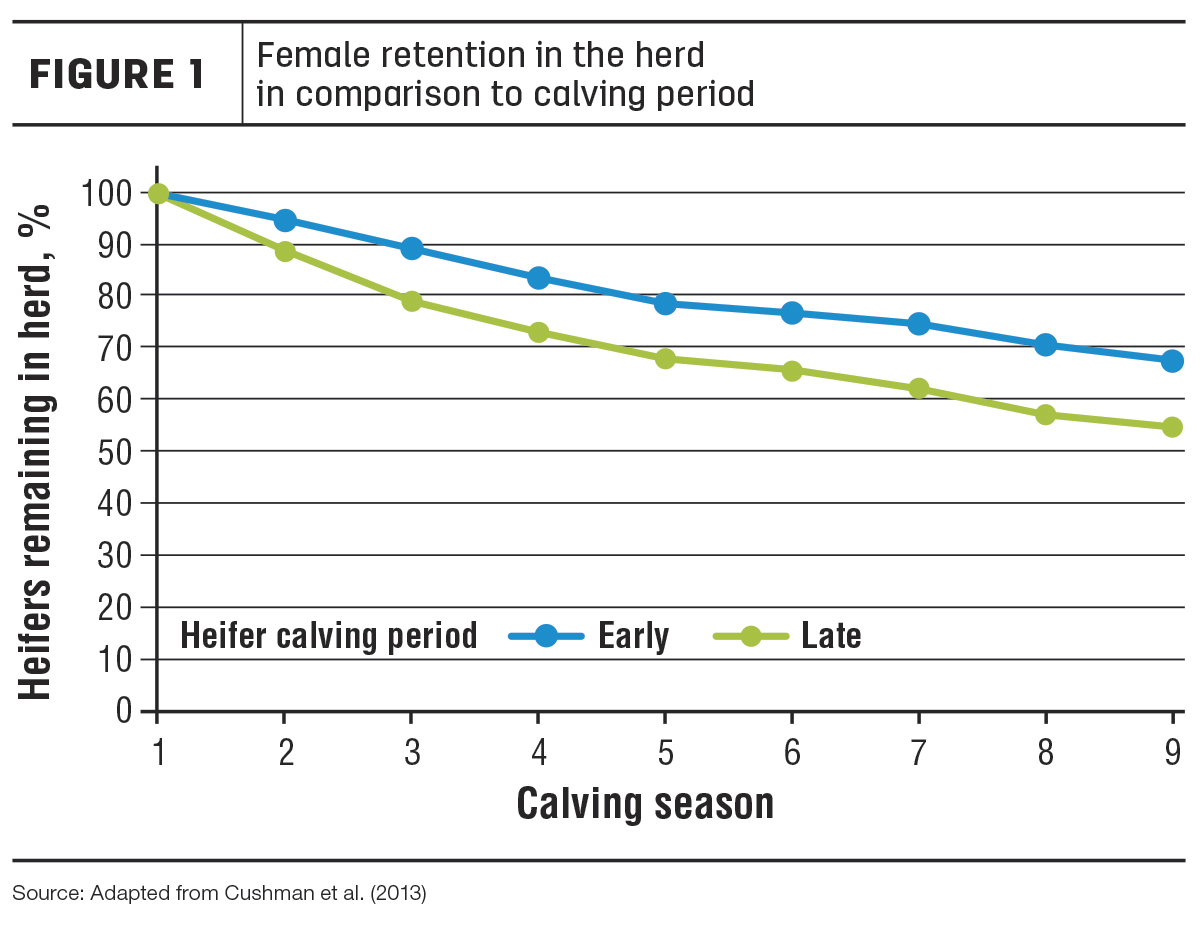
By selecting and breeding more replacement heifers than needed, cow-calf producers can select and retain those that conceive earlier. The offspring of these early conceiving heifers should weigh more at weaning (roughly 2 pounds for each day earlier than their later-calving cohorts) and have increased longevity – thereby increasing the profit margin for the operation and more quickly recovering heifer purchase and/or development costs.
Genetic selection tools: Enhancing confidence and precision
Genetic testing is a modern tool that can help cow-calf producers select replacement heifers by allowing for the evaluation of an animal’s genetic merit for various traits like fertility, feed efficiency, carcass quality and maternal performance – traits that are often difficult or expensive to measure visually or through traditional performance records. For example, tools like GeneMax Advantage and Inherit Select from Zoetis, Igenity Beef (Neogen), Method Choice (Method Genetics) and Red Navigator (Red Angus Association of America) provide maternal, performance and carcass traits and economic indexes that help producers select heifers with optimal lifetime productivity. These indexes balance traits across maternal, growth and carcass categories, offering a more holistic view of genetic potential.
Potential benefits of genomic testing include:
- Early decision-making: Samples can be collected at weaning, allowing earlier selection and culling.
- Improved accuracy: Genomically enhanced EPDs (GE-EPDs) increase confidence in genetic predictions, especially for young animals.
- Cost efficiency: Testing costs (around $40 per head) are modest compared to the $2,000-plus investment in raising a heifer.
- Marketing value: Genomic data adds credibility and value when selling replacements.
Conclusion
Selecting beef replacements is more than a one-time decision; it’s a strategic investment in the future of your herd. By utilizing the best available science, evaluating economic factors, aligning selection criteria with ranch goals and strategically leveraging genetic tools, producers can build a more productive, profitable cow herd. Whether raising or purchasing, selecting the right replacement today lays the foundation for tomorrow’s success.