This question arises more often than you may think. Having reviewed and shared the results of several thousand forage samples in the past decade plus, when the fermentation profile does not conform to the dairyman’s or nutritionist’s expectations, invariably the question is asked, “Why didn’t it ferment?” The countless potential answers become secondary to the obvious answer, “It did ferment, just not the way we would have liked.”

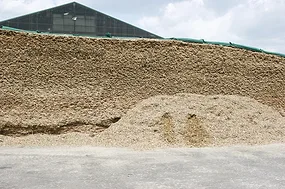
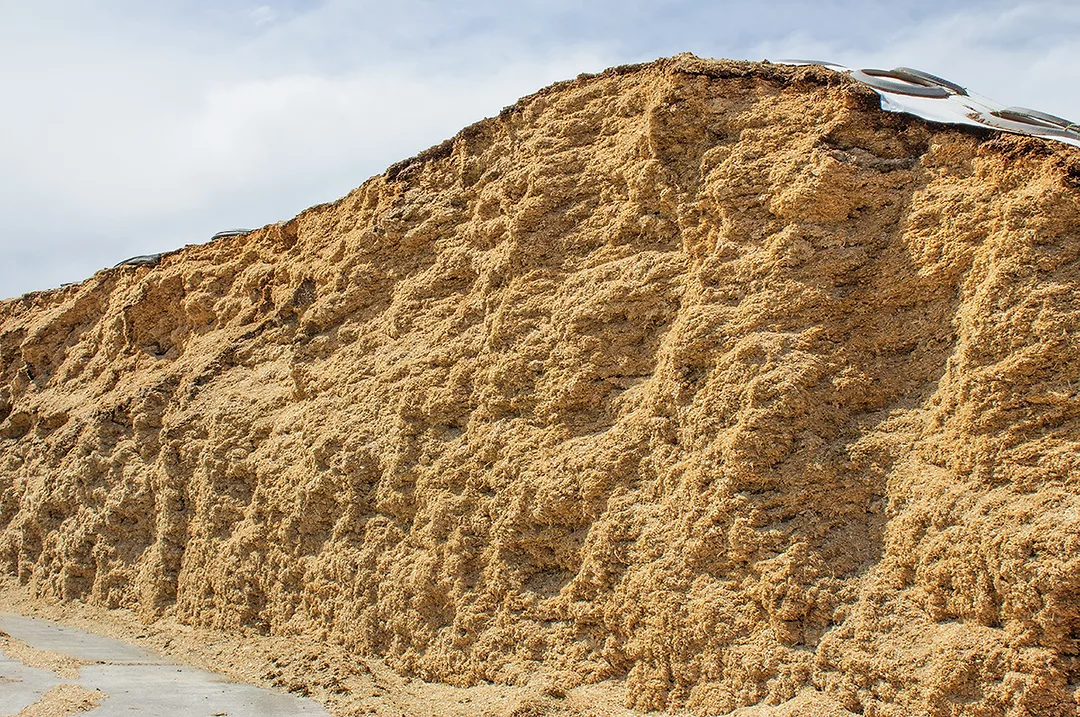
Fermentation, as in the preservation of an agricultural crop harvested one or a few times a year for storage and subsequent feeding, is the conversion of sugars to acids, gases and/or alcohols in the absence of oxygen (anaerobic environment). While there are several potential end products that could be produced, fermentation of whole-plant corn for corn silage or alfalfa for alfalfa haylage should be driven by lactic acid-producing bacteria (LAB) with desirable end products of lactic acid and, to a lesser extent, acetic acid. The key to fermentation is the conversion of sugars to lactic acid by LAB in an anaerobic environment.
So when we get those sample reports back from the laboratory and the numbers don’t conform to our expectations, we have to ask the question "why" in hindsight. There are four main reasons why our crops might not have fermented properly.
1. Lack of water-soluble carbohydrates
As previously defined, fermentation requires sugars as a metabolic substrate for bacteria and are almost always glucose, fructose or sucrose. Generally, there are sufficient water-soluble carbohydrates (WSC) liberated during chopping to ensure adequate fermentation; however, this is not always the case. In the case of a rain event or even heavy dew, WSC may be washed away from the forage to be ensiled and may limit LAB activity.
2. Lack of bacterial activity
Plants in the field and those crops typically harvested for ensiling each have a significant population of naturally occurring microorganisms, such as LAB, enterobacteria, yeasts, molds, clostridia and bacilli, to name a few, that are known as epiphytic microorganisms. These epiphytic microorganisms produce a variety of metabolic end products, some of which are detrimental to ideal fermentation of the crop in the silo. If the numbers or proportions of undesirable organisms are sufficient to "outcompete" the desirable organisms, fermentation will yield undesirable end products. In one instance, we were faced with 250,000,000 cells per gram of spoilage microorganisms in fresh chopped whole-plant corn to be ensiled due to more than 12 years of corn-over-corn production using gray water irrigation. This was a classic instance where we knew the undesirable organisms had a decided advantage over the desirable organisms at the outset.
There are several other instances where the undesirable organisms may have an advantage during the fermentation process.
First, we chose not to apply a research-proven inoculant. Why wouldn’t we spend about $1 per ton of forage to shift the odds of a desirable fermentation in our favor? Given the value of fermented forage to the long-term success and profitability of the dairy, it seems foolish not to consider seriously the return on investment of a quality, science-based, research-proven silage inoculant.
Second, we mixed the inoculant per the manufacturer’s label instructions and put it in the applicator, but it didn’t get applied. Why would we spend the money and the time to go through this process and not check to make certain that the equipment was functioning properly and applying the inoculant at the recommended rate? A few minutes of time spent ensuring that the applicator is functioning properly can mean the difference between average forage and good forage that you will feed for the next year.
Third, we applied the inoculant, but it didn’t work. Were the inoculant LAB alive when applied? We know that temperatures approaching 100°F kill inoculant LAB. Dead inoculant LAB will not ferment forage, no matter how many you apply.
3. Buffering
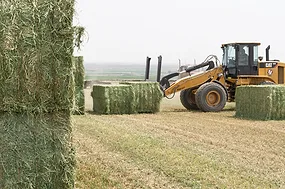
We have taken care of numbers 1 and 2 and ensured that everything is moving toward a favorable outcome. Even so, there are times when we can anticipate a challenging fermentation and need to plan accordingly – such is the case for alfalfa. The reason alfalfa presents challenges to fermentation is multifaceted, but hinges on buffering capacity. Alfalfa is high in protein, calcium and other minerals, and generally low in WSC. Protein and minerals serve to buffer the crop to be ensiled from reaching extremely low pH in light of potentially high lactic acid levels.
4. It did ferment
Even when we focus our attention on numbers 1, 2 and 3 to improve the likelihood of a favorable fermentation, the results may be unfavorable. Whether it is enterobacteria, yeasts, molds, clostridia or bacilli, sometimes we just don’t win the battle. Maybe we harvested the crop at a suboptimal maturity or moisture (too high or too low). Maybe we didn’t have sufficient packing tractor weight to achieve a minimum dry matter density of 18 pounds per cubic foot in order to minimize exposure to oxygen. Maybe our forage sample is not representative of the vast majority of the forage in the pile or bunker. Regardless of what might have happened, we can still use this information to change our management practices for next year.
Unfortunately, when asked, “Why didn’t it ferment?” our response is probably, “It did ferment, just not the way we would have liked.”