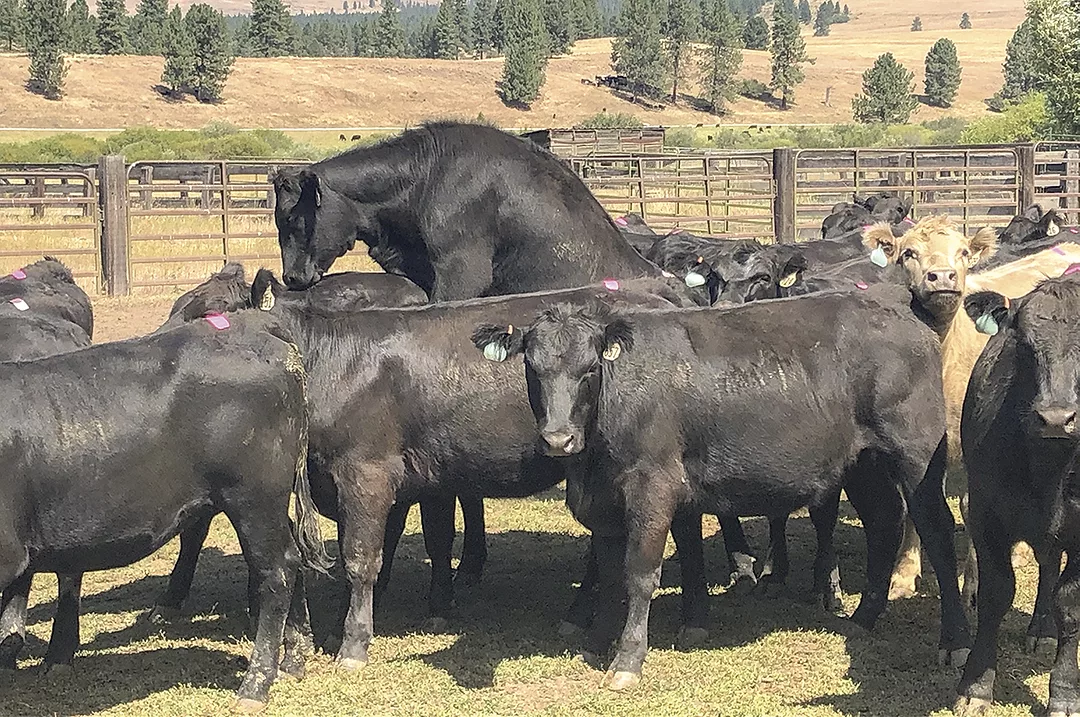
For decades, estrus detection has focused on simply determining whether a cow is in heat or not. However, research and breeding experience show that estrus expression is not exactly a yes-or-no trait. Rather, estrus exists on a spectrum, and where a female falls within that range can have a significant impact on reproductive success.

Monitoring the strength and duration of a cow’s heat, known as estrus intensity, is becoming an increasingly important indicator for beef producers to observe. This knowledge means producers can make more informed breeding decisions, resulting in greater success whether using conventional artificial insemination (A.I.), sexed semen or embryo transfer.
What is estrus intensity?
At its core, estrus intensity reflects how strongly a cow expresses heat. Adrienne Lulay, independent beef sales representative for Select Sires Member Cooperative, who breeds 2,000 cattle each year, describes estrus intensity as a combination of duration and behavior.
“Estrus intensity is how long estrus activity occurs, paired with the primary and secondary signs of heat,” Lulay says. “Standing to be mounted is the primary sign, but you also see things like increased activity, vocalization, mucus discharge and mounting other animals when intensity is high.”
According to George Perry, beef cattle reproductive specialist and associate professor with Texas A&M AgriLife Research, estrus intensity helps distinguish between cows that are truly ready to breed and those that haven’t begun to show signs of estrus.
“There is a big difference in fertility when cattle are bred based off of a good standing estrus,” Perry says.
An analysis of more than 10,000 head by Perry and other researchers shows that when estrus intensity is high during fixed-time A.I., conception rates improved 27%.
Low versus high estrus intensity
Cows exhibiting low estrus intensity often display secondary signs of heat, but they may not consistently stand to be mounted. This can occur early or late in the estrus cycle, or when cows are responding differently within a synchronized group.
“In those low estrus intensity situations, animals might be starting to come into heat but they’re not ready to breed yet,” Perry explains. “If you breed too early, you’re asking semen to live longer than it should, and conception rates drop significantly.”
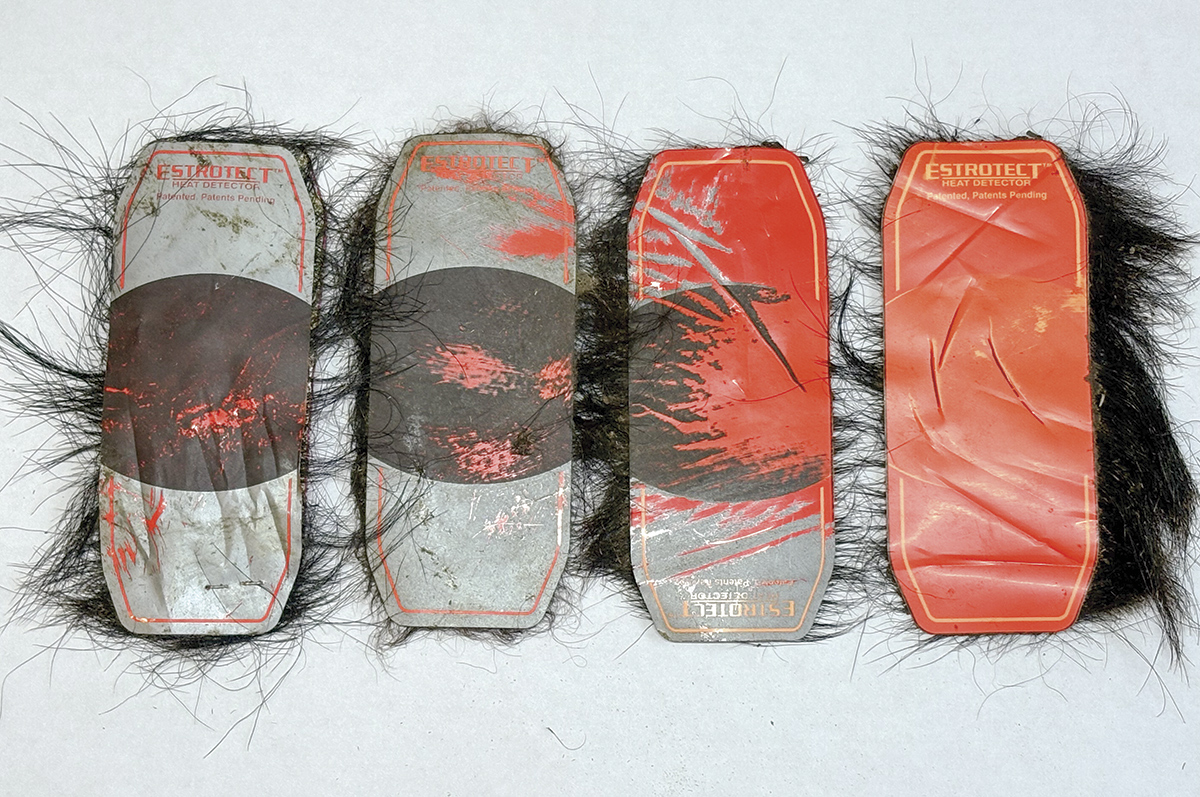
Estrus intensity can be determined using monitoring tools, such as breeding indicator patches. If less than 50% of the patch’s surface ink is rubbed off (left two patches), it means low estrus intensity. When more than 50% of the patch is activated (right two patches), it indicates high estrus intensity and a better likelihood of breeding success. Image courtesy of Estrotect.
Conversely, high estrus intensity is characterized by repeated standing mounts and clear behavioral signs. These cows are at the optimal physiological stage for breeding.
“When you observe a group, and a high percentage of them are active, jumping around or standing to be mounted, those are the cows that get pregnant,” Lulay says.
Why does estrus intensity matter?
Estrus expression is directly tied to what is happening hormonally inside the cow. Strong heats are driven by higher estrogen levels and follicle development.
“These cows have a larger, more robust follicle and display stronger signs of estrus,” Lulay says. “Cows with higher estrus intensity should be more likely to get pregnant.”
Perry added that estrus intensity also provides valuable insight into timing.
“If no real signs have been monitored to indicate estrus, you won’t know that she’s truly in standing heat yet,” Perry said. “Once she reaches that higher level of intensity, it takes roughly 30 hours before ovulation, so you can make better decisions about when and how to breed her.”
Tools to monitor estrus intensity
Producers have several options for identifying estrus intensity, including visual observation, breeding indicator patches, tail chalk and electronic activity monitors. Perry emphasizes the value of tools that provide consistent, easy-to-interpret results.
“The benefit of breeding indicator patches is that anyone can read them,” Perry says.
Tools such as breeding indicator patches allow estrus intensity to be easily monitored by looking for patches with 50% or more of the surface ink rubbed off as an indication that the cow is in high estrus intensity. When this metric is met, cows are ready to breed. Females with less than 50% of the surface ink rubbed off are in low estrus intensity and could be bred with lower-cost genetics or bred later when they’ve reached high estrus intensity.
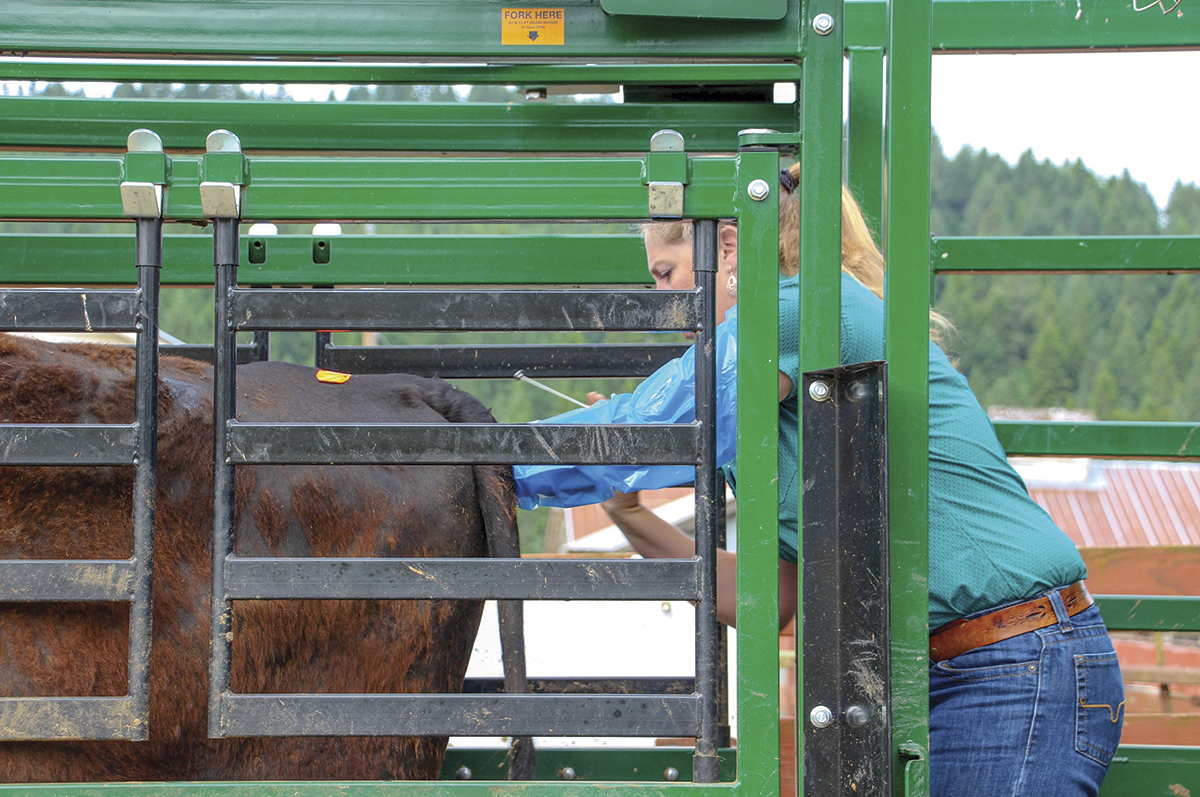
Breeding when cattle have reached high estrus intensity can improve pregnancy rates 27%. Image courtesy of Estrotect.
“When we think about it this way, research shows that when you get about 50 percent or more activation on a breeding indicator patch, we have really good pregnancy rates,” Perry adds. “You can clearly see whether a cow is at 10 percent, 30 percent or 70 percent activation, and that consistency helps drive better decisions.”
Lulay agrees, noting that these tools also help illustrate to producers what a true standing heat looks like.
“They give us a snapshot of where the cow is at, so we can place semen at the right time,” Lulay says. “Better estrus expression is going to mean more pregnancies.”
Make smarter breeding decisions
One of the biggest advantages of monitoring estrus intensity is the ability to match breeding strategy with a cow’s likelihood of success.
“When cows exhibit high estrus intensity, that’s when you can confidently use higher-value genetics,” Lulay says. “That might mean sexed semen, embryo transfer or rare semen you want to utilize.”
Perry’s research supports this type of approach:
- A 2017 study in South Dakota using breeding indicator patches to monitor estrus showed cows and heifers bred at high estrus intensity to sexed semen resulted in pregnancy rates that were 89% of the pregnancy rates of conventional semen.
- Therefore, if animals with activated patches had 65% pregnancy rates with conventional semen, they would have 58% with sexed semen.
- Low estrus intensity females saw pregnancy rates drop to 59% compared to conventional semen.
- This means animals with unactivated patches had 45% pregnancy rates with conventional semen and 26% pregnancy rates with sexed semen.
“With sexed semen especially, estrus intensity matters,” Perry notes. “When cows are in high intensity, sexed semen performs nearly as well as conventional semen. When intensity is low or absent, conception rates drop quickly.”
For cows exhibiting low estrus intensity, producers should consider breeding with high-fertility conventional semen or delaying breeding until stronger heat expression is observed.
As reproductive technologies continue to advance, understanding estrus intensity allows producers to get more out of their breeding programs. By recognizing that all heats aren’t created equal, producers can make smarter, more strategic breeding decisions to improve reproductive efficiency across the herd.
References omitted but are available upon request by sending an email to the editor.