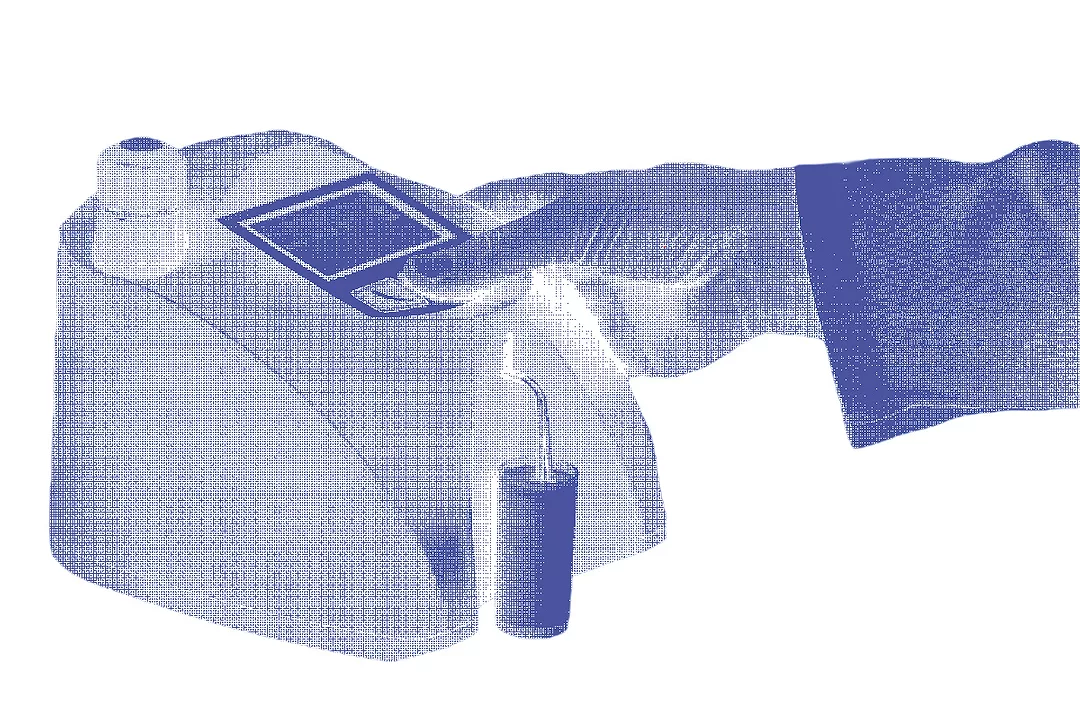
The U.S. Food and Drug Administration’s (FDA) annual analysis shows dairy consumers continue to be safer than ever when it comes to milk, with the number of samples testing positive for animal drug residues in the past year increasing slightly but staying near historic low.

During fiscal year 2025 (Oct. 1, 2024 – Sept. 30, 2025), slightly more than 3.5 million milk samples were tested for animal drug residues. Of those, just 307 tested positive, according to FDA’s National Milk Drug Residue Database Fiscal Year 2025 report.
The Grade A Pasteurized Milk Ordinance (PMO), which governs the state regulatory agencies in the implementation and enforcement of their Grade A milk safety program, requires that all bulk milk tankers be sampled and analyzed for animal drug residues before the milk is processed. Any bulk milk tanker found positive is rejected for human consumption.
The number of samples testing positive for drug residues in fiscal year 2025 was up from the year before, yet it is the second-lowest number of milk samples that tested positive for a drug residue in the 28 years data is available, back to 1994. By fiscal year, the number of milk samples testing positive for drug residues over the past decade was:
- 2025 – 307
- 2024 – 301
- 2023 – 345
- 2022 – 424
- 2021 – 451
- 2020 – 536
- 2019 – 556
- 2018 – 584
- 2017 – 605
- 2016 – 618
- 2015 – 579
State and local agencies conduct drug residue tests at four locations:
- Bulk milk pickup tankers (bulk raw milk from a dairy farm): Samples are taken on receipt of every tanker load at a milk receiving facility. Of more than 3.26 million samples, 206 (0.006%, or 6 thousandths of 1%) tested positive, resulting in the disposal of 10.7 million pounds of milk.
- Producer (raw milk obtained from the bulk tank/silo from a dairy farm): Of 229,245 total samples, 97 (0.042%) tested positive, resulting in the disposal of 224,000 pounds of milk.
- Other (milk from milk plant tank/silos, milk transport tankers, etc.): Of 49,807 total samples, three tested positive, resulting in the disposal of 64,000 pounds of milk.
- Samples of pasteurized fluid milk and milk products (finished dairy products in bulk or package form, after pasteurization, including milk, cream, condensed and dry milk and milk products, and condensed and dry whey and whey products) were tested. Of 32,995 total samples, one tested positive for animal drug residues and resulted in the disposal of 25,000 pounds of milk.
Overall, about 11.02 million pounds of milk were found positive for a drug residue and disposed of in fiscal year 2025, up from fiscal year 2024's total of 9.97 million pounds.
Testing for specific drugs
In addition to testing for the presence of any drug residues, specific tests seek to identify residues from four different groups or individual drugs, using 15 different testing methods. Since some samples are tested for more than one drug residue, over 3.8 million total tests were conducted, with 328 testing positive.
Of samples testing positive, 325 samples were positive for beta-lactams, three were positive for sulfonamides, and none were positive for tetracyclines or aminglyosides.
Of the 325 samples positive for beta-lactams, 223 were drawn from bulk milk pickup tankers (both Grade A and non-Grade A), 98 were in samples drawn from bulk tanks/silos from dairy farms, and four were from samples from milk plant tank/silos and pasteurized products.
Mandatory drug residue reporting is required by state regulatory agencies under the National Conference on Interstate Milk Shipments (NCIMS). NCIMS is a voluntary organization directed and controlled by member states to promote the availability of a high-quality milk supply.
The FDA and the NCIMS, through their collaborative efforts, have developed a cooperative, federal-state program (the Grade A Interstate Milk Shippers Program) to ensure the sanitary quality of Grade A milk and milk products shipped in interstate commerce.
The National Milk Drug Residue Data Base (NMDRD) is a voluntary industry reporting program, under contract to FDA. Data reported to the NMDRD are for educational and analytical purposes, and are not intended or suitable for regulatory action or follow-up.
The system includes all milk, Grade A and non-Grade A, commonly known as manufacturing grade. Grade A milk represents approximately 99% of the milk supply in the U.S. and is regulated through the NCIMS by the state regulatory agencies.