As football fans look back on the season, they might point to one play that turned the game, or even the entire season. It might be a missed kick, a dropped pass, an interception or a pass completion. In reality, it probably wasn’t just one play. Winning teams win with execution in every phase of every game. It starts with fundamentals like blocking and tackling. It also takes a roster with the right players used in the right way, and a game plan that plays to your strengths and exploits your opponents’ weaknesses. Maximizing performance of your automated milking system is like that. The total package includes robots that operate efficiently, the right cows – milked at the right time – and barn management that creates opportunities for cows to excel.

Fundamentals: Efficient robots
They say football is won and lost in the trenches with fundamentals like blocking and tackling. The fundamentals of automated milking systems are monitoring performance and completing maintenance. Develop a list of reports to monitor key performance indicators like incomplete or failed milkings, connection attempts and milking duration. Monitor those reports daily and have an action plan when problems are detected. Observe the robots daily, and develop protocols for keeping them clean. Keep up with maintenance schedules and replace worn parts as needed. Fundamentals aren’t exciting. A running back breaking away for a big gain is more fun to watch than the block that made it happen, but it doesn’t happen without the block. Similarly, none of the things we do to get cows to the robot matter if the robot isn’t going to milk them correctly.
Roster: The right cows
Just as coaches spend a lot of time evaluating players, drafting, trading and recruiting to field successful teams, you need to get the right cows in your barn. It is truly amazing to watch modern robots prep and attach cows. Modern camera systems can guide the cup to the teat, even when quarters are uneven or hair has not been removed from the udder – but it takes longer. Selecting the most efficient robot cows is an essential part of milking more cows per robot. This doesn’t happen overnight. As the herd is growing, it might not make sense to ship high-producing cows just because they have long box times. It is important to identify the inefficient cows and include robot performance in culling decisions. Just because a robot can milk a cow doesn’t mean it should.
It’s not enough to have the right players on the team. It’s also important to put the right players in the game at the right time. Football teams use different personnel for short yardage situations than they use when a big gain is needed. Milking permission puts the right cows in the robot at the right time. As idle time decreases, it becomes more important to make sure there is still time for fresh cows to be milked at least three times per day. That usually means limiting access to the robots for late-lactation cows. Recent research shows cows that are milked three times per day in the first 21 days in milk produce 6 pounds more per day through the first 150 days compared to cows that are milked less frequently. Set milking permission so early-lactation cows still have an opportunity to be milked when the robots are busiest.
Game plan: Managing the barn
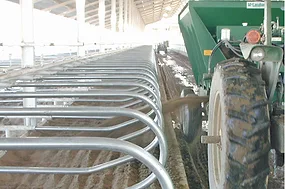
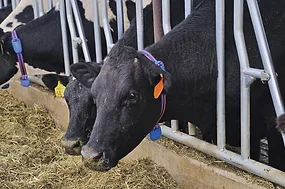
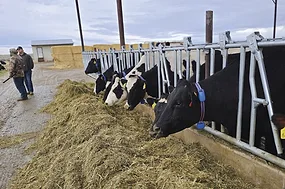
Football teams prepare for games using practice squads that mimic the next opponent’s players and plays. This helps coaches put players in the right place on the field and gives players the opportunity to make a big play. Bunk management is the key to your automated milking game plan. Bunk management puts cows in the right place to be milked. Feed in the bunk motivates cows to get out of their stalls and move around the barn, and moving around the barn creates opportunities for milking. If feed is not available, cows are not motivated. If cows learn that feed will not be available for the same three hours every morning, robot visits will decrease during that time. If feed delivery motivates all the cows at the same time, it will overload the robots. Consistent feeding times make it easier to maintain a consistent amount of feed. If you feed at the same time every day, you are always providing 24 hours of feed. If feeding time varies by only two hours, you are feeding for 26 hours one day and 22 hours the next. Keeping feed available 24 hours a day needs to be part of your game plan.
Saturday and Sunday are big days for football. Many producers with automated milking systems also report that their barns perform best on the weekends. Activities like bedding, herd check, hoof trimming, moving cows and dry-offs are less likely to be scheduled on weekends. People stay out of the barn and the cows come to the robots without interference. All of those management activities are essential. We can’t stop doing them. We can optimize the processes to minimize the interference. Maybe you can add an extra person to move cows more efficiently during bedding or reduce the lockup time during herd check. Avoid trimming feet in a location that affects cow traffic. Combine activities so you disturb the cows less frequently. Your game plan should be to stay out of the way and let cows be cows.
The big play that wins the championship game is usually the result of preparation and execution in every phase of the game. Top performance in your automated milking barn is the same. Focus on efficient robot performance, milking the right cows at the right time and managing the barn to keep the cows moving.