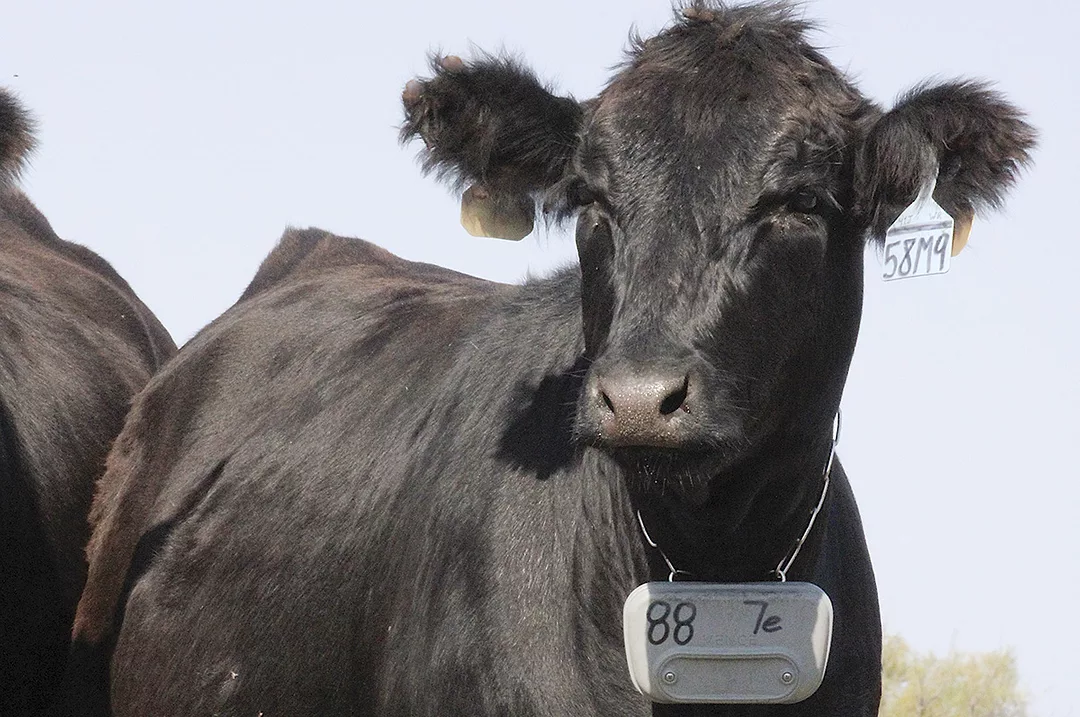
Fencing is a critical tool for enhancing grazing management through managing livestock access and distribution. However, constructing physical fences, both permanent and temporary, can be labor-intensive and costly. The introduction of virtual fencing into North America has many ranchers wondering how it works and whether it fits their operations.


Virtual fencing is a new and fast-growing management tool available to livestock producers and land managers to enhance grazing management without the use of interior fences. It is a system that utilizes digital fence boundaries with GPS-enabled collars to manage the movement of grazing animals. While design and connectivity can vary by vendor, virtual fencing systems work through the same principles. A GPS-enabled device is fitted to livestock that communicates its position to an online management platform either via a tower or cellular service. These platforms are used to create virtual fences, containing animals (in or out of designated areas) and even moving animals (with assisted move features).
Virtual fence devices utilize GPS to determine the position of the animal and administer various cues to manage them. Management cues include auditory tones and electrical cues. Auditory and electrical cues are only administered when an animal enters or approaches the set boundaries. An auditory cue warns the animal that it is approaching a boundary. If the animal continues toward or past the boundary, an electrical cue (or in combination with the auditory cue) is administered to deter further movement past the boundary. These cues are direction-sensitive and will not activate as animals move back into the desired area. Additionally, electrical cues are limited for animal welfare and deactivated if a cue threshold is met.
Livestock require training to effectively respond to virtual fence cues. The training period is used to teach animals to associate the auditory and electrical cues with physical fences. Once livestock are trained, virtual fencing is just as effective as electrical fencing options, ranging from 80% to 99% effectiveness, depending on the grazing strategy and class of livestock. Ongoing research at North Dakota State University (NDSU) and the University of Nebraska – Lincoln (UNL) has observed up to 99% effective containment when strip-grazing annual forages.
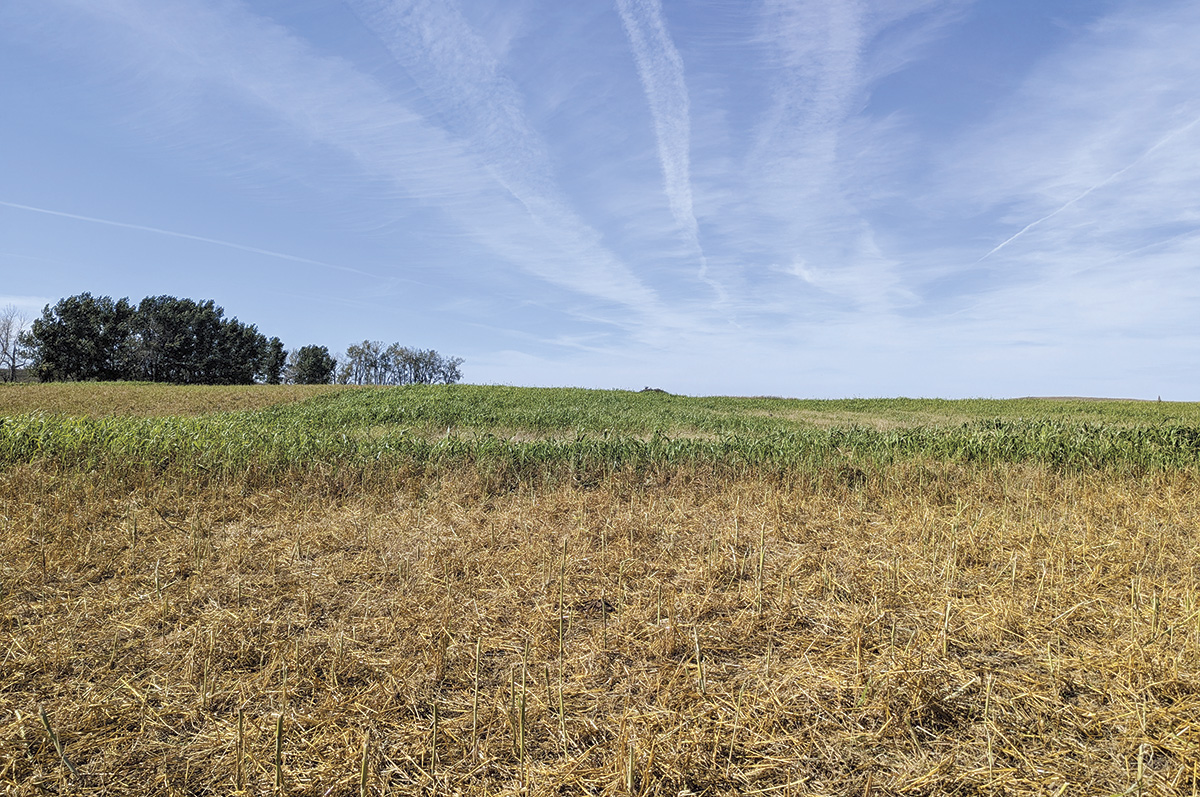
This is a strip-grazed virtual fenceline within an annual forage pasture. Virtual fencing can be just as effective as single-strand physical fencing, even in small paddock settings. Image provided by Miranda Meehan.
Virtual fences can be designed based on the management goals for each pasture. Most commonly, virtual fencing programs offer three types of fencing: inclusion zones, exclusion zones and movement fences. Inclusion zones are used to confine livestock within a set boundary, fencing them in. Exclusion zones are used to prevent livestock from entering an area by fencing them out. Movement fences slowly push a boundary in one direction. Movement fences are helpful in moving cattle to new paddocks or toward corrals.
Key considerations for implementing virtual fence
Before deciding to implement virtual fence, there are some key considerations to make. These include available vendors, design connectivities, livestock species and product availability. Understanding the capabilities of virtual fencing systems, as well as the limitations, is an important step in implementing the technology. With varying cellular coverage, you must consider signal coverage and strength when selecting a virtual fence platform. A cellular connection that allows you to send a text is sufficient for virtual fencing collars to update. Radio-connected collars can work in more remote areas with limited cellular coverage. These systems do require a base station or tower to transmit data, which will have limited range depending on topography. Hilly or heavily wooded terrain can limit the line of sight needed for the base station to communicate with the collars. Virtual fencing can still work in hilly or mountainous areas, but placement of boundaries is critical to be effective.
Battery life can be a limiting factor for virtual fence implementation. Battery life can range from a few months to an entire grazing season, depending on how many updates are sent to the collar and how many stimuli are provided. Frequent fence changes or small pastures where livestock interact more with virtual fence boundaries put greater demand on the devices and shorten battery life. Many collars have integrated solar panels to extend battery life or eliminate the need to replace batteries entirely.
Each virtual fencing vendor has a different pricing structure; see the product information and pricing table. For the most up-to-date cost, visit the UNL Virtual Fence Resource Hub or contact a company representative.
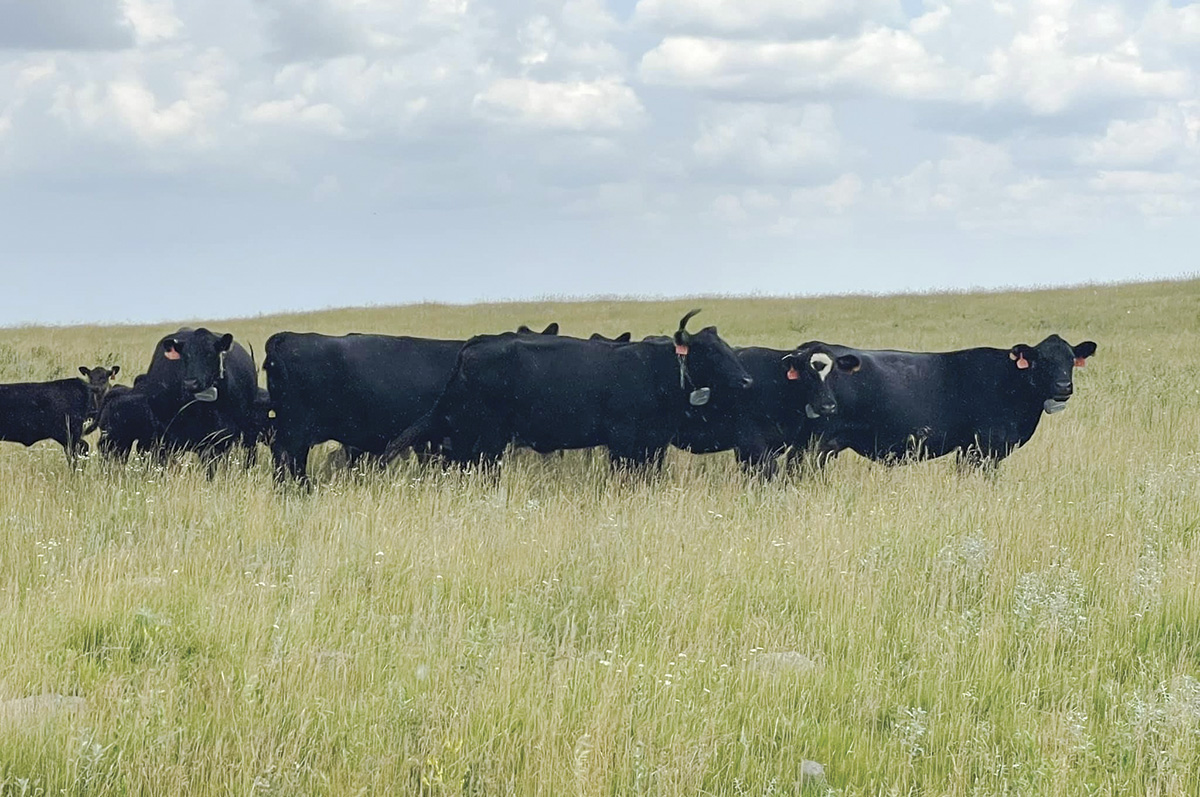
Cows are managed with virtual fence while grazing native range. Image provided by Miranda Meehan.
When setting a virtual fence, first consider whether additional infrastructure will be required. Since some systems rely on base stations, they can have a greater upfront cost than those that do not. While virtual fence does not replace the need for a perimeter fence, it does give ranchers the flexibility to resize and change pastures without any additional materials or labor. It is important to understand how different virtual fence systems would impact the multiyear economics of your operation.
Prior to investing in a virtual fence system, it is important to understand how this technology complements and enhances your current grazing system. It will provide the greatest return on investment to operations that require new fences to optimize grazing distribution and harvest efficiency, as well as operations that integrate extended-season grazing (i.e., bale and swath grazing, cover crop and crop aftermath grazing), where devices will get greater use.
Benefits of virtual fence
Virtual fencing offers a flexible method of implementing intensive grazing practices. By replacing the interior cross-fencing on rangelands, virtual fencing allows a grazing system to be implemented without the need for physical fencing.
Outside of rangelands, virtual fencing can be useful for alternative grazing strategies where fencing is labor-intensive or otherwise difficult to implement. Research at NDSU and UNL found that within annual forage systems, virtual fencing is just as effective as conventional polywire fencing under strip-grazing practices. These uses can be further expanded into crop residue or bale-grazing scenarios, where constructing fences may be difficult or not feasible.
Using virtual fencing can help enhance environmental health through livestock exclusion, enhanced grazing and removal of physical barriers. As mentioned above, virtual fencing increases the precision with which a producer can implement more intensive grazing while reducing labor inputs. These grazing practices using virtual fence have the added potential benefits of improving native vegetation communities, providing greater floral expression for insects and reducing fire risk through more targeted grazing to create fuel breaks. The reduction in physical interior fencing not only reduces labor and materials but also eliminates a physical barrier that can injure or kill wildlife. Virtual fencing can expand producers’ opportunities to partner in conservation beyond immediate herd management goals.
Virtual fencing is a new and fast-growing technology that can aid in grazing management by helping remotely implement adaptable and flexible grazing practices. The flexibility provided by virtual fencing can also be used to reach environmental and conservation goals while reducing labor. As with many new technologies, it is important to determine how virtual fencing can impact your operation.
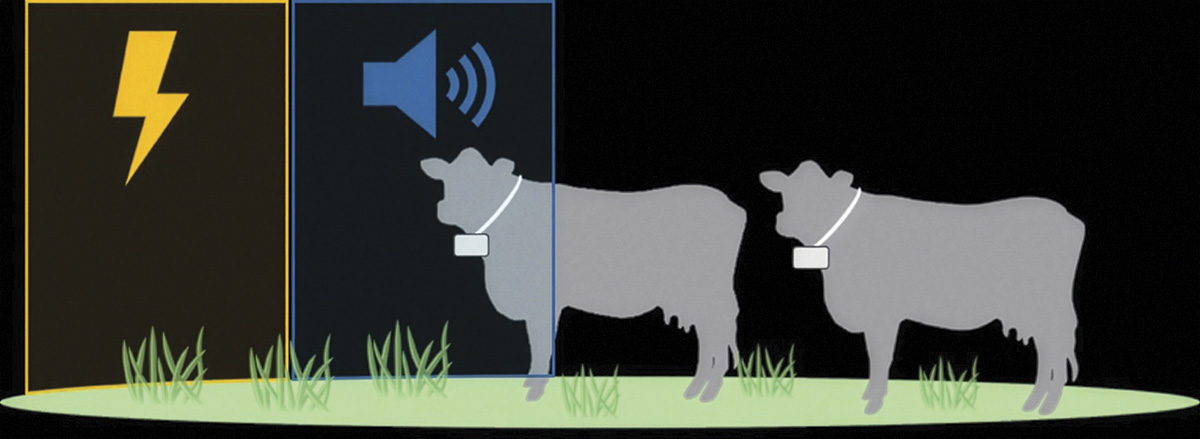
This is a visualization of virtual fencing management cues: The blue zone shows an auditory cue and the yellow zone an electrical cue. If livestock continue through each zone, cues are provided in a cycle until the animal responds positively or a safety limit is reached. Image provided by Miranda Meehan.