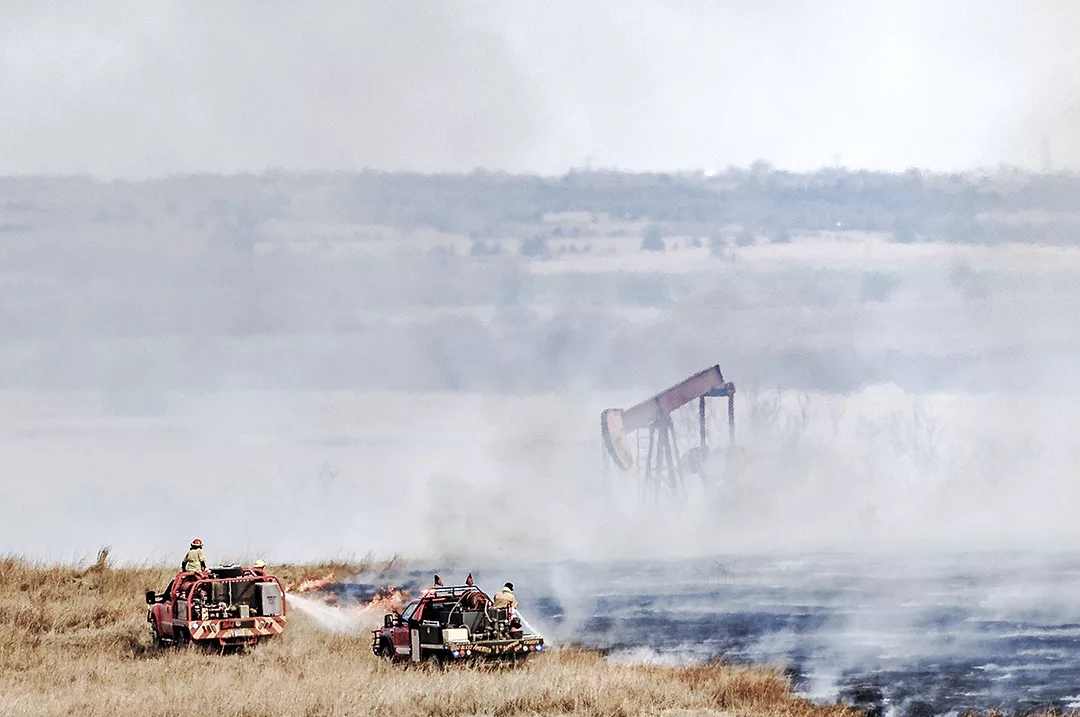
Wildfires undoubtedly are one of the most challenging natural disasters, and when they occur, they create immense hardship for our farming and ranching families and greater rural communities.


Here in Kansas, and in many other areas of the central and southern Great Plains and the western regions of the U.S., producers are generally accustomed to experiencing wildfires, particularly during late winter and early spring. However, the frequency and intensity of these fires seem to be growing each year. Likewise, more wildfires are occurring in many other areas around the U.S. that we typically don’t associate with uncontrolled fires.
While the underlying conditions that influence the occurrence and severity of wildfires are very complex, it is something that no one wishes for any of their neighbors. We often don’t like to think about the daunting situations or the “What do we do if this happens?” scenarios, as we have so many other positive things to be grateful for right now in the beef industry. However, it is good for all of us as we enter this time of year to keep the following points in mind pertaining to cow herd management should we be directly impacted by wildfire.
Have emergency contacts ready
Make sure everyone that is involved with your operation has readily available the contact information of those that need to be reached in case of an emergency. This includes spouses, children, employees, neighbors and relatives who live nearby. Do your children know the neighbors who live down the road and how to reach them in case of an emergency? Do you have the number of that young man who just moved back from college that you’ve only talked to once, and he’s renting the section of grass right next to where you are wintering your bred heifers? Know who your designated emergency management officials are for your community and how to contact them. Everyone directly involved with your operation should know and be able to contact key folks such as an extension professional, your nutritionist/feed service provider and veterinarian, as those individuals may often need to be involved in making important herd management decisions during and after a wildfire event.
Know your inventory
Inventory management of both feed and animals is one of the most challenging aspects of a cow-calf operation, regardless of size. Maintaining accurate pasture or group head counts is always important, but it becomes even more critical when animals become scattered or commingled with other herds or are hastily relocated to a random location away from the direct path of a fire. Simply take time to ensure your head counts are continually updated and accurate so that it is easier to reconcile differences afterwards in the event of an emergency. Likewise, keep an accurate count of bales in your haystacks to help you track what gets fed or lost during the event. In cases of large and severe fires, hay is frequently donated, and if you are a recipient of given hay, having a good idea of what your own bale inventory was to begin with is helpful in segregating donated hay from that of the farm/ranch.
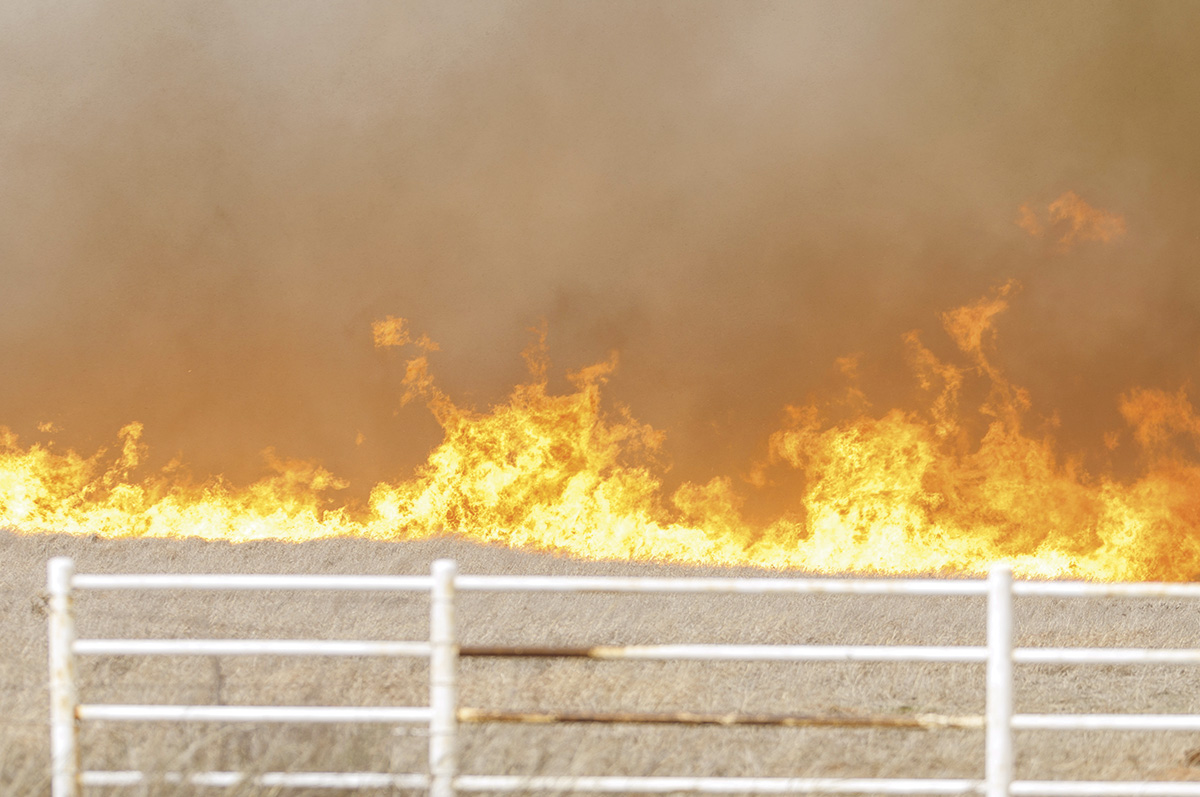
Image by Mitchell Alcala, Oklahoma State University Agriculture.
Document losses
Accurately documenting losses of any assets goes hand in hand with inventory management, but it is such an important part of the process from a financial standpoint. For all of us, it is obvious from our perspective when we lose an asset, but we have to make sure we record and communicate that loss to those we work with. Video taken with your phone or trail camera, pictures, eartags and other forms of animal identification, and verification affidavits are examples of documentation that will be needed by insurance companies and lenders when making claims and verifying losses on assets.
Provide care and closely monitor
Just as the people who work to save and care for them, the cattle that survive through any wildfire have experienced an incredible amount of stress. As you work with these animals in the days, weeks and months following a fire event, avoid adding undue stress to the animals as much as possible. Take the approach of providing critical, compassionate care with low-stress handling techniques.
In emergency scenarios such as this, it’s important to focus your efforts on basic animal care: safety, water and feed. Once cattle are moved to or discovered in a safe location, they need an opportunity to rest, drink clean fresh water, then eventually consume feed. Keeping inventory of resources such as portable water tanks, refilling sites and feed resources will help achieve this critical step.
Animals will need to be monitored very closely both immediately after as well as over the next several days as adrenaline subsides after this stressful time. Particular things to monitor for are damaged eyes (similar symptoms as pinkeye), severe hoof damage or separation of the coronary band (indicating sloughing hooves) and secondary respiratory disease (pneumonia) from smoke inhalation. Triage may be appropriate for animals that need immediate intervention and those that will be under consideration for monitoring and treatment. Be prepared and plan accordingly to humanely euthanize animals if at any point they are in severe distress. Consult with your veterinarian as to whether developing a specific animal health management plan appropriate for surviving animals is necessary for your operation, and be sure it is outlined well so you can act quickly and implement it when necessary.
Monitoring young calves during this time is also important. Many calves may have to be transitioned to a bottle if they cannot effectively consume milk from the cow due to teat damage.
Reassess your culling criteria
This will certainly vary from one cow herd and situation to the next, but it is worth considering. In working with producers directly impacted by fire, my experience has been that there will be instances in which surviving cows are clearly injured to the extent they are no longer able to be productive and must be culled from the herd. There will also be cases where only minor injuries occur, with resulting impacts to female productivity being much more subtle.
For example, if a cow sustains burn damage to two quarters of her udder but the other two properly function, is she allowed to remain in the herd if her feet and legs are still sound? Similarly, if a female has bad burn scars resulting in blindness in one eye, yet she sees from the other, do you give her one more year? If a bull has minor burn scarring on the scrotum, can he pass a breeding soundness exam? These are the types of decisions that may have to be made, often in that “gray space” with many factors influencing our judgment, including the genetic merit of the cattle in question.
If you are directly impacted by wildfire, please remember that you are not alone, and that there are resources to help, many of which can be found at your local extension office. Two key resources for Kansas include Kansas Forest Service Wildfire Response and Kansas Mesonet Fire Danger Forecast. Be familiar with similar resources available in your state.
If we experience wildfire, we need to remember that – even while taking care of everyone else around us – we also need to take care of ourselves in all aspects of life through the process. The overwhelming outpouring of support that is always provided to those affected and the way people from throughout the beef industry rally and come together during such events is a testament to the strength of production agriculture and our rural communities. May we all support each other when needed.