Cover crops and manure are both tools. When they are aligned, they improve nutrient efficiency, protect water and can even add forage value. When they are not aligned, they create management friction, yield drag and frustration.

The key question is not simply when should you apply manure? It is: “What is the purpose of the cover crop in this field?” because the right manure timing depends entirely on that answer. On many dairy farms today, cover crops are being asked to serve two very different roles. In some fields, they are environmental insurance policies, there to protect soil and capture nutrients. In others, they are feed, another opportunity to grow tonnage and stretch the forage base. Those two purposes demand very different manure strategies.
Fall manure: Where cover crops matter most
From a water-quality standpoint, cover crops earn their keep most clearly when manure is applied in the fall. Think about what happens in a typical Midwestern system. Manure goes on in September or October, and nitrogen begins transforming in the soil. Then winter arrives. Then spring, often wet and with water draining through tile lines.
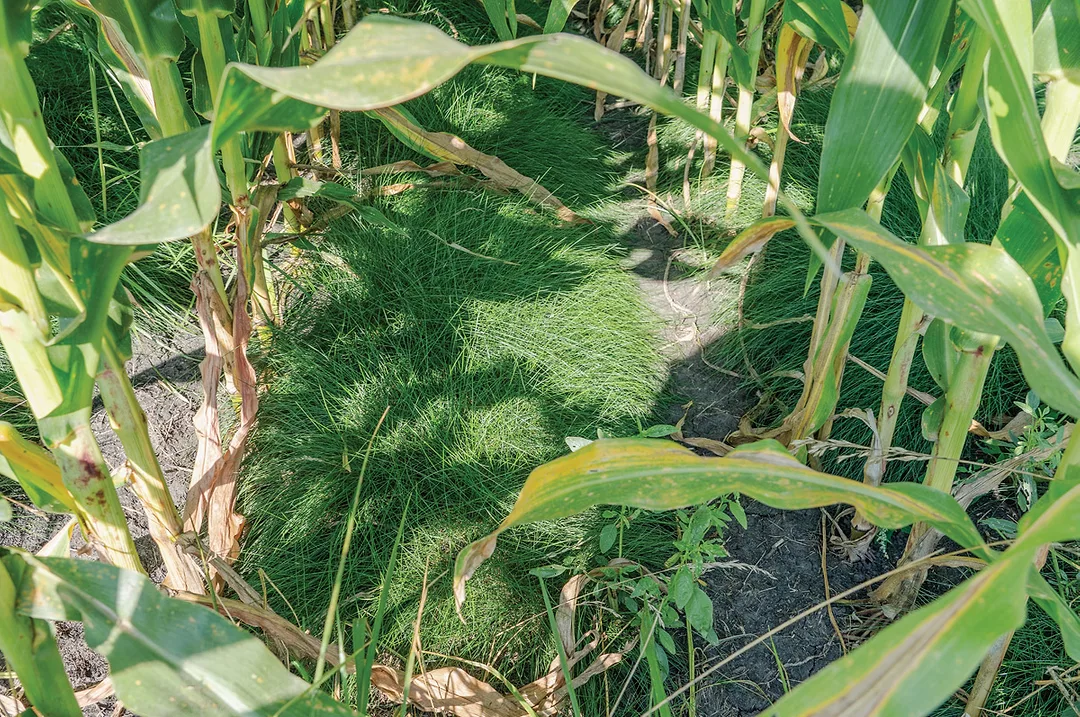
Meanwhile, the following cash crop won’t meaningfully use nitrogen until late May or June. That is a long exposure window. Nitrogen sitting in the soil profile during a wet spring is nitrogen at risk. The biology and physics don’t care about our nutrient management plans, and living cover crop changes the equation. Growing plants utilize nitrate as it forms, converting soluble nitrogen susceptible to loss into plant tissue. Cover crops hold those nutrients in place when water wants to wash them away.
But we should be honest about the trade-off. When a cover crop captures fall-applied nitrogen, it isn’t scavenging for nitrogen. It is temporarily tying up the manure groceries we were using to feed the following cash crop. That nitrogen is now in biomass. If the cover crop is terminated late or produces substantial growth, some of that nitrogen will not be immediately available to the following corn crop. Producers sometimes interpret this as “the cover crop hurt my corn.” There are reasons it could, but in that case, the cover crop often adjusts nitrogen supply and the timing of nitrogen availability.
That is why starter nitrogen so often becomes part of the recipe in fall-manure systems with aggressive cover crops. Not because manure failed, not because the cover crop is a problem, but because we asked the cover crop to do a job – capture nitrogen during a vulnerable season – and it did. Fall manure plus cover crops is a strong water protection strategy. It just requires intentional spring nitrogen management to ensure cropping success.
Spring manure: Shortening the risk window
Now shift to spring-applied manure. The interaction with cover crops changes dramatically. In this case, the cover crop grew on residual nitrogen from last season. It did not have access to the new manure nutrients during its main growth window. When manure is applied shortly before planting, the nitrogen exposure window shrinks. The crop is not months away from uptake; it is weeks away. From a nutrient management perspective, this simplifies things. The cover crop is less likely to compete with the corn for fresh manure nitrogen because it hasn’t been feeding on it all spring. Immobilization concerns are reduced as the nitrogen cycle is more tightly aligned with crop demand.
That doesn’t make spring application risk-free. We all know the logistical tension of wet soils, compaction concerns and tight planting windows. But strictly from a nitrogen competition standpoint, spring manure and cover crops tend to co-exist more quietly.
When the cover crop is feed, not just for water protection
The conversation changes again when the cover crop is not just there for environmental stewardship, but for forage. On dairy farms, cereal rye or triticale ahead of corn silage is increasingly part of a double-crop strategy. Now, the cover crop is not simply holding nutrients; it is converting them into tonnage. That shift in purpose opens opportunity. If you apply manure in the fall to support cover crop establishment and spring growth, you are no longer just protecting nitrogen. You are intentionally routing nutrients into harvestable feed.
You planted a higher density of cover crop and you fertilized with intention. The system becomes about total dry matter production per acre, and you have to be thinking about getting fertility right for the forage and for the cash crop that follows. For farms that can delay corn silage planting slightly, harvesting a high-quality small-grain silage in May can increase annual forage output. But it also changes nutrient accounting.
When a cover crop is terminated and left as residue, much of the nitrogen it captured eventually cycles back into the soil. When it is harvested for silage, that nitrogen leaves the field in a feed wagon. It must be accounted for in the nutrient plan and its uptake replaced accordingly. Harvest timing of the cover crop silage affects corn planting date. Nutrient removal affects fertilizer planning. We need to adjust the application rates to ensure the forage is fed and still there to give the corn silage the groceries it needs to be successful.
Matching strategy to field purpose
The temptation is to look for a single best practice: fall manure with covers or spring manure into covers. In reality, different fields on the same farm may justify different answers. Fields getting early fall manure with steep slopes or proximity to surface water benefit the most from cover crops for environmental protection. Fields dedicated to corn silage production may justify a forage-first mindset, treating the cover crop as part of the cropping system rather than an add-on conservation tool.
The mistake is assuming that manure timing decisions should be made independently of cover crop purpose. What risk are you managing? At its core, manure timing with cover crops is a risk management exercise. Fall manure extends the window of nitrogen exposure while allowing cover crops to intercept nutrients. Spring manure reduces that exposure window. Harvested cover crops convert nutrients into feed but require tighter nutrient accounting. At first glance, they don’t sound that different, but when it comes to fertility management, they are serving different purposes.
Cover crops and manure are both powerful tools, but they only work together well when we are clear about why the cover crop is there in the first place. Start with the why, and then design manure timing and fertility system around it.