Consistent daily and weekly owner maintenance is necessary to get the most from automated milking, feeding or cleaning systems. Regular cleaning, inspecting and checking components prevents costly downtime, protects milk quality and reduces stress on cows and farmers. Following the manufacturer’s owner maintenance schedule found in the owner’s manuals can help ensure systems run more smoothly each day.
Daily checklist
Your milking robot operates in a demanding environment. Manure, feed particles and milk residues can accumulate quickly. Daily tasks are primarily focused on hygiene and using data to detect issues early. These routines prevent small concerns from becoming costly problems. Here are three things you can do every day to help keep your robots functioning properly.
- Clean and inspect critical components. Maintaining clean sensors ensures accurate teat detection and consistent attachment performance. Pay particular attention to teat detection system (TDS). While you’re checking the TDS, examine teat cups, tubes and liners, along with the cleaning brushes. Damaged or worn cups, tubes and liners can affect milk quality and reduce cow comfort. Early detection prevents potential performance issues. Look for wear, cracks, milk buildup and proper positioning. Lastly, consistently replace your milk filter. This protects milk quality and helps detect abnormalities such as clots or debris.
- Maintain cleaning agents, teat sprays and dip solutions. Test levels of these critical solutions and refill if necessary. Running out of these products can compromise hygiene and system functionality.
- Make sure everything looks and sounds like it should. Daily checks of your machine attentions can dramatically reduce unexpected downtime. Use the machine attentions to direct the focus of a quick walk-around inspection while also listening for unusual sounds, checking for leaks, confirming smooth robot arm movement and verifying hoses are properly connected. These attentions will often tell you what to focus on in your daily inspection.
Weekly checklist
Daily maintenance is about keeping things moving. Weekly maintenance goes beyond surface cleaning and focuses on functional integrity and deep cleaning. Here are three things you can do weekly to help ensure proper robot functionality:
- Measure the concentration of the brush cleaner liquid and test the teat spray nozzle for proper coverage.
- Inspect air and vacuum systems. Consistent vacuum levels are critical for proper milking performance. Check for air supply, vacuum stability and visible air leaks in hoses and connections.
- Lastly, check for wear and tear on parts, replacing damaged components as needed. Replacing worn parts proactively can reduce the frequency of emergency service calls.
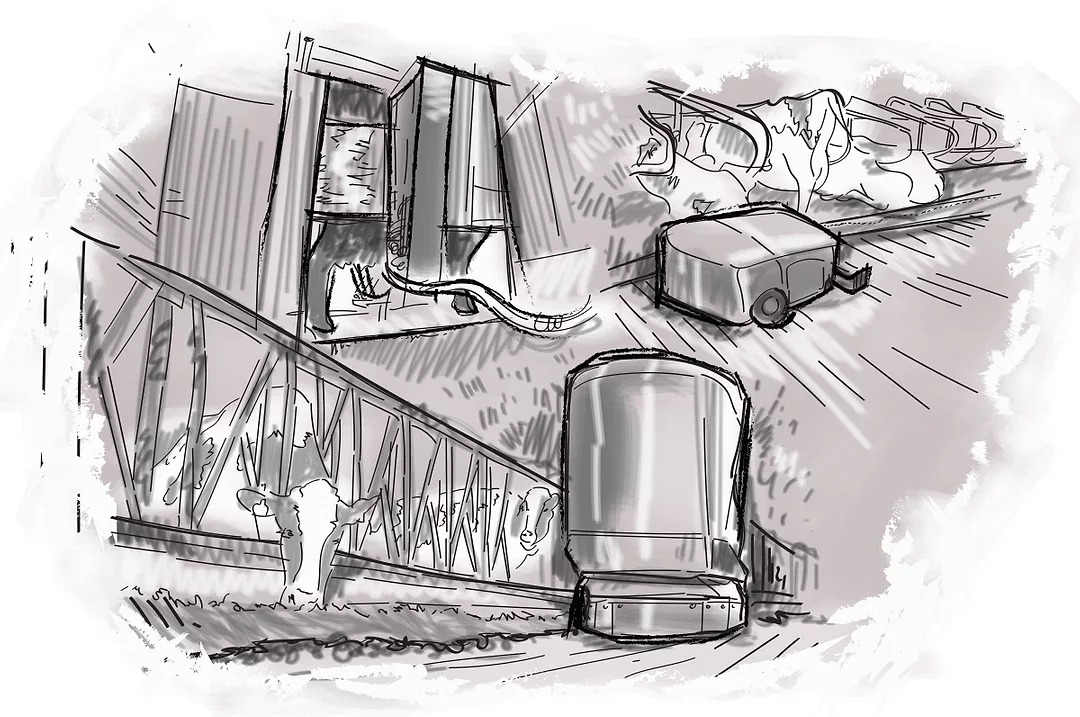
In addition to automated milking systems, regular cleaning of feeding and manure robots is necessary too.
Automated feeding systems
For automated feeding systems, daily cleaning of ultrasound sensors, charge contacts and feed measurement components helps ensure precise mixing and delivery. Regularly checking mineral levels, inspecting dosing mechanisms and clearing feed buildup from movement paths reduces errors and prevents mechanical strain. Weekly deep cleaning of filters, rollers and connectors protects the longevity of the system and helps ensure ration accuracy.
Feed kitchen and inventory management
The performance of an automated feeding system begins in the feed kitchen or storage and loading area. Keeping the kitchen area clean, clearing spilled feed and organized ingredient management directly contributes to feed precision, cow health and overall system efficiency. Calibrating mineral bins and maintaining accurate dry matter data ensures rations are mixed accurately.
Automated manure collection systems
Automated manure collection systems might be one of the hardest working employees running in the barn. It’s important to check under the hood, along with floor scrapers, suction lips, water nozzles, wheels and wheel wells weekly. Regular cleaning of sensors, air filters, charging contacts and moving components prevents buildup that can interfere with navigation and suction performance. Inspecting wheels, scrapers and vacuum systems, as well as clearing debris from travel paths ensures consistent manure removal and reliable charging.
Establishing simple routines for all automated systems helps protect your investment and ensures the entire operation runs smoothly and efficiently.