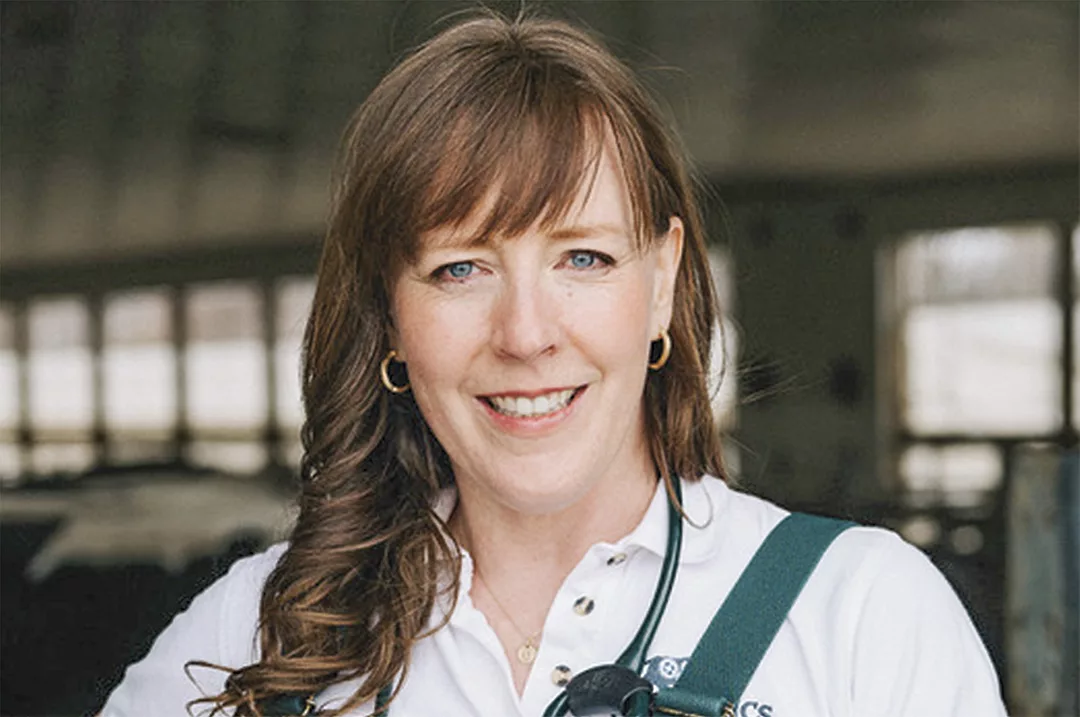
Shari Van de Pol, founder of Cattleytics, appeared on season 20, episode 16 of CBC’s Dragon’s Den. Progressive Dairy Editor Matti McBride interviewed Van de Pol to learn more about the experience of appearing on national television.

Q: Walk us through the application process.
VAN DE POL: One of the parents at my children’s school is one of the producers for the show and she encouraged me to apply. We had a video call – from a dairy, actually – for the initial interview. We didn’t get through but it was an interesting experience. I actually was participating in a pitch competition called The Forum at the same time. After competing in that, a few people came up to me that are producers for Dragon’s Den and encouraged me to apply again.
If you go pitch in person, you go to a large atrium in downtown Toronto. When it was your turn, you went to a table and pitched to a producer – he was very nice and positive, but we didn’t know what happened. On the drive home, I got a call from the producers asking a few follow-up questions. Then we had a video call with them, and they told us that we were going to be on the show.
Q: Logistically, how do you bring cattle on a TV show?
VAN DE POL: The producers wanted us to bring cows, so I started looking. I wanted something to stand apart from what the show had seen, so I wanted a non-Holstein cow. A friend of mine connected me with Mac and Rose Jakeman, who have Ayrshires in Ontario. The next step was to register the TV studio as a dairy farm for DairyTrace. We went through all the red tape to register the CBC offices as a dairy. Our producer – Paula Sanderson – had done this before with Vodkow and knew what she was doing.
We showed up to the CBC building – which is huge and in downtown Toronto. Mac and Rose pulled up with their trailer and the two Ayrshires. This is the moment where I was like, "This is really happening; we are really bringing these calves on live TV. How are we doing this?"
They had an elevator that was big enough to pull the entire trailer onto with a skid steer. There were stage people and producers running around, doing everything they have to do. They had a little room for us to go into and then the waiting game happened because you don’t know when you’ll be on.
For filming, they wouldn’t let us see the set beforehand. The first time I saw it all was when we were walking on to film. There are lights everywhere and everything is glossy and they tell you to walk to your mark and that’s it – you have 90 seconds. Everything is filmed in one take. You have 90 seconds to describe everything.
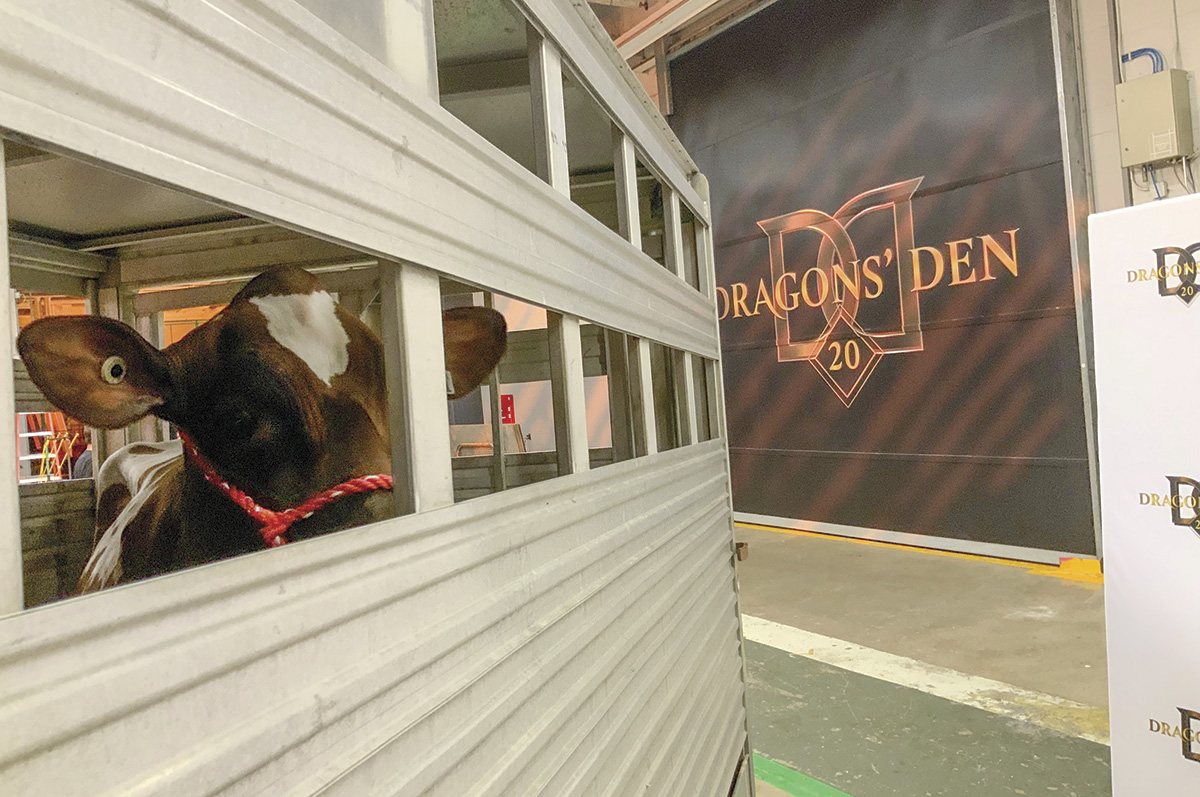
Two Ayrshires made an appearance alongside Shari Van de Pol on national television. Image provided by Cattleytics.
Q: What does it mean to you to represent the Canadian dairy industry on national television?
VAN DE POL: When people picture a farm, they picture something from a children’s book, right? You have to jump them from the 1930s dairy knowledge to today – we have sensors and daily milk weights and somatic cell count – and we have to explain all that plus our software in 90 seconds. It was a huge challenge. Honestly, I was surprised they accepted us because software doesn’t make good television.
I really saw it as a great opportunity to connect with the public with what farms are really like today and the important elements of it. When the media is putting things out there that have gone wrong, people don’t see the other 99% of the time when things go right. Part of my purpose with this experience was to highlight how hard farmers work and how much they care about their animals.
It was pretty cool to see the Dragons’ reactions. They were so excited to see an animal; that was neat. They were so complimentary about our business.
I think when we’re talking about the big problems of the world – environmental pressures, a safe food source for a growing population, those sorts of things – we’re not going to get good solutions to those problems if half the population has no concept of what is real. I think being able to tackle issues with some knowledge of this industry is key. Otherwise, you have people making decisions for you in agriculture that don’t know anything about it. I’m hoping we’re in a neutral enough position to be able to do that – that’s our goal. Did we succeed? Did we not succeed? I don’t know. But if you never speak up and tell people your story, how can you complain that people don’t understand?
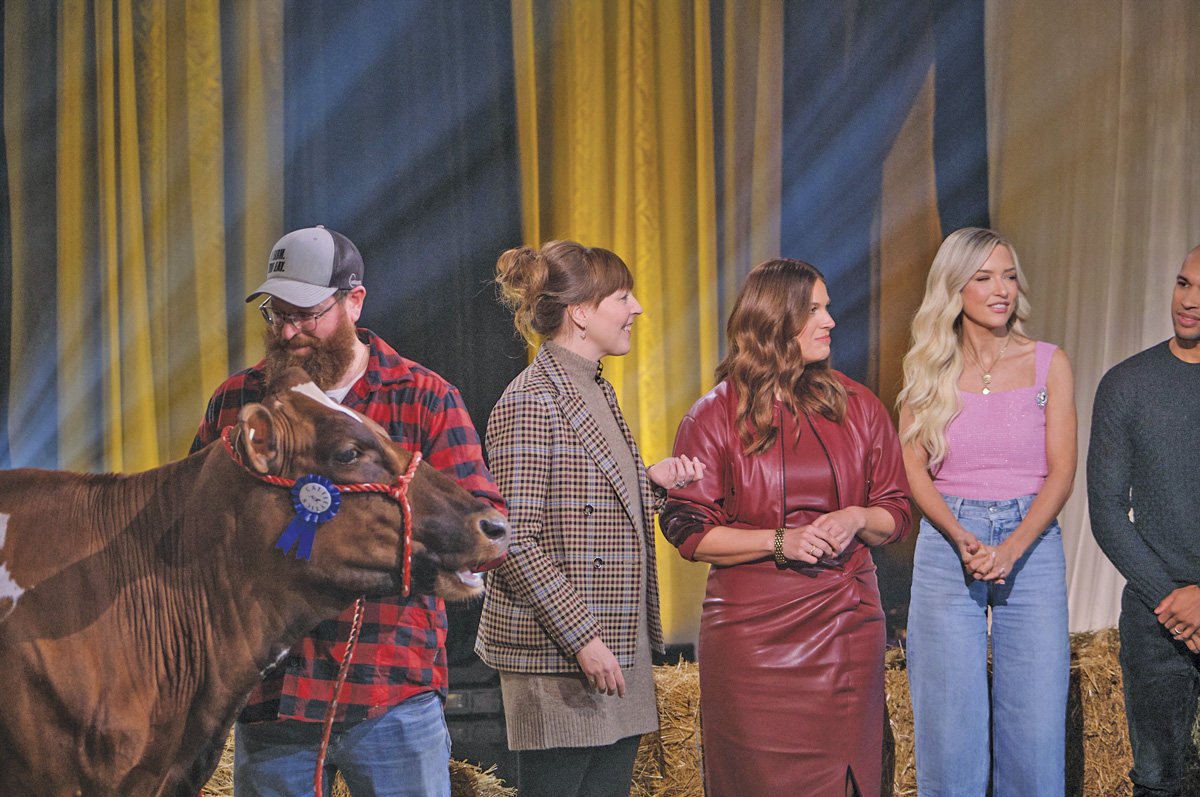
Mac Jakeman holds one of his Ayrshires while Shari Van de Pol chats with the Dragons. Image courtesy of CBC.