It is no secret that technological improvements are critical to the continued success of agricultural producers. Row crop farmers operating machines with varying levels of sensors have enjoyed watching their progress through the field for decades now, while poultry, swine and dairy producers have access to the capability of numerous robotic systems designed in some cases to automate barn management decisions and lower onsite labor requirements.

Beef producers have readily embraced genetic selection and reproductive tools such as expected progeny differences (EPDs) and DNA testing, alongside A.I. (artificial insemination) and, in some cases, digitized record-keeping tools. When coupled with technological advances in genetics, pharmaceuticals and refined nutritional strategies, the concurrent improvement in efficiency, production potential and overall sustainability has been close to exponential. But automated management tools have largely remained out of beef producers’ daily lives.
To date, technology improvements for beef producers have largely centered around improved machinery, improved pharmaceuticals, improved genetic prediction testing tools and mathematical models, and record-keeping apps. But beef operations have generally been insulated from massive integration of robotics and automation technologies due to their diverse nature and location in rural communities.
However, anyone who has walked through a livestock trade show or opened a livestock magazine knows that this is quickly changing as technology bridges the gap that prevented beef producers from remotely monitoring and managing livestock on their operations. Cellular and satellite connectivity has brought the Internet of Things through the farm-to-gate, and early adopters are already actively managing aspects of their day-to-day lives via apps on their phones. The list of available precision livestock technologies is long and includes (but is not limited to) widgets such as GPS-tracking biometric eartags, virtual fencing systems, remote scale systems, automated precision supplementation feeders, drones checking animals or mapping forage availability, and water tank monitoring systems.
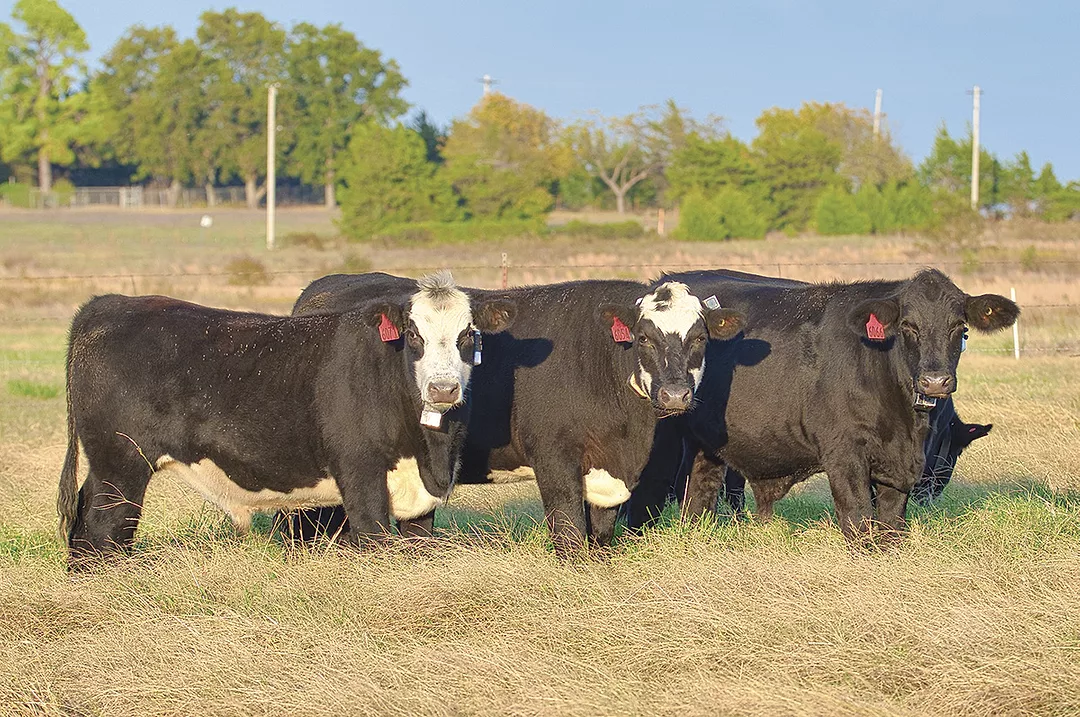
The technology may be as simple as a cellular-enabled game camera monitoring a water tank and cattle visitation, or as advanced as a virtual fencing system used to manage rotational grazing strategies.
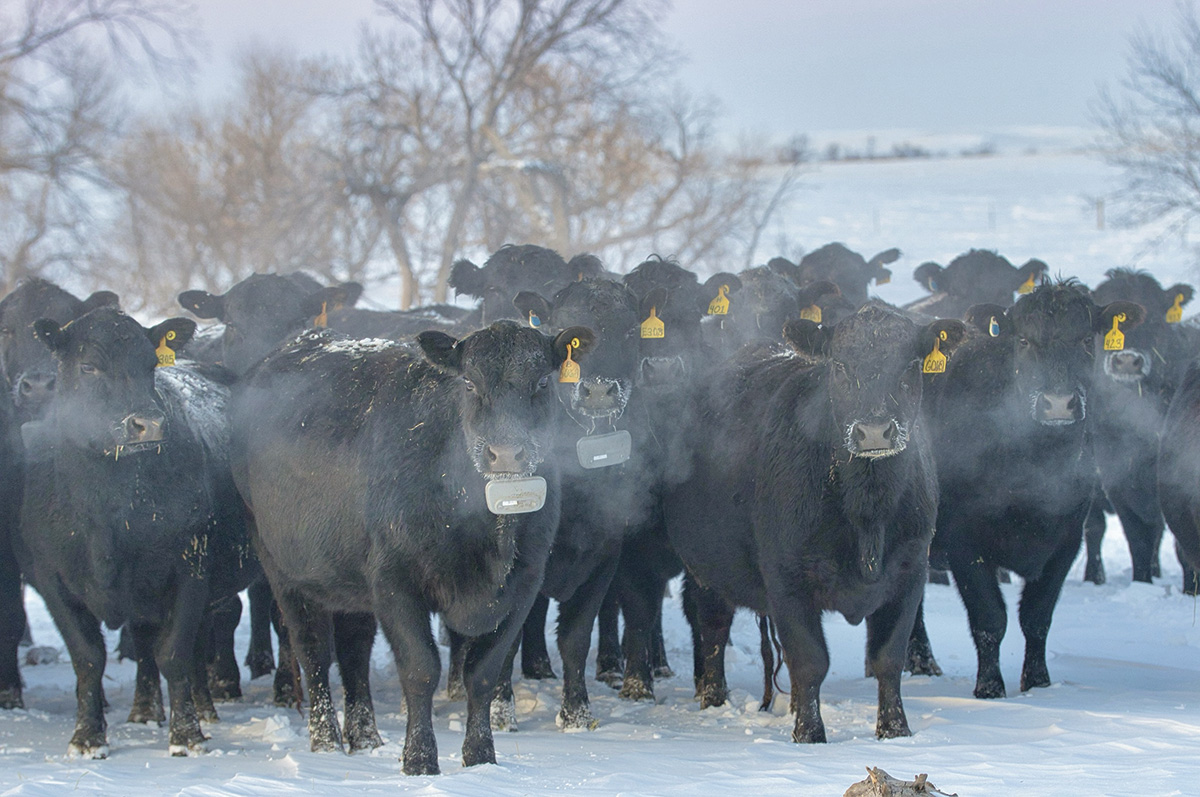
Image provided by Ira Parsons.
Being a late adopter of precision technology may ultimately work in the beef industry’s favor. Developing integrated dashboards that can collate data from multiple companies’ technologies across various databases is a technically demanding job that can be a significant barrier, both in terms of time and technical expertise. However, the development of application programming interfaces (APIs) and cloud-based computing in data centers has made the automation of these efforts more feasible. But connecting them in an intentional manner that yields quantifiable information useful for making management decisions still requires effort. Thought and technical expertise is required to provide information useful for that operation. In a diversified industry such as the cow-calf sector, what is applicable for one operation may not be the information needed by a neighboring operation with different production goals.
The rapid growth of artificial intelligence (AI) and large language models (LLMs) could help us build custom dashboards that pull together lots of data from different sources into one easy-to-use screen. Agent-based LLMs tuned to an individual operation’s geographic location will facilitate integrating local weather and climatological data with satellite imagery using animal-worn devices such as GPS tags or water tank monitors. The LLM can then be equipped to apply previously trained data science tools to monitor individual animal behavior, such as walking, grazing time, water tank visitation, weight, etc., and provide actionable recommendations for the producer to consider.
Here are a few decision-making advantages that AI-augmented sensor technology has that will improve the operation of beef producers (Figure 1).

1. Detecting health issues
With the price of cattle at record highs, each animal represents a substantial investment by the producer. Historically, producers have relied on physically inspecting animals to determine whether they need medical or veterinary care. However, in a herd of even moderate size and activities always vying for producers’ attention, each animal may only be observed for a few seconds at best. Given that livestock are prey animals, they instinctively try to hide their symptoms, which makes timely treatment even more difficult. However, an animal with a biometric tag or collar will provide data to a specifically trained AI algorithm, which will detect changes in the animal’s behavior and improve both animal identification and treatment.
2. Timely reproductive decisions
Actively tracking bull and cow activity will improve the accuracy of identifying breeding activity. Behavior monitoring can not only provide more reliable service dates to identify when – and the number of times – a cow cycled but also monitor bull health to identify injury or other health issues which may reduce bulls’ ability to cover cows.
3. Pasture and forage monitoring
Biometric tracks providing real-time information of animal behavior and location can be used to create grazing maps that allow producers to monitor in real time heavily grazed areas of the pasture. When integrated with remotely sensed imagery, either from drone-mounted camera systems or satellite maps, and local weather data, more accurate predictions of forage growth and quality can provide detailed and real-time information regarding forage quality.
4. Improved nutritional decision-making
AI agents integrating real-time animal biometric and environmental data can be connected to nutritional models to improve nutritional management decisions. Further, idealized production goals can aid in informing supplementation strategies to provide for both the health and well-being of the animal while balancing against the production and economic goals of the operation. Users may even be able to simulate potential outcomes, playing their own version of Farm Simulator with parameters set by their own operation and expectations.
5. Informed marketing decisions
Developing a sound marketing strategy is critical to ensuring the economic success of any operation. While market uncertainties will always be a source of risk, AI agent models connected with local and national market outlooks will aid producers to develop production and marketing strategies that fit their operation.
Tools provided by precision livestock technology and specifically built AI agent models certainly provide a great deal of opportunity for the beef industry. One distinct advantage may simply be more efficient allocation of labor resources, which might afford young producers who, through necessity or desire, have an off-farm career while working the family operation in their spare time.
However, I would be remiss to not address legitimate concerns posed by AI agents and LLMs to the beef industry and our broader world in general. National debate over space, energy and devotion of natural resources required for the construction of data centers is a critical problem. And the movement of production data to cloud-based computing opens the beef industry to greater cybersecurity risk that must be considered. However, there is no doubt that technology is continuing its march forward, and successful operations will have to decide how to remain economically competitive in a dynamic and changing world.