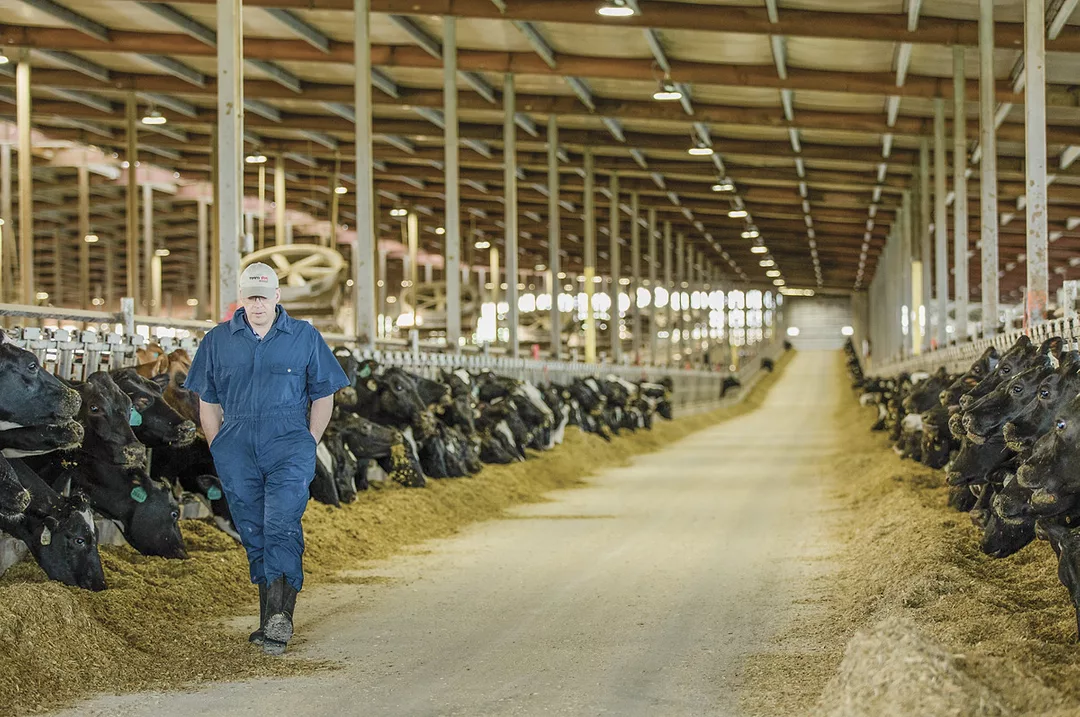
A dairy producer walks through a pen of second-lactation cows and notices something unsettling: Nothing has really changed. The cattle look good, production is steady, but they are almost identical to the cows from five years ago. Nothing is wrong with these cows, but nothing is meaningfully better either. Same variation. Same strengths. Same limitations. And that’s the problem. If your herd looks the same year after year, your genetics – and your profitability – are standing still. In today’s dairy landscape, standing still isn’t neutral. It’s falling behind.
Reproductive strategy in dairies is no longer just about pregnancy rates; it’s about compounding progress across generations. But how do you compound progress?
For many small and large dairies, the answer is implementing embryo technologies.
Embryo programs are large investments in both capital and management. There’s no sugar coating the extra time and resources needed to innovate. But the real risk isn’t the investment; it’s falling behind in genetic and reproductive efficiency.
“In today’s dairy environment, maintaining the status quo is often the most expensive decision a producer can make,” says Trans Ova dairy consultant Chelsea Abbott.
From single-step breeding to system-level strategy
Embryo technologies aren’t a replacement for traditional A.I. practices but rather a complementary tool that strengthens an existing reproductive strategy. Instead of creating replacements across the entire herd, the top females are chosen based on genetic merit, production performance and genomic data to create embryos through in vitro fertilization (IVF). The lower-end females then become recipients of those elite replacement embryos.
Similar to a sexed semen and beef-on-dairy model, this approach concentrates your best genetics in your replacement pool, while lower-tier cows are utilized strategically as recipients or bred to beef semen. In a large dairy, embryos allow you to control the genetic direction intentionally, not incrementally. Essentially, you compound your progress.
Proven outcomes in large-scale dairy systems
Dairy producers have seen great success when implementing IVF and embryo systems. One dairy herd achieved a 10% higher pregnancy rate using our embryos compared to their conventional A.I. practices.
Conception rates:
- A.I.: 50% (14,000 breedings)
- Embryos: 60% (1,700 transfers)
Pregnancy loss:
- A.I.: 3.7%
- Embryos: 3%
These embryo pregnancies also maintained a lower abort rate than the conventional A.I. counterparts and lower birthweights than other embryos. On this large scale, embryos performed competitively with and in some cases exceeded A.I. across multiple categories. While the investment required to implement a similar program is significant, real results continue to demonstrate measurable reproductive and genetic advantages for dairies.
Not one calf, but generational gain
Instead of waiting generations to see genetic improvements across your herd, embryos open the door to multiply your top females (or bring in outside genetics) and shorten the generational interval. You make faster progress in production traits, health traits, feed efficiency and longevity.
Creating more consistency in calf crops leads to better management down the line. Playing the long game means better grouping, feeding and performance. In addition, the consistency across the calf crops isn’t average. This more intentional herd composition is made up of elite females who efficiently produce more milk. Over time, embryos lead to reduced costs per unit of progress. More bang (milk) for your buck.
What makes an embryo program work
Adopting an embryo program requires thoughtful consideration. Upfront costs, added labor, management complexities and the learning curve for teams are important concerns, and results are not instantaneous.
In addition, not all embryo programs perform equally. Producers should explore providers who view their clients as partners and not transactions. Combined with high-quality embryos, it’s important to work with teams who can help guide synch protocols, recipient selection and provide experienced technical support.
“The process and provider matter just as much as the technology,” Abbott says.
Momentum is built, not bought
Genetic progress compounds when the right programs are in place. As that progress builds, so does reproductive efficiency and more informed decision-making. Dairies that delay adopting these technologies aren’t just trailing early adopters. They fall significantly behind over time.
“When you look back five years from now, the question won’t be whether embryos were worth it,” Abbott says. “It will be how much progress was left on the table by waiting.”
While the cost of IVF and embryo programs is visible on a balance sheet, the cost of missed progress is not. That hidden cost is far more dangerous than the risk associated with investing in your herd’s future.
From investment to advantage
Embryos are gaining traction in modern dairy systems across the U.S. With the right provider partnership, they create proven performance and long-term compounded progress. These programs aren’t just an expense category. They’re a growth strategy aligned to take your herd’s potential further, faster. Are you ready for what’s next?