Prices for U.S. replacement dairy cows continued climbing into the first half of 2026, reaching a new record high in April, according to the latest quarterly estimates from the USDA. One factor driving replacement cow and heifer prices higher is the continued crossbreeding of portions of dairy herds to beef, which is reducing the supply of dairy replacements available to enter the milking herd. Meanwhile, average cull cow prices have also strengthened in 2026, with first-quarter prices matching the peak reached last September.

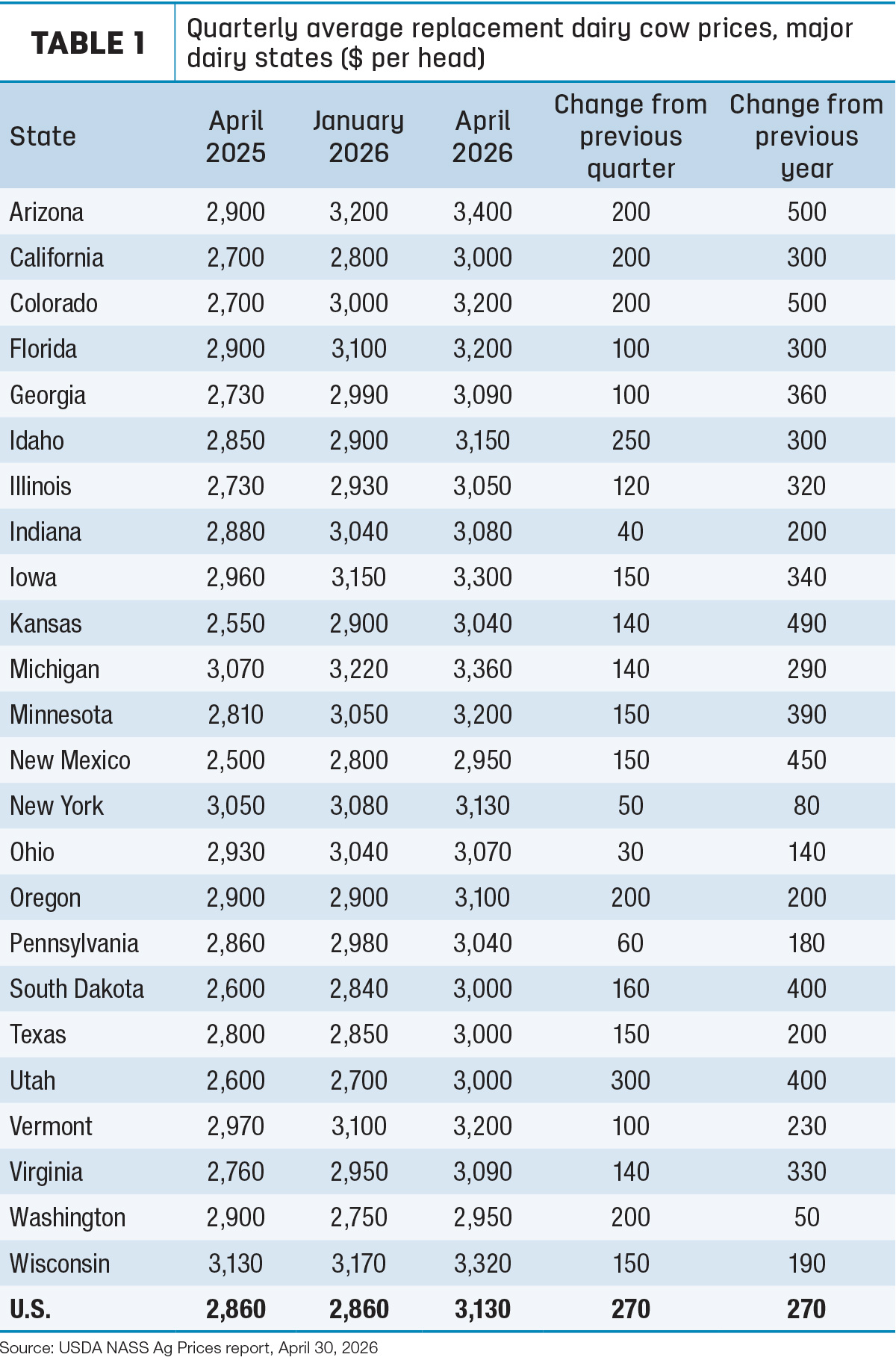
U.S. replacement dairy cow prices averaged $3,130 per head in April 2026, up $270 (9%) from January 2026 and up $270 (8%) from April 2025.
The USDA estimates are based on quarterly surveys (January, April, July and October) of dairy farmers in 24 major dairy states, as well as an annual survey (February) in all states. The prices reflect those paid or received for cows that have had at least one calf and are sold for replacement purposes, not as cull cows. The report does not summarize auction market prices.
Quarterly average prices for replacement cow prices were up in all 24 major dairy states (Table 1). Largest increases occurred in Utah, up $300; Idaho, up $250 and $200 in Arizona, California, Colorado, Oregon and Washington.
Compared to a year earlier, April replacement cow prices were up $500 in Arizona and Colorado, $490 in Kansas, $450 in New Mexico, $400 in South Dakota and Utah, and $390 in Minnesota.
Market cow prices increase
With a month lag in reporting data, the USDA’s Ag Prices report indicated U.S. average prices received for cull cows (beef and dairy, combined) in March 2026 averaged $164 per hundredweight (cwt). While up $2 from February, it was also up $24 from March 2025. If realized, the March price would match the market peak reached in September 2025, underscoring the strength of current cull cow values.
After a steady decline in cow slaughter, dairy producers are starting to see a shift in culling decisions. The high cost of replacement heifers has made it difficult to justify culling cows, but that trend is beginning to change. Recent numbers show more cows moving to slaughter again. Weekly slaughter toward the end of 2025 reversed a long-term trend where weekly dairy cow slaughter had trailed year-earlier levels with a total decline of nearly 556,100 head. However, in the weeks since September 2025, it has increased 73,423 head from the same period a year earlier.
Latest USDA data, released April 23, showed the number of dairy cull cows marketed through U.S. slaughter plants in March 2026 was estimated at 239,200. While up 1,900 from February, it was also 21,300 more than March 2025.