It is evident with advances in beef production that for cattle to perform at their greatest potential, it is important that their nutritional demands are met. Optimizing cattle performance depends on meeting the nutritional demands for energy, protein, vitamins and minerals. Minerals are generally divided into two different classes: macrominerals and microminerals, also referred to as trace minerals.



Macrominerals are required in larger amounts and are usually expressed in percentages of the total diet or grams per day when supplemented. Microminerals are required in smaller amounts and are typically expressed as parts per million (ppm) or milligrams per pound of bodyweight or dry matter intake, which are concentration units. Trace minerals, yes, are required in smaller amounts but are crucial for production, reproduction, immunity and overall health.
There are various sources, concentrations and combinations of mineral supplements on the market for cattle. Cow diets are often delivered with trace minerals supplemented in the form of inorganic salts because they are less expensive than the alternatives. Inorganic trace mineral supplements usually include oxides, chlorides and sulfates. However, in recent years, nutritionists have evaluated organic trace mineral supplements, and research has suggested that their inclusion may have positive effects, potentially due to their greater bioavailability compared to their inorganic counterparts.
Therefore, the objective of a recent University of Arkansas study was to investigate the long-term effects of trace mineral source on overall cow herd performance. The hypothesis was that supplementing Angus-crossbred cows with organic complexed trace minerals would enhance reproductive performance over time.
The three-year project was conducted at the University of Arkansas Division of Agriculture’s Beef Cattle Research Unit using 219 Angus-crossbred cows ranging from 2 to 12 years old. Both spring- and fall-calving herds were represented in this group.
Cows were assigned randomly to one of two supplemental trace mineral treatments:
- Inorganic (ING): With all trace minerals being provided by inorganic sources, levels were set to provide zinc (300 milligrams per day), copper (100 milligrams per day) and manganese (400 milligrams per day) as sulfates; and cobalt (12 milligrams per day) as cobalt carbonate.
- Organic (ORG): A portion of organic sources of zinc (180 milligrams per day), copper (65 milligrams per day) and manganese (100 milligrams per day) as amino acid complexes; and cobalt glucoheptonate (3.6 milligrams per day) (Availa-4, Zinpro Corp., Eden Prairie, Minnesota) with inorganic sources added to make the total trace minerals supplemented equal to the ING treatment.
At weaning, heifer calves remained on their respective dietary treatments through their first breeding season (about 15 months of age). The study started initially with pregnant cows; thus, all heifers weaned in the first year and some in other years were conceived before their dams received the respective dietary treatments. Most heifers weaned in years two and three were conceived while their dams received the respective dietary treatments. At the conclusion of this study, the cow-calf unit continued to keep performance records on each cow. Years of performance data were analyzed to determine the long-term effect of trace mineral sources on these heifer calves’ reproductive productivity.
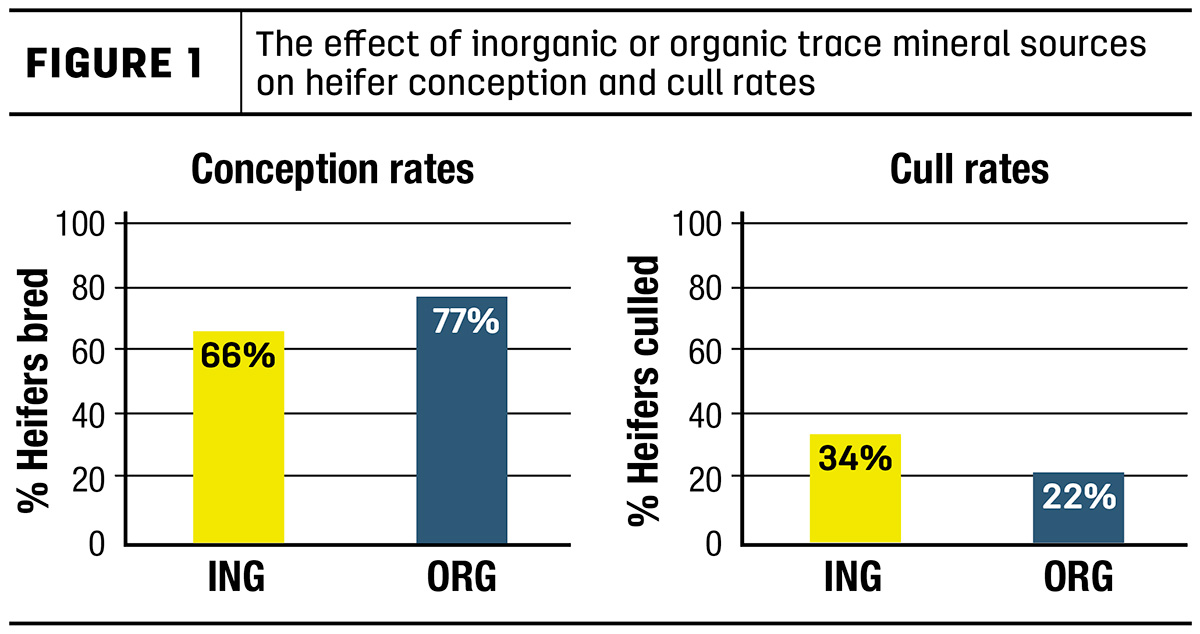
Within the three-year period, heifers supplemented with organic trace mineral sources had a tendency for improved conception rates (66% versus 77%) and a decreased percentage of heifers culled (34 % versus 22%) compared to heifers receiving inorganic supplementation (Figure 1).
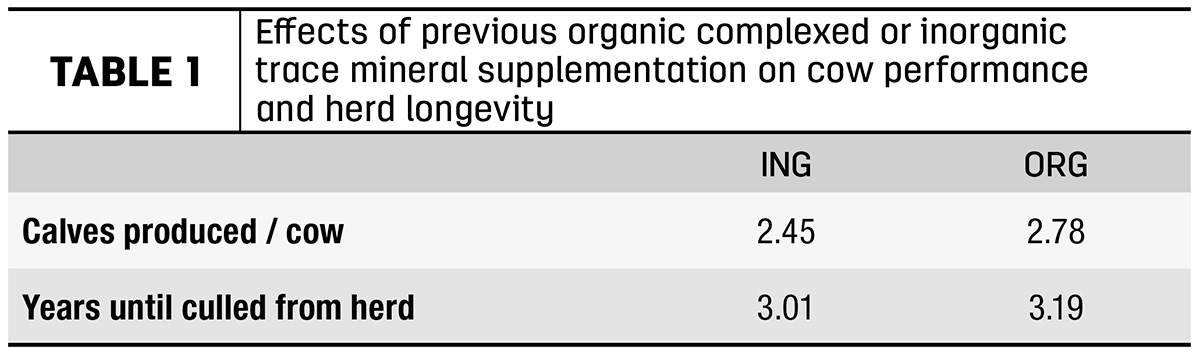
After reviewing herd records for the subsequent years, previous trace mineral supplementation did not greatly influence when cows were culled from the herd or the total number of calves produced per cow (Table 1).
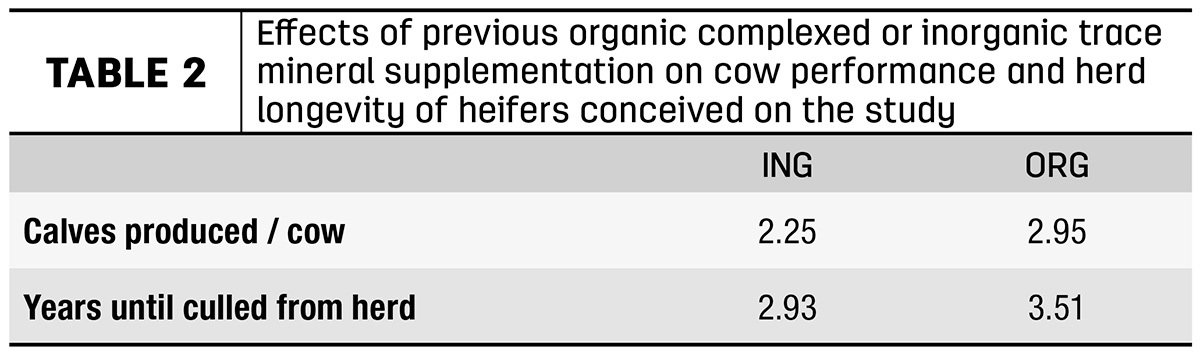
With heifers that were conceived in the study, there were no differences in when they were culled or the total calves produced. However, both averages for the heifers conceived on the organic treatment were greater compared to the inorganic heifers (Table 2).
To conclude, we observed marginal differences in reproductive outcomes when supplementing cows with organic complexed trace mineral sources versus the inorganic alternative source. Inorganic trace minerals have been used in livestock diets and supplements for many years and are still frequently used in the formulation of mineral supplements because they are readily available and lower in cost. Data suggest potential advantages of supplementing organic trace minerals to grazing cow-calf operations for heifer reproductive performance.