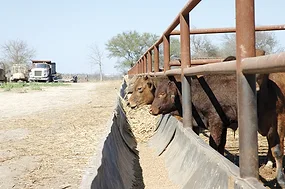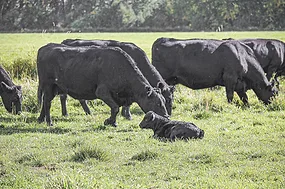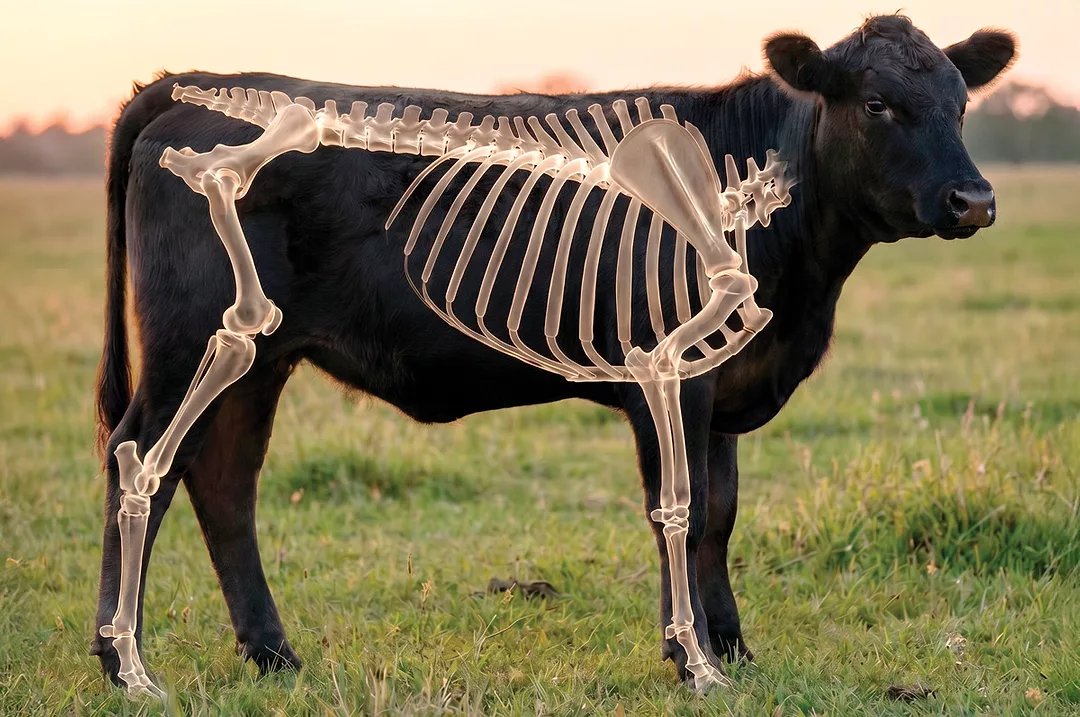
Over time, selection pressure for improved growth efficiency and earlier reproductive maturity in cattle has focused heavily on muscle development, fat deposition and reproductive performance, while the skeletal system is often overlooked. However, these same selection pressures also influence skeletal growth and maturity, making proper bone development critical to overall cattle performance.

The skeletal system not only provides structural support and mobility but also serves as an important mineral reserve for the entire body. In reproductive females, adequate skeletal development is necessary to support pregnancy, lactation and mineral balance. In feeder cattle, bones must mature rapidly enough to support accelerated weight gain and maintain structural soundness. If skeletal growth cannot keep pace with increasing bodyweight, issues such as poor structure and lameness increase in frequency. As modern cattle continue to grow faster and reach maturity earlier, the skeletal system must also develop earlier and more efficiently to support both productivity and long-term soundness. Over the last several decades, advanced skeletal maturity has become increasingly common in beef cattle and, at one point, created significant challenges for under-30-month age verification at harvest.
Prior to 2017, skeletal maturity was the primary method used to estimate the physiological age of cattle at harvest. Determining age was important because it influenced USDA quality grades and how carcasses were processed. Carcasses from youthful cattle, less than 30 months of age (MOA), were handled differently than carcasses from cattle over 30 MOA because younger cattle typically produce a different quality of beef than older animals. Additionally, handling of specified risk material (brain, spinal cord, etc.) is a concern in cattle over 30 MOA, making this age discrimination and accuracy much more important. Skeletal maturity was evaluated using a lettering system associated with estimated age ranges: A (9 to 30 MOA), B (30 to 42 MOA), C (42 to 72 MOA), D (72 to 96 MOA) and E (over 96 MOA).
As skeletal systems began maturing earlier in life, many cattle, particularly heifers, appeared physiologically older than they actually were chronologically. Young cattle that were chronologically less than 30 months of age often graded as B maturity or older based on bone development alone, as conversion of cartilage to ossified bone was accelerated. This resulted in economic discounts at harvest and negatively affected producer profitability. Research later demonstrated that although these cattle exhibited more advanced skeletal maturity, beef quality was not negatively impacted. Based on this evidence, the USDA expanded age determination methods to rely on dentition and/or verified birth records rather than skeletal characteristics. The USDA officially updated grading standards in 2017, helping eliminate many of the financial losses associated with maturity-based grading. Although the grading issue was resolved, the biological trend toward accelerated skeletal development in young cattle remains, and this physiological change persists in our herds.
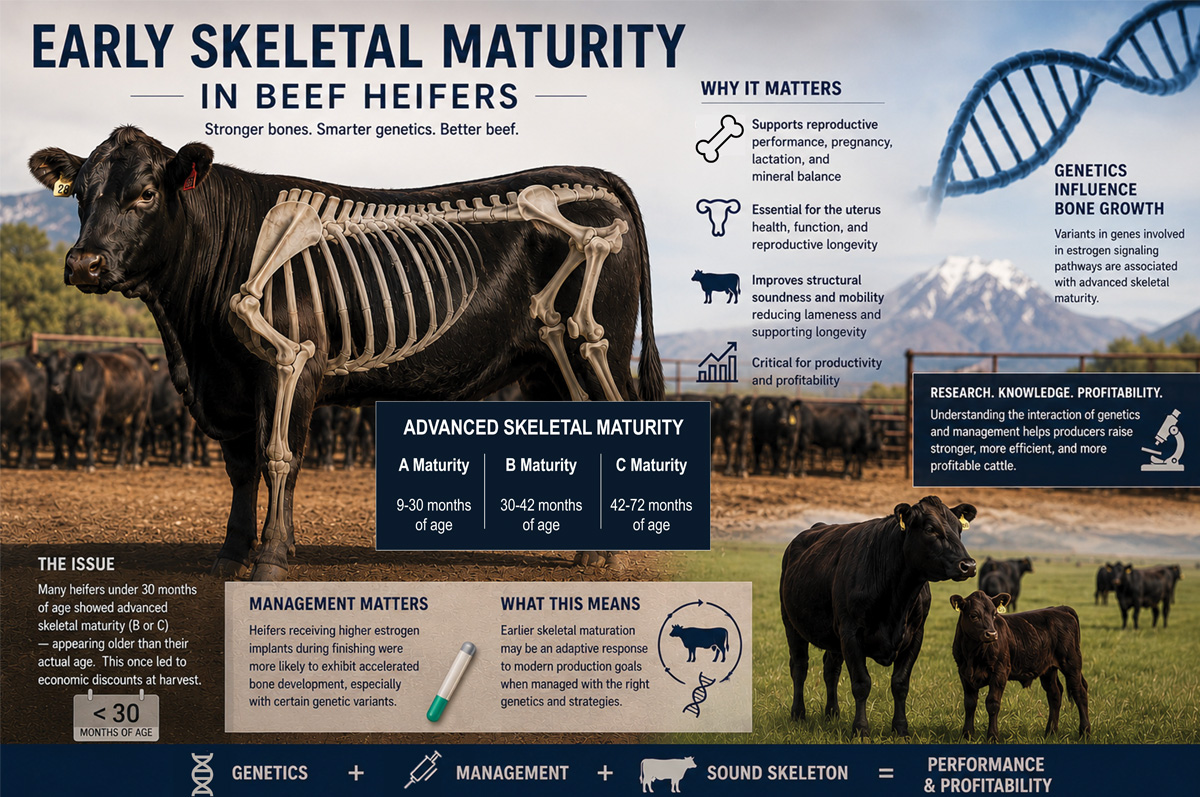
Image by Kimberly Davenport and Katie Shira.
Genetic variants and implants promoting advanced skeletal maturity
With support from two Idaho Beef Council grants, our team investigated genetic and management factors associated with advanced skeletal maturity in beef heifers. This study evaluated 900 harvested commercial beef heifers that were all age-verified by dentition to be less than 30 MOA. Using the previous skeletal maturity grading system, carcasses were selected to include 300 A-maturity, 300 B-maturity and 300 C-maturity heifers. Although some carcasses appeared physiologically as old as 72 MOA based on skeletal characteristics, all animals were confirmed to be youthful by dentition.
Across this population, we identified variants in genes known to be physiologically involved in bone growth and maturation that were associated with cattle exhibiting advanced skeletal maturity. In addition to genetics, we also evaluated implant strategies used during finishing. Heifers receiving implants containing higher levels of estrogen during the finishing phase were more likely to exhibit accelerated bone development, particularly when they possessed certain genetic variants. Many of these variants were identified in genes involved in estrogen signaling pathways, which aligns with the relationship observed between implant use and skeletal maturity. Our findings suggest that management strategies may influence the rate of advanced skeletal development in feedlot cattle. Providing lower estrogenic implants during finishing, particularly in cattle carrying these genetic variants, may reduce the incidence of accelerated skeletal maturity. In addition, custom genetic tests developed and validated through this project provide opportunities to further evaluate these variants and their role in cattle growth and development.
Although advanced skeletal maturity previously created grading concerns, this earlier bone development may not necessarily be detrimental. As cattle are selected for faster growth and earlier maturity, the skeletal system must also develop rapidly enough to support increased bodyweight, reproduction and overall structural soundness. Earlier skeletal maturation may therefore represent an adaptive response to modern production goals. With the changes in age determination at processing plants, it may still be of value to identify the physiological benefits and limitations of early skeletal maturation for producers. These findings also raise additional questions regarding how these genetic variants may influence puberty attainment, reproductive longevity, structural integrity and overall lifetime productivity in beef cattle. Continued research examining the interaction between genetics, management and skeletal development in modern beef cattle herds will help improve our understanding of optimal growth and long-term performance in beef cattle.
This is hopefully another example of how genetics and physiology research may serve the needs of producers and the beef industry at large. Knowledge is powerful when the desire is to continue to produce safe, energy-dense beef of the highest quality for consumers.
References are omitted here but are available upon request by sending an email to an editor.