Home to a few onion sheds, a grocery store and a handful of hometown restaurants, every Wednesday the town becomes Grand Central Station for nearly every cattle operation within 150 miles.

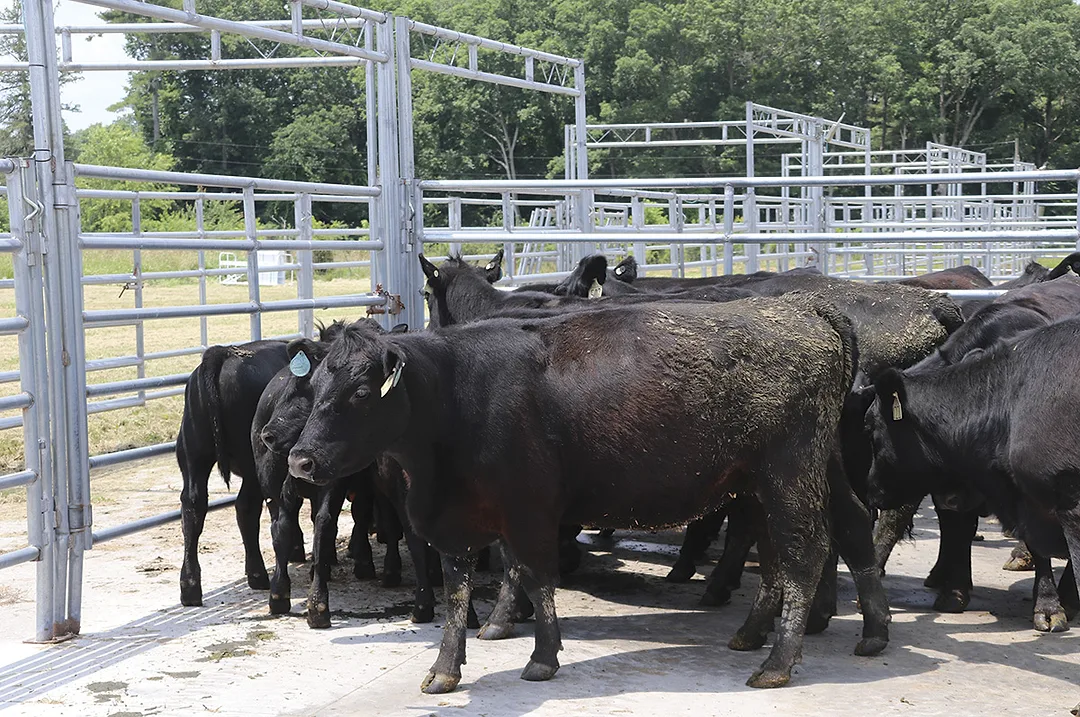
You can stand on the catwalk as the sun comes up in the east and watch cattle pour into a maze of pens and gates, each group waiting its turn to sell. I spent countless early mornings and long days there, running cattle through the vet chute – getting them ready to be sold or processing them before they headed back out into the country somewhere. And it didn’t take long to notice that some cattle would handle the environment better than others that would move through the exact same system.
At some point, that’s where the idea of docility starts to come into play. It’s a term we use a lot, but it doesn’t always mean the same thing, depending on who you ask. Some define it by how cattle act in the chute, others by how they move through a pen, and there’s no question that environment and handling play a role in what we see day to day.
But even with that variation, there’s something consistent underneath it. Some cattle handle pressure better than others – and that difference shows up over and over again.
Part of that comes down to how cattle respond to stress. We know that response is tied, at least in part, to cortisol and the biological systems that drive fight-or-flight. It’s not a perfect measure, but it helps explain why some cattle escalate under pressure while others seem to absorb it and keep moving. Where this starts to matter is in what happens after that initial stress event. They stay reactive, they move differently through the chute, and they tend to be the ones you keep an eye on later. Many producers observe that these cattle may be more likely to require treatment a week or two later. The quieter cattle, on the other hand, process and move on. Over time, you start to notice a pattern. And it’s hard not to wonder how much of that comes down to how those animals handle pressure in the first place.
At a practical level, docility shows up in how cattle move through our operations every day. Cattle that handle pressure well are easier to work, safer to handle and more consistent in how they respond to processing, shipping and routine management. That matters not just from a labor and safety standpoint but from a performance standpoint as well. Cattle that remain calmer tend to maintain intake, recover more quickly after handling and transition more smoothly through stressful periods.
But where it gets more interesting is what’s happening beneath the surface.
Stress is a normal part of cattle production. Weaning, transport, commingling and processing all place pressure on the animal. The difference is in how each animal responds.
Cattle that are more excitable tend to mount a stronger and more prolonged stress response. That response is closely tied to cortisol and other physiological pathways that, over time, can suppress immune function. When that system is engaged repeatedly or for extended periods, it begins to impact how effectively the animal can respond to additional challenges. In practical terms, that means some cattle are less equipped to handle the very moments that put them at the highest risk for disease.
Bovine respiratory disease (BRD) is a good example. It’s rarely just about exposure to pathogens; it’s about how well the animal can respond under stress. Most operations already know this intuitively. The same group of calves can come off the same truck, experience the same weather and receive the same processing protocol – yet some respond differently. Weaning, hauling, weather changes and commingling all converge at the same time. When immune function is compromised – whether through management, environment or the animal’s own biology – the risk increases.
That raises an important question: How much of what we see in terms of health outcomes is tied not just to what cattle are exposed to but to how they handle the pressure leading up to it?
Docility as a genetic trait
While docility is often discussed as a behavioral or management trait, it is also moderately heritable. That means part of what we’re observing is not just situational; it’s built into the biology of the animal. If certain cattle are consistently better equipped to handle stress, maintain immune function and recover from challenges, then those are traits that can be selected for over time. That doesn’t replace good vaccination, nutrition or management, but it may help explain why some cattle consistently respond better within the same environment.
That said, the goal isn’t to select for the most docile cattle possible.
Cattle still need to be functional. Awareness, responsiveness and strong maternal instinct are critical traits in a commercial cow herd, and they shouldn’t be lost in the pursuit of calmer cattle. A cow that fails to protect or properly care for her calf creates a different set of problems that no one can afford to ignore. The goal isn’t passivity – it’s targeted control. Cattle that can handle pressure without overreacting while still maintaining the instincts that matter in a real-world production environment. Thinking back to those mornings on the catwalk, the differences between groups of cattle never seemed random. Some handled the pressure, and some didn’t. The more time you spend around cattle, the more you realize that difference isn’t just behavioral, it’s biological.
And if that’s the case, it’s something we can pay attention to, measure and ultimately select for.
We’ve spent years managing disease through vaccines, nutrition and environment. The next step may be paying closer attention to how the animal itself handles the pressure – because in many cases, the cattle that handle pressure best may also be the cattle better equipped to stay healthy through it.