As someone who grew up in Montana, Wyoming and South Dakota, my first experience with a hurricane was a little traumatic. It didn't help that my introduction to hurricane season was Hurricane Michael – one of the strongest hurricanes ever to make landfall in the U.S.

Growing up, I knew how to deal with blizzards and wildfires. A hurricane, on the other hand, gives you days – sometimes more than a week – to sit around watching weather forecasts and imagining every possible worst-case scenario.
After several years in Florida, I've learned there are generally three types of people when a hurricane is headed your way.
- The "it'll be fine" crowd: They might buy a few snacks and an extra case of Mountain Dew. Their plan consists mostly of saying, "We've been through these before."
- The professional preparer: The moment a tropical disturbance forms, they're stocking up. Despite drinking coffee and sweet tea year-round, they suddenly need 10 cases of water per person. By landfall, they have enough supplies to survive a small apocalypse.
- The panickers: They spend a week saying, "We should probably get ready," then rush to the store the day before landfall to find empty shelves.
In a way, we can compare the New World screwworm (NWS) outbreak to a hurricane. We've known for a while that the likelihood was pretty high that we would have to deal with it. We still aren't certain exactly how it will impact our operations, but it probably wouldn't be a bad idea to prepare in some ways. Most of the information I've seen has focused on identification and treatment. While these things are very important, from a systems-thinking standpoint, producers can and should be doing things right now to prepare their herds and ranches, and depending on your geographical location, some producers have longer to prepare than others.
Infrastructure
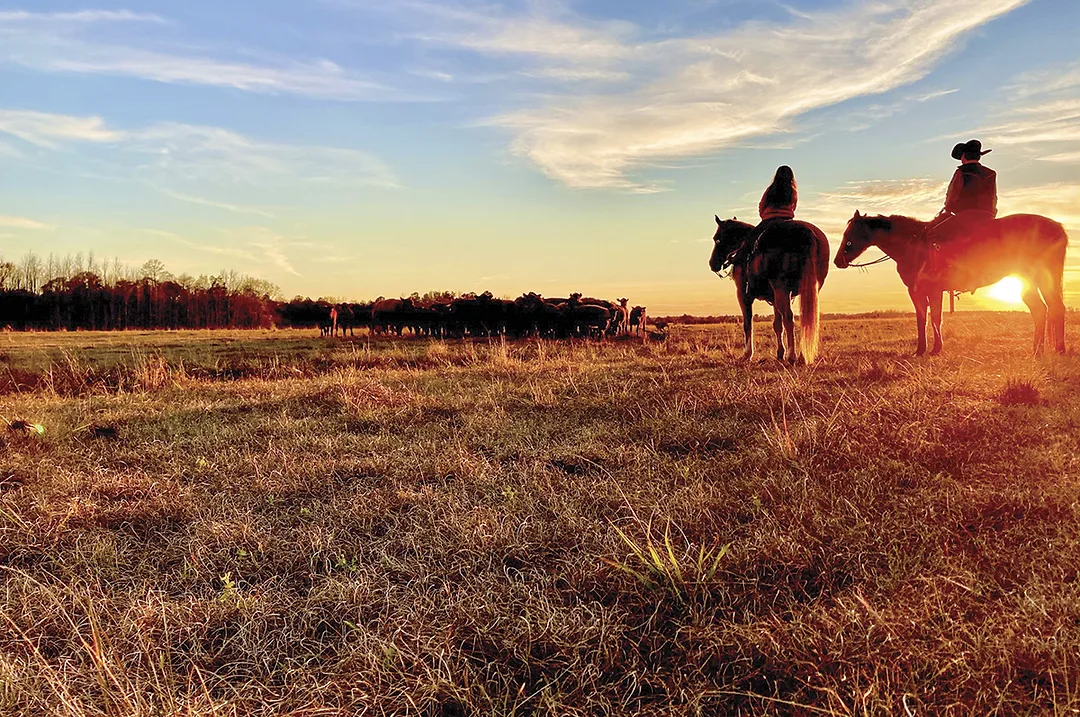
Having infrastructure in place will be critical for treating and managing them in your operation, regardless of its size. This is not something we can treat with an antibiotic and a dart gun in a range situation. You will have to be able to restrain the animal and treat/doctor the wound. If you do not have the ability to treat animals in the pasture, for example, using horses to rope and doctor, how far is it to the nearest chute? Given that infestations and outbreaks are likely to be worse during the hottest times of year, we need to consider how far you would have to drive cattle to a chute/pen to treat them. In some cases, it will make sense to strategically build a small corral or catch pen with a chute in central locations of the ranch.
Other infrastructure considerations would include a quarantine area for infected animals for smaller producers who typically have only one pasture. This should be considered.
Cattle that need treatment are already stressed. Limiting the distance they have to travel to receive treatment will help reduce the impact on performance and speed up their recovery time.
Calving season
According to the USDA, over one-half of operations (54.5%) lacked a defined breeding season, leaving producers without a calving season and newborn calves highly susceptible to NWS infestation via their umbilical cords. Without a defined calving season, year-round calving would be more difficult to manage. Additionally, it would leave calves born in the summer months, when outbreaks are typically higher. By having a defined calving season, especially one in the cooler winter months, producers will be better able to manage success with their calf crops.
Castration
Approximately 21% to 23% bull calves enter the livestock market having not been castrated. This is interesting to think about in our current situation, as we have always received a premium for castrating our male animals – and with castration, regardless of the method used to do so an open wound, this will likely make the market spread between steer calves and bull calves at the market much higher. Stocker calves that need to be castrated are at high risk of contracting the New World screwworm, raising the question of when we should castrate them. I'm not quite sure of the answer yet; my initial thought is that if you're caving during the cool winter months, when the fly population is lower, that would probably be the ideal time to have her perform castration; however, each ranch's situation is going to be different. Our neighbors in South America have shown us that preventive treatments at castration allow healing to occur, minimizing the risk of contracting NSW.
Taking time now to strategically prepare your ranch will alleviate stress if and when NWS finds its way to your operation. Thankfully, this is coming at a time when our cattle industry is strengthened by good markets, and with due diligence and a little extra work, we will be able to overcome this, as we have historically.