In dairy-related news the third week of June 2026:

- Dairy farmers sue the USDA over checkoff program
- Dairy farmers urge action on labor, other issues at congressional fly-in
- Rabobank: Global dairy market heads toward supply slowdown
- Idaho Milk Products expands footprint
- NMPF awards 2026 National Dairy Leadership Scholarship winners
Dairy farmers sue the USDA over checkoff program
Three Wisconsin farmers filed a lawsuit against against the USDA and the National Dairy Promotion and Research Board (Dairy Board) for requiring dairy producers to pay mandatory fees to the dairy checkoff program, which are then used to back environmental, social and governance (ESG) priorities that farmers have not agreed to support.
The plaintiffs allege the funds that are supposed to be used to market and promote milk are being used to fund private, third-party organizations that promote radical and ideologically driven ESG agendas.
“This lawsuit is about protecting the First Amendment and ensuring family dairy farms are not forced to fund ideological speech with which they disagree, as well as ensuring that federal agencies are not overstepping the authority granted to them by Congress,” stated Wisconsin Institute for Law & Liberty Deputy Counsel Rebecca Furdek.
The lawsuit specifically takes issue with checkoff funds backing the Innovation Center for U.S. Dairy, a nonprofit that utilizes public funding to advance ESG-focused initiatives, such as the Net Zero Initiative (NZI), Pathways to DNZ and FARM Environmental Stewardship (ES), which focus on greenhouse gas reduction.
Dairy farmers urge action on labor, other issues at congressional fly-in
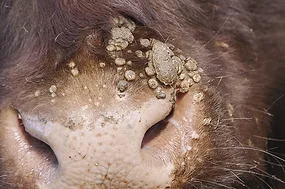
More than 80 National Milk Producers Federation (NMPF) board members and young dairy farmers met with about 100 congressional offices in the organization’s annual fly-in, advocating on behalf of dairy on issues ranging from agricultural labor to the recent return of New World screwworm to the U.S.
The fly-in came after NMPF’s June board meeting, which was highlighted by remarks from Deputy Secretary of Agriculture Stephen Vaden and Ambassador Julie Callahan providing perspective on the agriculture economy and trade landscape.
Other action items NMPF members called for in their meeting included:
- Passing a farm bill through the full Congress in 2026
- Maintaining access to all types of milk in school meal programs
- Passing the Defending Against Imitations and Replacements of Yogurt, milk, and cheese to Promote Regular Intake of Dairy Everyday (DAIRY PRIDE) Act, ensuring integrity in milk labeling
- Urging lawmakers to tell the administration to strengthen dairy provisions while renewing the United States-Mexico-Canada (USMCA) trade agreement.
NMPF also welcomed a new board member, Ted Vander Schaaf of Northwest Dairy Association/Darigold, and a new associate member, Illinois Farm Bureau.
Rabobank: Global dairy market heads toward supply slowdown
Global dairy markets are entering a turning point as rising input costs and geopolitical uncertainty begin to squeeze margins and slow production growth across key exporting regions. After peaking in late 2025, milk supply growth is easing and is expected to flatten in the third quarter of 2026 before contracting later in the year. Food price inflation, including for dairy, is likely to rise in the coming months, adding pressure to farmer margins. According to a new RaboResearch report, the key forward-looking risk lies in escalating input costs, driven by geopolitical tensions, which could further accelerate supply contraction and heighten market volatility.
Global milk production surged through 2025, with year-on-year growth peaking at 5.2% in the fourth quarter, one of the strongest increases on record. However, this expansion is now firmly in retreat. RaboResearch estimates growth of 1.5% in the second quarter of 2026, followed by stagnation and an expected contraction of 1.6% in the fourth quarter. If materialized, this would mark the first quarterly decline since mid-2024 and signal a rebalancing after a prolonged period of excess supply.
Price dynamics have been uneven across the dairy complex, says Lucas Fuess, senior dairy analyst at RaboResearch. “Skim milk powder has been driving the recent price recovery, while cheese and butter markets remain under pressure due to ample supply. Regional differences also stand out. U.S. nonfat dry milk prices have hit record highs, while European milk prices have fallen sharply, putting pressure on farm margins.”
The emerging constraint on dairy supply is not demand but rising costs. Energy, fertilizer and financing costs are increasing across most producing regions, driven in part by continued instability in the Middle East. The unresolved disruption around the Strait of Hormuz is raising uncertainty in global oil markets, with cascading effects on agricultural inputs and feed costs.
Higher costs are already eroding profitability, particularly in Europe where milk prices have fallen significantly over the past year. While some regions, including the U.S. and New Zealand, are seeing relatively stable or supportive milk price outlooks, the broader trend points toward margin compression. This dynamic is expected to play a central role in limiting future production growth.
On the demand side, dairy consumption remains supported by structural trends, including sustained interest in protein-rich products. However, rising food price inflation and weaker consumer purchasing power are beginning to shift buying behavior. A widening gap between higher- and lower-income consumers is likely to influence demand patterns across both retail and food service channels.
In the coming months and into 2027, RaboResearch expects global milk production growth to slow significantly, with the potential for outright contraction in key regions. This outlook is contingent on continued pressure from input costs, alongside uncertain developments in energy markets and geopolitical conditions.
Idaho Milk Products expands footprint
Idaho Milk Products celebrated the ribbon cutting of its new $190 million ice cream and powder-blending facility in Jerome, Idaho, marking a significant expansion of its operations and reinforcing its position as a leader in value-added dairy ingredients.
Designed with advanced technology and precision processing, the new integrated facility enhances the company’s ability to deliver exceptional quality, consistency and innovation across an expanded portfolio of dairy products.
The facility supports a wide range of production capabilities, from premium ice cream novelties to bulk formats and custom dairy formulations. Idaho Milk Products can produce up to 54,000 novelty ice cream items per hour, including stick bars, sandwiches and cones, with options for variegates, inclusions and dual coatings. In addition to novelties, the plant offers high-capacity bulk manufacturing, producing up to 14,400 pints per hour or 7,200 48-ounce containers per hour. Flexible packaging options range from 3-ounce servings to half-gallon containers, allowing for tailored solutions that meet precise customer specifications.
Complementing its ice cream capabilities, the facility features advanced dry blending systems capable of processing up to 16,000 pounds per hour, delivering consistent, dairy-based ingredient solutions tailored to specific food applications. With flexible batch sizing, integrated sifting and high-speed filling, and a diverse ingredient portfolio, Idaho Milk Products supports custom formulations designed to meet functional, performance and market requirements.
NMPF awards 2026 National Dairy Leadership Scholarship winners
The NMPF board of directors selected five graduate students, conducting research that benefits dairy cooperatives and producers, to receive scholarships as part of the 2026 NMPF National Dairy Leadership Scholarship Program. Scholarship recipients include:
- Pari Baker is a doctoral candidate at Case Western Reserve University in the department of microbiology and molecular biology, molecular virology program. Her research analyzes the host determinants of susceptibility to HPAI virus in mammary epithelial cells.
- Haowen Hu is a doctoral candidate studying animal science at Cornell University. His research explores the advancement of whole-farm environmental modeling in U.S. dairy systems through model evaluation and field-based refinement.
- Gabriela Alejandra Macay Hernandez is a doctoral candidate studying animal science at University of Florida. Her research focuses on unraveling the effects of semen components on endometrial and oviductal responses and their impact on embryo development, fetal development and postnatal offspring performance.
- Vaishali Poswal is a doctoral candidate studying dairy manufacturing at South Dakota State University. Her research focuses on environmental listeria persistence and biofilm formation in dairy microbial communities, as well as development of an antimicrobial peptide bio-sanitizer for enhanced control.
- Jayden Scott is a master’s student studying food science at Washington State University. His research explores the correlation of the microbiome, proteolysis and flavor development in white cheddar cheese varieties.