Modern dairy herds are producing more milk than ever before, while reproductive management strategies continue to evolve as producers balance production, fertility, health and longevity. One of the most debated questions in modern dairy management is whether extending lactations and delaying conception can improve profitability in high-producing cows.

Traditionally, dairies have targeted calving intervals near 12 to 14 months because maintaining more cows near peak lactation maximizes milk sold per day of life. However, modern Holstein cows are more persistent, produce higher volumes of milk and often remain profitable longer into lactation than cows from previous generations, leading some producers and researchers to question whether all cows benefit from aggressive rebreeding strategies.
Understanding these interactions requires looking beyond pregnancy diagnosis alone and examining how reproductive timing influences the biology of the next lactation. Days open and dry period length affect far more than reproduction, influencing metabolic stress, body condition, transition success, future milk production, fertility and ultimately long-term herd survivability.
Rethinking ‘days open’ in the modern dairy cow
Longer days open are commonly associated with higher milk production. In practice, higher-producing cows are often given more opportunities to conceive and remain in the breeding program longer than lower-producing herdmates. This creates an important distinction between association and causation. Are cows producing more because they remain open longer, or are cows remaining open longer because they are more productive and therefore retained?
Part of the perceived benefit of extended lactation comes from delaying the suppressive effects of pregnancy on milk production. As gestation progresses, nutrients are increasingly redirected toward fetal growth, especially during the final trimester. By delaying conception, cows may maintain milk production for a longer period before experiencing this biological shift.
Proponents of extended lactation argue that delayed breeding may offer several advantages:
- More time for cows to recover after calving
- Greater opportunity to resume ovarian cyclicity
- Reduced frequency of stressful transition periods
- Less milk at dry-off
- Potential improvements in welfare and labor efficiency
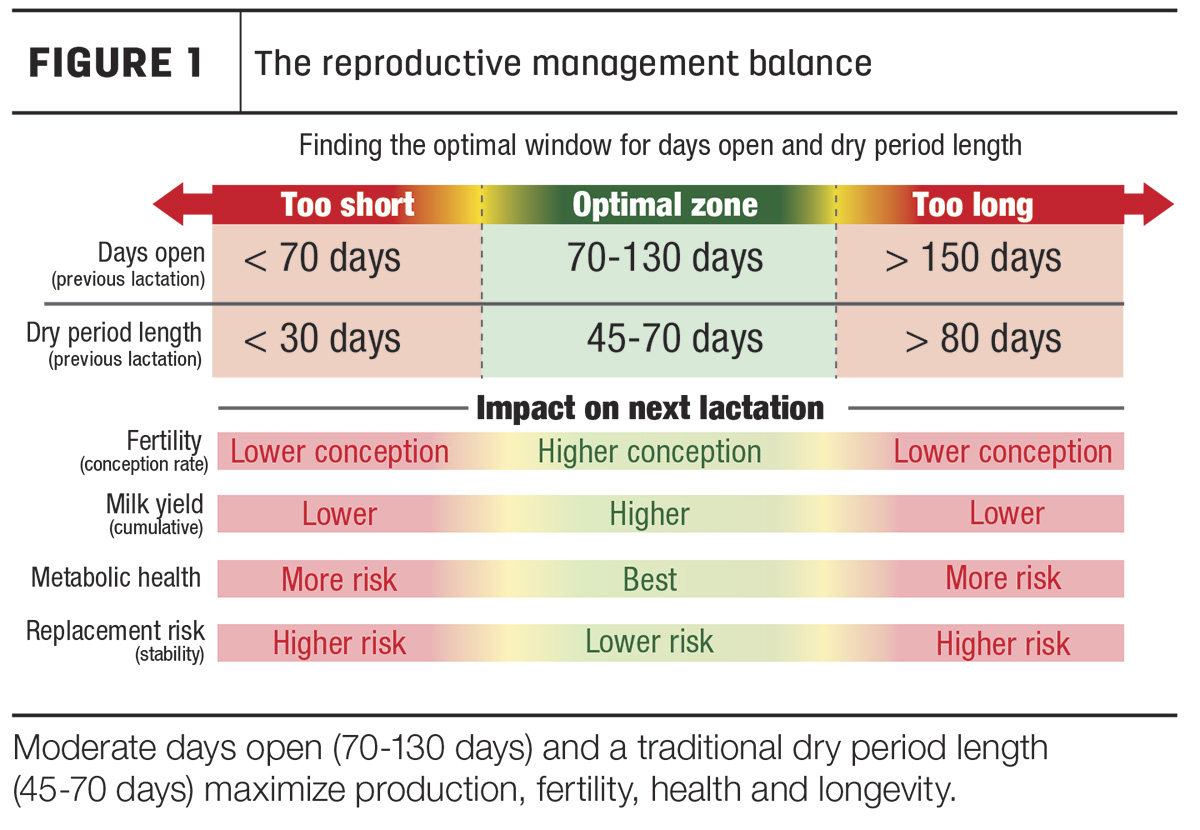
These concepts have received increasing attention in modern high-producing dairy herds with persistent lactation curves. However, delaying conception also carries important biological risks. Cows that remain open too long often spend extended periods consuming high-energy lactation diets while milk production gradually declines. This increases the likelihood of excessive body condition gain late in lactation. Overconditioned cows entering the dry period are at greater risk for fatty liver, ketosis, impaired immune function, poorer fertility and early-lactation metabolic disorders during the next transition (Figure 1).
Additionally, prolonged lactations may reduce total milk produced per day of life and increase variability in reproductive performance across the herd. What initially appears profitable from a milk perspective may create hidden carryover consequences in the following lactation.
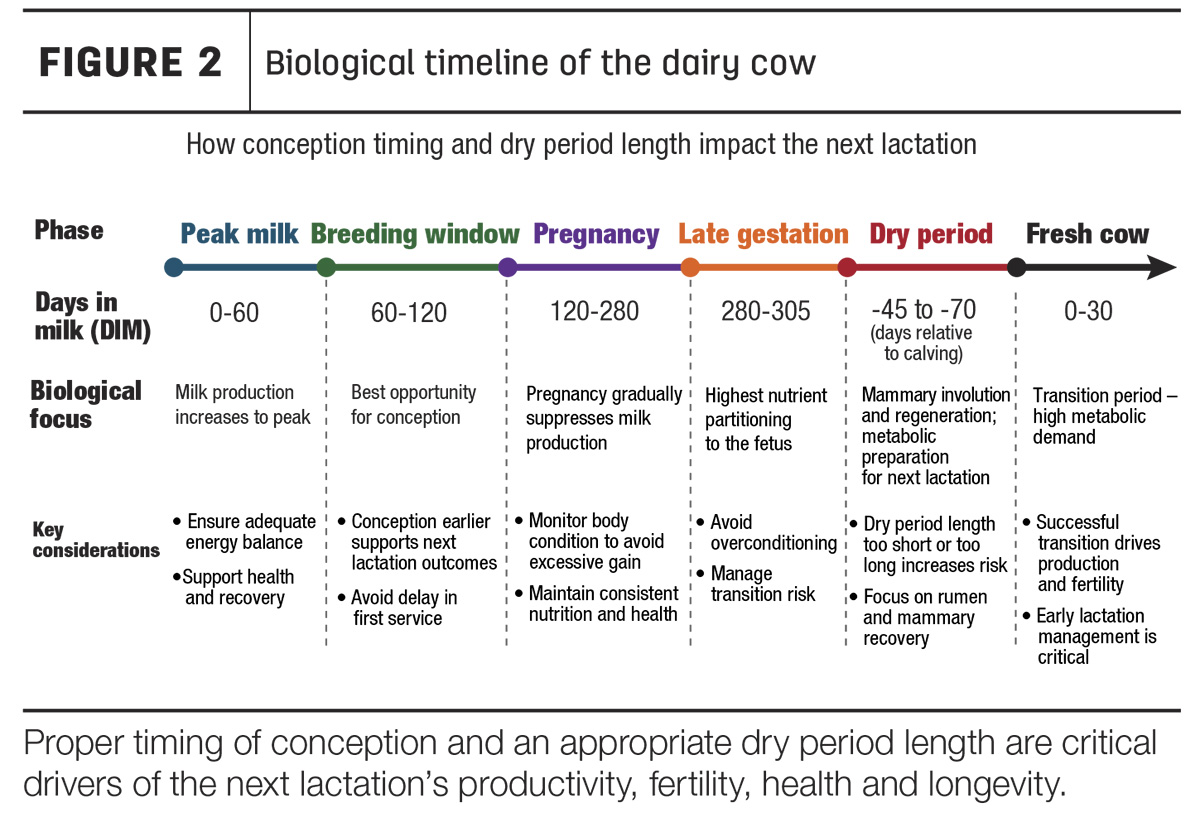
The dry period is critically important because it represents the biological bridge between one lactation and the next. Most evidence continues to support a dry period of approximately 45 to 70 days, with many herds targeting around 60 days to support mammary regeneration, colostrum development and metabolic preparation for the subsequent lactation.
Short dry periods may improve early-lactation energy balance and metabolic health because cows generally produce less milk after calving and experience reduced negative energy balance. However, excessively short dry periods can compromise mammary cell renewal and reduce subsequent milk yield, whereas excessively long dry periods are associated with elevated replacement risk, impaired fertility, excessive body condition gain and metabolic dysfunction.
The interaction between extended days open and dry period length is especially important. Cows that conceive late may experience declining milk production before the planned dry-off date, resulting in unintended prolonged dry periods. These cows may enter the dry period overconditioned and remain dry too long, compounding metabolic risk during the subsequent transition period (Figure 2).
The increasing interest in extended lactations has prompted researchers to evaluate whether these strategies truly improve long-term productivity and survivability. These biological questions were recently evaluated in a large retrospective study by Overton and Eicker involving more than 109,000 Holstein cows from 60 intensively managed U.S. dairy herds. The authors investigated how previous lactation days open and dry period length influenced milk production, fertility and replacement risk during the subsequent lactation.
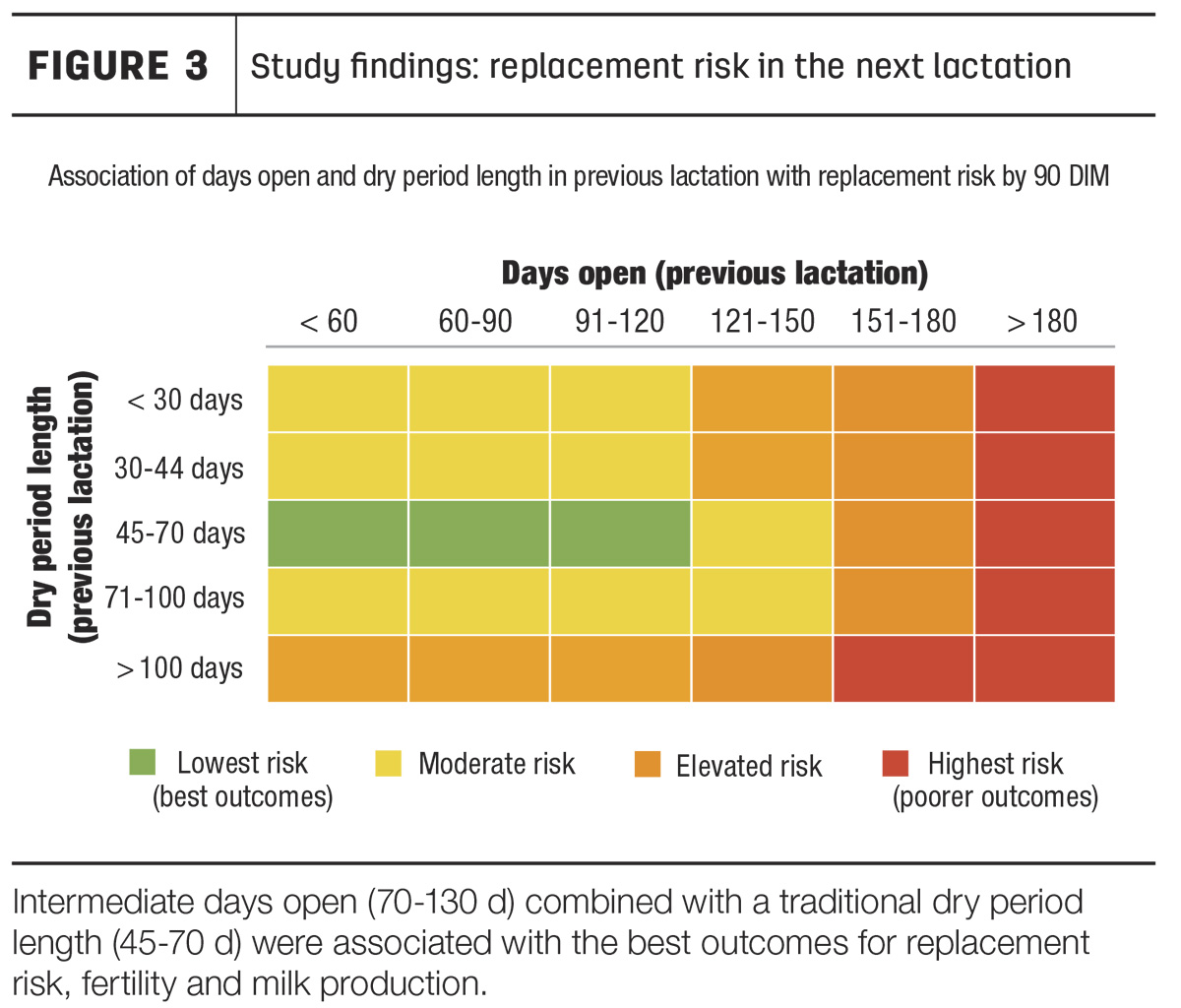
The findings were highly relevant for commercial dairy management. Longer days open in the previous lactation were consistently associated with increased replacement risk during the next lactation. Additionally, dry period length demonstrated a curvilinear relationship with performance. Both excessively short and excessively long dry periods increased the risk of early removal from the herd, while intermediate dry periods produced the best outcomes (Figure 3).
The study also demonstrated important effects on milk production and fertility. Lower previous-lactation days open generally resulted in greater cumulative milk production through 90 days in milk (DIM) in the subsequent lactation, particularly in mature cows. First-lactation cows appeared to tolerate slightly longer open periods better than older cows, possibly due to continued body growth.
Fertility outcomes followed similar patterns. Cows with lower previous-lactation days open and more traditional dry period lengths were more likely to become pregnant by 90 DIM, while the negative effects of prolonged days open became progressively worse with increasing parity.
The study also reinforced the substantial carryover effects of health events. Mastitis, lameness and twin pregnancies negatively affected survivability, production and fertility in the subsequent lactation, with twin pregnancies having particularly detrimental effects.
Importantly, high-producing cows were not immune to the negative consequences of excessive days open. Although greater milk production was generally associated with lower replacement risk, that protective effect diminished as days open became excessively prolonged. The authors ultimately concluded that cows should generally be managed to conceive earlier rather than later while maintaining a traditional dry period length to improve production, fertility and survivability in the subsequent lactation.
Take-home messages
The discussion surrounding extended lactation should not be reduced to whether longer or shorter calving intervals are inherently better. The real objective is biological and economic optimization.
The most profitable reproductive strategy is rarely the most aggressive or the most permissive. Successful programs align days open, dry period length, body condition, health status and genetic potential with the biological needs of the cow. In modern dairy systems, reproductive efficiency should not be viewed solely as a pregnancy metric but as a long-term driver of productivity, survivability and herd profitability.
References omitted but are available upon request by sending an email to the editor.