At no time in the history of livestock agriculture have producers been more efficient at producing beef than they are now. Just in the past half-century, global beef production has nearly doubled, despite a historically small herd size. At a time when public pressure continues to mount for farmers and ranchers to continue feeding a growing population while decreasing their environmental impact, these are immensely encouraging statistics.

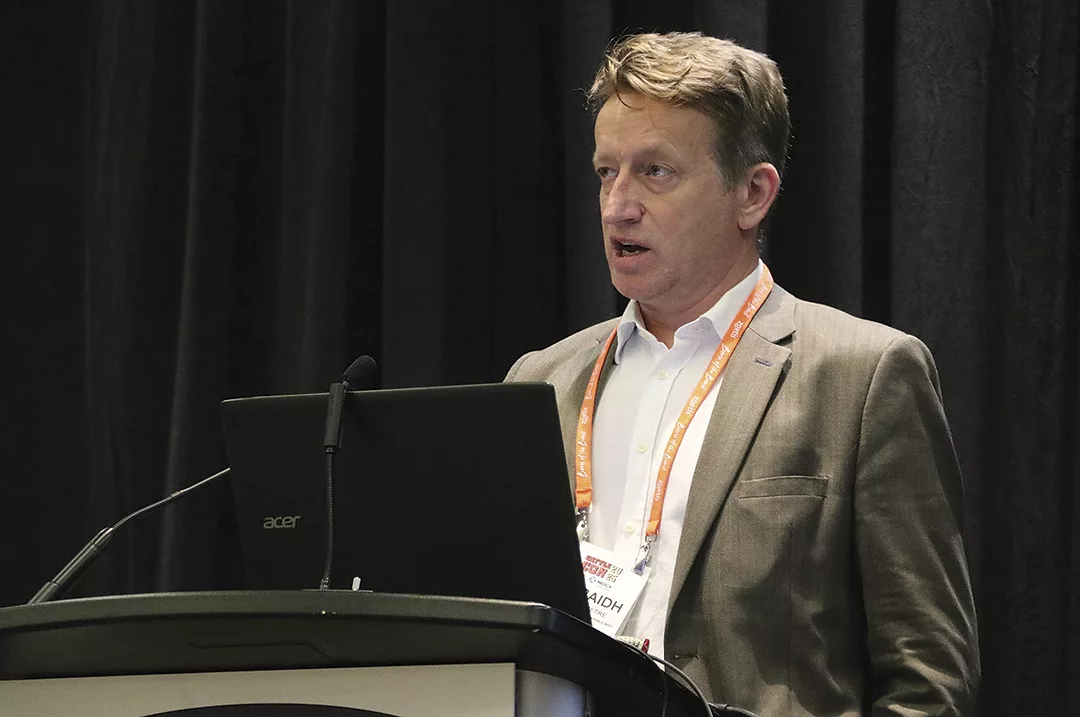
“The U.S. herd is very low at the moment – maybe too low for some of you – but your productivity is unmatched,” Ruaraidh Petre, executive director of the Global Roundtable for Sustainable Beef (GRSB), said during a Cattlemen’s College session at NCBA’s CattleCon in San Antonio. And while the U.S. leads the way, we’re not the only ones producing more from less. Petre pointed out that Brazil, for example, has seen steady growth in both beef and soybean production, even as deforestation rates have plummeted.
The primary goals of GRSB, Petre told attendees, are to see the global beef industry lower its emission intensity (measured as total carbon emissions per pound of beef) by 30% by 2030, and to have a defined pathway to climate neutrality for the industry by that time. The question, of course, is how to make those goals reality. With a vast majority of the world’s agricultural land suitable only as rangeland, the cattle industry can have a major impact. Petre pointed to two areas of focus that he believes will go a long way in determining what can be achieved. The first is animal health and welfare; the second is genetic improvement.
Petre shared the results of a recent study conducted by GRSB that produced some truly eye-opening data about the relationship between vaccinations and environmental sustainability. Among them:
- A 60% global vaccination rate for beef cattle correlates to a 52.5% increase in productivity – equivalent to the beef consumption needs of 3.1 billion people.
- Globally, a 40% global vaccination rate for cattle in a given year is associated with a 5.2% reduction in land required for production.
Unfortunately, access to livestock vaccines is a huge barrier to a lot of producers in Africa and Asia, where about two-thirds of the world’s large domestic ruminants are. Petre said GRSB is working to increase access to those producers. They also promote producer education in North and South America, Europe and Australia on best practices for animal health and welfare, such as sanitation and bunk space.
“Good animal welfare aligns with your financial interests,” he said. “If you’re not looking after the welfare of your cattle, a lot of the practices you’re doing for health are going to waste, anyway.”
In the realm of genetic selection, Petre praised the beef and dairy industries for the work done to make beef-on-dairy breeding a practical and successful endeavor. The swine and dairy industries have made more genetic progress than the beef industry on sustainability, but we’re gaining ground.
“Beef-on-dairy has given us a huge advantage in sustainability terms,” he said. “If you’re getting good beef genetics into those dairy cows, it’s better money and less [environmental] impact overall [to produce that amount of beef].”
Petre also addressed the potential to develop a beef herd that emits fewer greenhouse gases. Studies have shown that genetic selection for low methane production could reduce emissions in a herd by as much as 1.5% per year – a not insignificant amount. But is that investment worth it for an individual producer? As yet, there’s little to no financial incentive for a producer to gather and track that data, so it’s not usually going to pay for itself. However, Petre says, history suggests the industry will continue to trend toward more provable sustainability.
“Everybody is going to have a different reason for selecting the cattle they’ve got,” he said. But with the financial viability and success of an operation so closely linked to its environmental sustainability, Petre believes those selections can only improve producers’ standing in the eyes of the consuming public.
“Better health and genetics means a smaller supporting herd for the amount of beef produced,” he said, “which means a smaller footprint and the opportunity for more nature-positive production.”