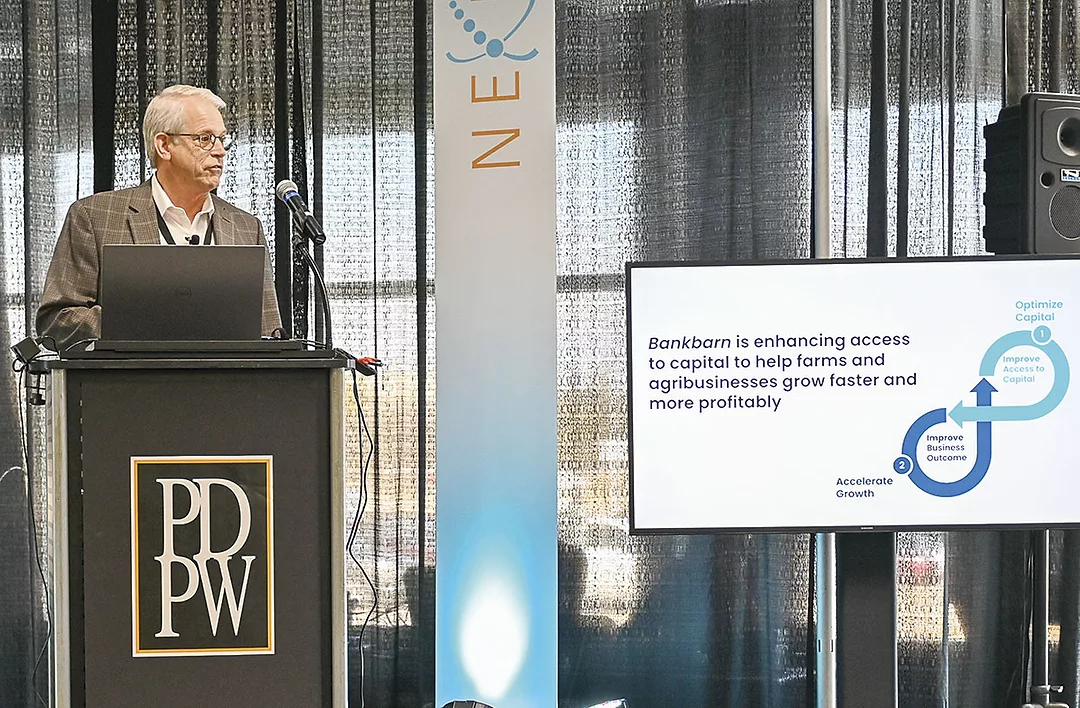
A new digital platform to access capital aims to quickly finance dairy farm projects up to $2.5 million in value and do so in days, not weeks. The company BankBarn delivers pre‑approval for loans within hours and provides transparency to producers about the lending process.

“Farm finance is somewhat of a black box,” says Dan Little, business development manager for BankBarn. “If a farmer needs something, they contact their banker, tell them what they need and then sometime in the future, they find out if they can buy it. That doesn’t help producers much if rejected. They wonder, ‘What did I do wrong? What should I improve?’”
Little says BankBarn is changing that.
Producers can complete an online application for preapproval with the new company in 15 minutes. The platform uses a scorecard process based on credit score and farm financial data to evaluate a farm’s repayment potential. Within minutes after providing initial data, a producer will receive a BankBarn credit score and response from the bank evaluating the strength of their farm’s financials. The credit scoring system goes from zero to 100 and categorizes applicants based on a traffic light color system. Green scores above 80 may be eligible for preapproved. Yellow scores between 60 and 80 may require additional information to be approved. And red scores below 60 have some work to do before being eligible for a loan. An applicant’s FICO credit score will not be negatively impacted if seeking preapproval, as the online bank’s financial evaluation doesn’t involve checking with the three major credit bureaus.
The digital lending platform’s algorithm completes the first review of an application quickly. And then a small team of humans further reviews applications. “We don’t have to go through multiple committees to make a determination,” Little says.
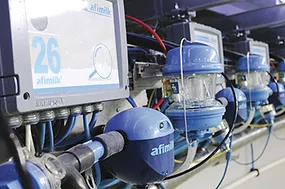
“The whole goal of what we’re doing is to be able to fund projects that have high return on investment,” Little says. “A lot of technology available today has a very high return on investment, such as activity monitors, milk meters, robotic feed pushers, etc. Installing these often increases a farm’s return on equity. We’re excited about working with producers and equipment providers to help finance new technology adoption.”
The platform already has partnerships with 15% of the U.S. dairy equipment market. When making a loan, its capital partners take liens on the equipment involved. It does not take liens on land or other buildings on the farm.
The startup company also has a “buy now, pay later” program to fund maintenance and service contracts. This allows farmers to plan for expected maintenance on new or current equipment, pay a dealership for the service and have farmers pay a flat monthly amount to repay the amount. Little says many producers prefer having these type of bills paid for monthly rather than in large payments at various times of the year.
“This is a way to level out cash flow for the farm,” Little says. “In many cases, this type of maintenance program would be issued at 0 percent interest because it would be financed in partnership with the dealer or OEM.”
Little says the new digital lending platform doesn’t have any project financing caps. A $2.5 million threshold is the amount the platform will promise for “fast” pre‑approval. Loans of greater value may be possible for those who provide additional financial information or through co-op financing with other lending institutions. Little explains that often local banks want to lend in their communities but can’t take on the entire risk of a project. This is where the platform as an independent aggregator of capital may be able to pull together financing sources from multiple entities to fund larger projects.
“We can bring funds from multiple sources together to help get a project financed that one particular entity may not be willing to finance themselves,” Little says.
Because the startup has an angle toward lending for technology installations, it gathers data as part of its finance process to validate the technologies that produce a high return on investment. This reinforces the bank’s ability to make more of those kinds of loans.
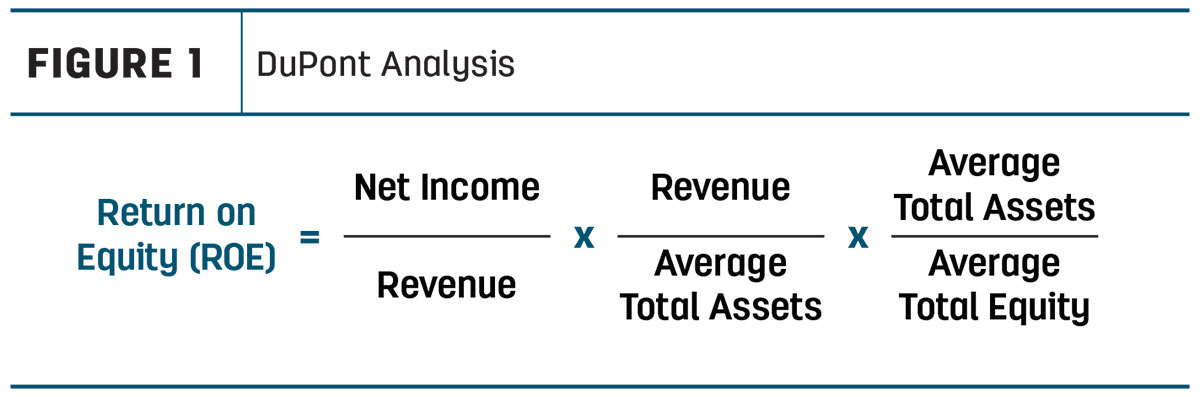
“It looks at return on equity as a measure of profitability, times your asset turnover, times your leverage,” Little says. “The key parameters that are taken into account are net income, revenue, total assets and total equity as illustrated by the DuPont equation” (see Figure 1). The Dupont Corporation developed the formula for evaluating the financial health and return on investment for businesses in different industries in the 1920s.
“We are also ingesting data from the farm and integrating financial and production data into a one- to two-page monitor report that looks at changes in EBITDA or cash flow within four to six weeks after a project has been completed,” Little says. The monthly monitor is also available as an ongoing report.
“Overall, we offer a digital lending platform that helps to improve transparency in the lending process and also allows producers to acquire capital for projects that have an incredibly high return on investment but may not be part of the overall financing model that they currently have,” Little says. “We are all about accessing capital to support technology implementation.”