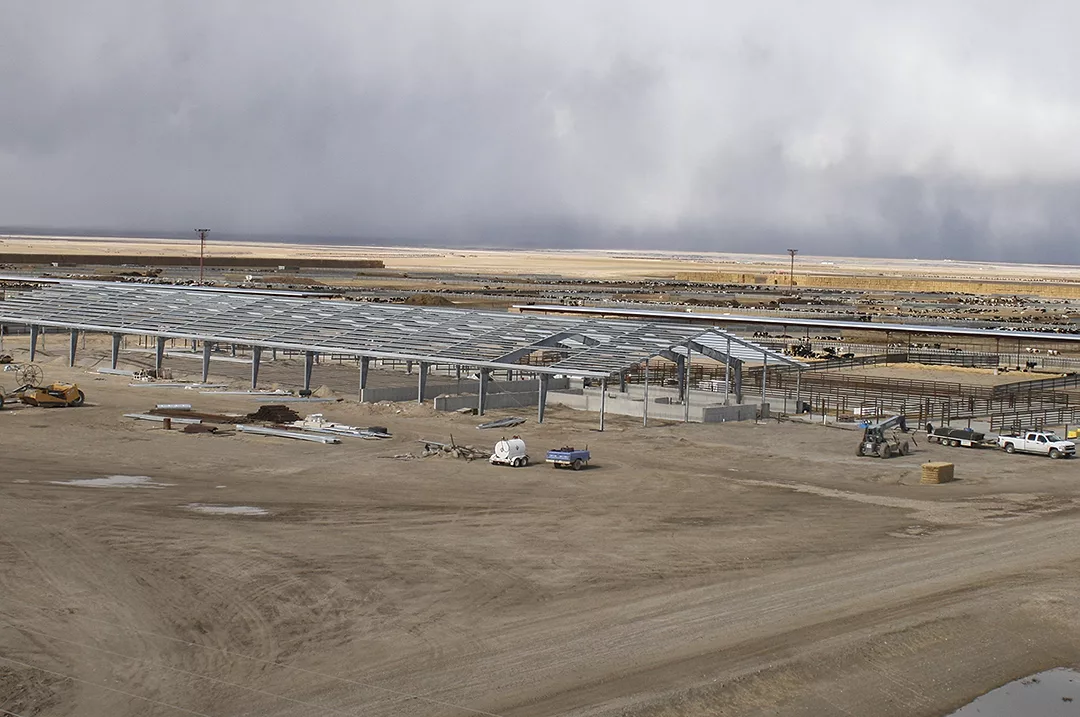
Deciding to expand a dairy operation is a major milestone for any dairy farm family and their management team. However, this decision is often just the first step in a multiyear planning process. The primary objective of most expansions is to maximize and coordinate the milking facility, herd, team, crop and feed enterprises, and manure management to create a more efficient and profitable business. A well-conceived and coordinated plan is essential for a successful expansion that achieves the dairy family's objectives. Here are key areas to address and implement.

Succession and transition
Expansions often coincide with family members and key managers assuming greater leadership roles. Clearly defining these roles and responsibilities within the plan ensures everyone understands their focus. If a senior generation is involved, they may need to defer payouts to support the expansion investment. These discussions should occur upfront to avoid surprises and conflict later.
Single-site or multi-site
While most expansions occur at the existing site, purchasing a second site as other dairy farmers retire is worth considering. A second site might be less expensive than new construction and could provide access to additional milk processing capacity. A key consideration is whether parlor capacity and labor productivity can be maximized at multiple locations. If the current milking facility has room for more cows or needs updating/replacement, focusing on a single site is likely preferable. If the current parlor is at capacity and the management team is strong, a second site might be an effective option.
Processor alignment
A crucial factor in increasing herd size and milk production is ensuring the farm's milk processor has the capacity for the additional milk. Early discussions with the processor are essential to confirm alignment on increasing milk production, storage, hauling, component targets and pricing.
Design and contracting
Most dairy farmers have a preliminary design layout in mind. Engaging with various contractors and vendors can refine these ideas and ensure competitive bidding. Farmers should be receptive to different ideas and feedback while ensuring the design aligns with their objectives. Establishing capital cost parameters upfront with contractors helps manage cost expectations.
Financing
Early and frequent communication with the lender is critical for a workable plan. Expansions are capital-intensive, so the farm must start from a position of financial strength in equity and working capital. A period of negative cash flow is typical during expansion as cow flows are disrupted, and labor and operating costs increase before additional milk production and income are realized. This negative cash flow must be factored into the financing analysis to prevent over-leveraging or funding shortfalls during construction and startup.
Cow procurement
Planning for additional heifers and cows has become more challenging due to limited heifer inventories resulting from the growth of beef-on-dairy. Waiting until construction is complete to purchase cows on the market can be difficult and expensive. Dairy farms planning expansions might increase their use of sexed semen two to three years before construction to produce more heifers. While this is a reasonable plan, it will decrease beef-on-dairy calf sales and increase heifer-raising expenses before the additional milk production goal is achieved. Planning for the cash flow impact of raising these heifers is essential.
Public relations
This involves outreach to neighbors and the local community, as well as obtaining necessary permits from regulatory agencies. Early engagement is crucial. Sharing plans and goals with neighbors can build support during the permitting process. Depending on the expansion's size, permitting can take 12 to 18 months. Engaging professional advisers and consultants to assist with permitting is often highly valuable.
Preparing for an expansion is an exciting time for dairy families, offering the prospect of managing in new facilities with improved comfort, productivity and efficiency. Careful coordination of these factors within an organized plan is more important than ever as the cost and complexity of expansions increase. A well-defined business plan as a roadmap, along with monitoring an established completion timeline, will help ensure a successful expansion.
This article is provided for information purposes only. Readers should consult their own professional advisers for specific advice tailored to their needs. Information contained in this article may be subject to change without notice.