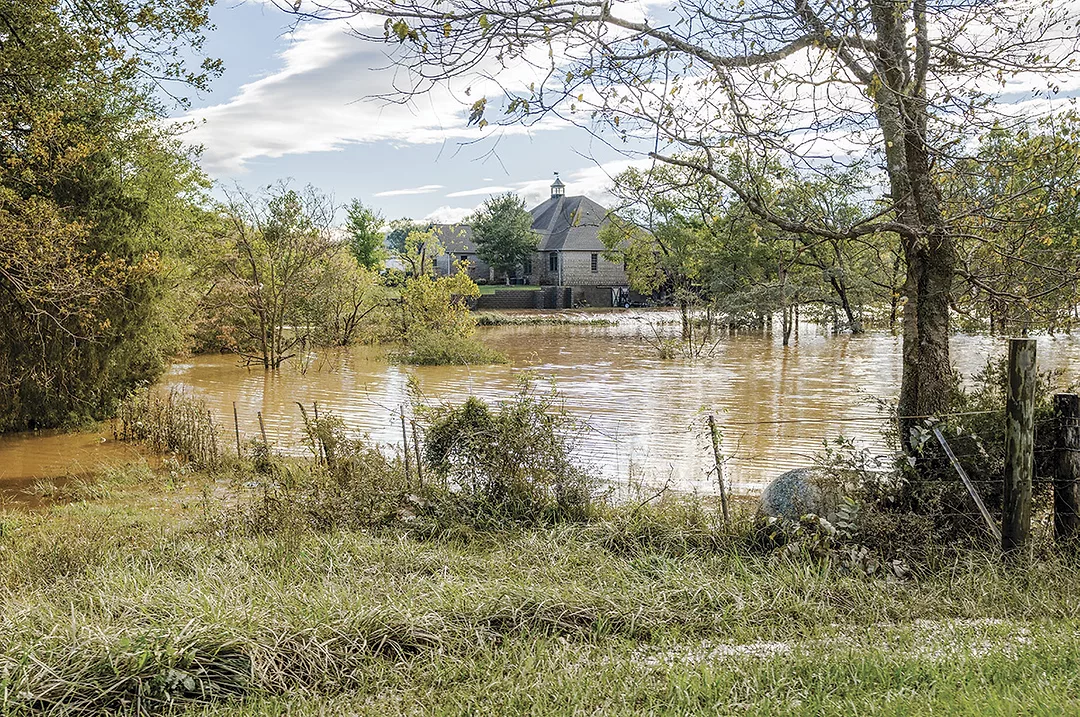
When considering environmental stress, we generally think in terms of the heat of the summer or cold in winter, both of which can be challenging. But what if that stress goes to a whole new level? In recent months and years, we have seen very difficult situations like wildfires (not exactly environmental but exponentially worsened by dry weather and high winds) and severe storms such as hurricanes. This is a story about one such event.

Most folks may recall that in September 2024, the southeastern U.S. was hit by Hurricane Helene, a Category 4 storm that made landfall in Florida’s Big Bend area with 140-mph winds. It crossed Florida and came up through Georgia, South Carolina, North Carolina and eastern Tennessee, causing numerous fatalities and billions of dollars in damage. We are still hearing about the recovery efforts across much of the region, particularly areas of North Carolina devastated by flooding.
And while we commonly hear about the lives lost and the massive property damage, we typically don’t hear much about the effects on livestock producers, particularly cattle operations. It’s not uncommon to hear about extensive damage to hog barns and poultry houses, but cattle, generally, have very little shelter from a storm of this nature, except for trees and brush. Some farms may have sheds or windbreaks, but this is not terribly common, especially for larger herds.
One area affected by the storm was in western South Carolina. The areas around Seneca and Clemson are covered with small to medium-sized cattle operations. One of these is Little Cane Creek Farms, owned by longtime cattle producer Pat Williams, who is heavily involved in the area’s ag industry, including serving as president of the Oconee County Cattlemen’s Association. He is a conscientious manager and takes very good care of his herd. This is reflected in his breeding and calving performance during normal years. In the fall of 2023, Williams calved 100% of his herd in 70 days, from mid-September to Dec. 1. This is not an atypical performance for his operation.
In the fall of 2024, this was a somewhat different story. While he did calve all but one cow during his fall calving period, the results were not as good. Helene hit the area on Sept. 29, bringing heavy, sustained winds and driving rain. Fortunately, no mature animal losses took place on the farm. However, about three weeks after the storm, in the middle of his calving period, Williams started seeing calves born dead or very premature – approximately 30 to 40 days with very light birthweights (around 25 pounds), no hair, blind or partially blind. This occurred about the middle of the calving season and affected 20% of his calf crop. Even without current market conditions, this has huge economic effects.
Postmortems showed no obvious effect from infections, toxicities, nutritional deficiencies or other causes. These cows and the affected calves were in different pastures, so it is unlikely it was from something consumed. They were not subjected to flooding conditions, so it is unlikely they were exposed to anything that might have made its way downstream in high water. To date, no specific cause has been determined. Other herds were similarly affected.
In Williams’ case, the very light birthweights could suggest that the cow’s body initiated labor several weeks prematurely when the fetus was still in the growing and developing stage. The question is: What was the trigger that prompted these early deliveries? Stress impacts the reproductive system by influencing body temperature, metabolic hormones and the hypothalamus-pituitary-adrenal (HPA) axis. Additionally, stress can impair the uterine environment, embryo development and maternal recognition of pregnancy, increasing the risk of embryo or fetal loss.
Patty Scharko is a professor and extension field veterinarian with Clemson University in Columbia, South Carolina. She also heard of some of the losses producers in the area suffered after Hurricane Helene. Surprising to her was that more cases were not reported to her office. However, she acknowledged this was not necessarily unusual, as cattlemen are a pretty self-reliant group.
Scharko observed that in cases like this, the stress can certainly take a toll on cattle herds exposed to the extended effects of the storm. She does not disagree that this significant environmental stress could have a direct effect on certain pregnancies. She says it is also not uncommon in situations where high winds can blow down trees that cattle can gain access to materials such as acorns (which have high tannin levels) from oak trees or other plants such as chinaberries, which are also known to be toxic. However, reviewing the literature, it is unclear if consuming these plant materials might affect the unborn calves or pregnancies.
Justin Martin of Martin Veterinary Services in Pelzer, South Carolina, worked directly with a number of herds similarly affected. His initial assessment has been that much of what was observed may have been a reaction to a toxin of some type that may have entered the pasture environments from the excessive wind and rain of the storm. But he said he could not discount the direct possibility of the stress effects on a pregnant cow in this situation.
While the actual causes of the calf losses in the area remain unclear, it is obvious that the stress of the storm very likely contributed to this unfortunate situation of so much pregnancy loss.
This is the second of a two-part series by Stephen B. Blezinger about understanding and managing environmental stress. The first, “Keeping cattle eating and producing during heat, cold and related events,” was published in the July 2025 issue of Progressive Cattle.