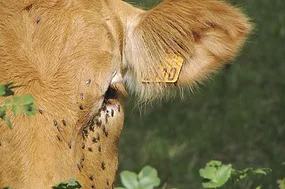
Electronic identification tags, also known as e-ID tags, have been around for many years. While they are commonly used in the cattle industry, many farmers and ranchers may not be familiar with the specifics of the tags or how truly beneficial the tags can be in your cattle operation and processes.

First, let’s start with understanding the basics of the actual e-ID tag. The ones used in the cattle industry are typically round tags about 2 inches in diameter. A unique 15-digit number is printed on the front side of the tag so it can be seen visually. A small microchip and copper wire are inside of the tag which transmit the number electronically when read by an electronic ID reader.
Generally, there are two categories of e-ID tags used in the U.S. – ones that are USDA-compliant and ones that are global. E-ID tags compliant to USDA standards and the 15-unique digit number will start with “840” to indicate tag registration with the USDA. A premises ID is needed to purchase these specific tags, which are required in some states, including animal movement across state lines. Global (non-USDA) e-ID tags are also available which do not require any special registration to purchase, but different segments of the cattle industry are moving toward a more unified identification system.
Capturing the number
Next, let’s talk about how to capture the number electronically. The number can be read electronically by a standard electronic ID reader, such as stick readers manufactured by leading animal identification and weigh scale companies. Many e-ID reader models have an internal memory to provide additional functionality after “reading” the e-ID number via a Bluetooth wireless connection. A few examples include recording permanent details such as the date of birth and breed, along with current/changeable details such as the pasture location or breeding status of the animal. These details can also be recorded on apps designed to work with e-ID readers. In most cases, details collected by an e-ID reader or on an app can be downloaded into a csv/Excel spreadsheet for further analysis or imported into a cattle software program.
Using an e-ID reader is not required for use with e-ID tags because the 15-digit unique number is printed visually on the front of the tag and therefore can be manually written down or typed into a document or spreadsheet. That said, there are many benefits to using an e-ID reader to assist in data collection. One of the very first benefits is accurate reading and recording of the number. Given that each tag number is 15 digits, someone can easily miswrite or misunderstand a number or few. By scanning the number electronically with an e-ID reader, accurate reading and collecting of the number is assured. This becomes important because you need to know which animals came into the chute or were scanned. Many cow-calf producers will scan e-ID tags of calves as they are loaded onto a truck or trailer to have an accurate inventory list of animals being transported. Other producers use e-ID tags to easily and quickly update the animals’ records in their software or record-keeping program. Another way to use the scanned e-ID number list is to indicate in your software program that the animals received certain medical treatments, or need to be grouped together to be sold, or all of the animals were moved from one pasture to another. It is a much easier and more accurate process to have an electronic list of scanned e-ID tags than to manually write down tag numbers.
Additional benefits
In addition, another benefit of using e-ID tags is to increase efficiency and reduce time and stress, especially when cattle are coming through the chute or are being treated with medications. It’s much quicker and easier for someone to scan an e-ID tag than try to write down 15 digits they visually see on the very small tag or to have someone telling them the numbers.
Another benefit of using an e-ID tag is that it serves as a second form of identification for the animal. Visual plastic tags, which on average are about 3 inches wide and 4 inches tall, can come loose or fall out, especially in rough terrain. Electronic ID tags are round, much smaller and are applied in the upper part of the ear, making these tags much less likely to become detached and lost. The combination of a visual eartag in one ear and an e-ID tag in the other ear helps ensure that the animal has at least one form of identification at any time.
While electronic ID tags have been available and used for decades in the cattle industry, farmers and ranchers are continually recognizing the importance and benefits of using e-ID tags. While e-ID tags can help meet compliance regulations, the benefits of the tags go well beyond that and can really be helpful in your cattle working and data collection systems.