Maintaining optimal hoof health in dairy herds is paramount for ensuring peak productivity and minimizing lameness, a prevalent issue that can severely affect cow welfare and farm economics. Leveraging tools and reports in herd management software can significantly enhance your hoof health program by streamlining the process, providing real-time data and facilitating proactive measures.

Understanding the importance of hoof health
Lameness is one of the most critical issues affecting dairy cows, leading to decreased milk production, reduced fertility and increased culling rates. Proper hoof health management is essential to prevent these problems and ensure the overall well-being of the herd. Implementing a hoof health program within your herd management software can identify issues early, track treatment outcomes and improve overall herd health.
Software features for insight-driven hoof health program
- Customizable protocols: Tailor interventions to meet the specific needs of your herd. Dairies need to fine-tune eligibility for maintenance trims and prioritize lame trims.
- Detailed reporting and analysis help track the effectiveness of treatments and make informed decisions.
- Integrated task management and recording: Ensure that hoof health tasks are scheduled and completed on time, reducing the risk of missed treatments or inspections. Mobile electronic solutions simplify data capture for detailed insights while increasing labor efficiency.
Steps to execute a successful hoof health program
Set clear objectives
Begin by defining the objectives of your hoof health program. These may include reducing the incidence of lameness, improving treatment outcomes and increasing overall herd productivity. Are there effective measurements in place? Are the resources in place for meeting those objectives? Clear objectives will guide the development and implementation of your program.
Conduct initial assessments
Perform thorough initial assessments to establish a baseline for hoof health within your herd:
- What is currently being recorded at hoof trimming?
- Is maintenance trimming done on time?
- What is the current prevalence of laminitis in the herd? Is this something that should be recorded regularly?
- Is lesion and treatment identification consistent?
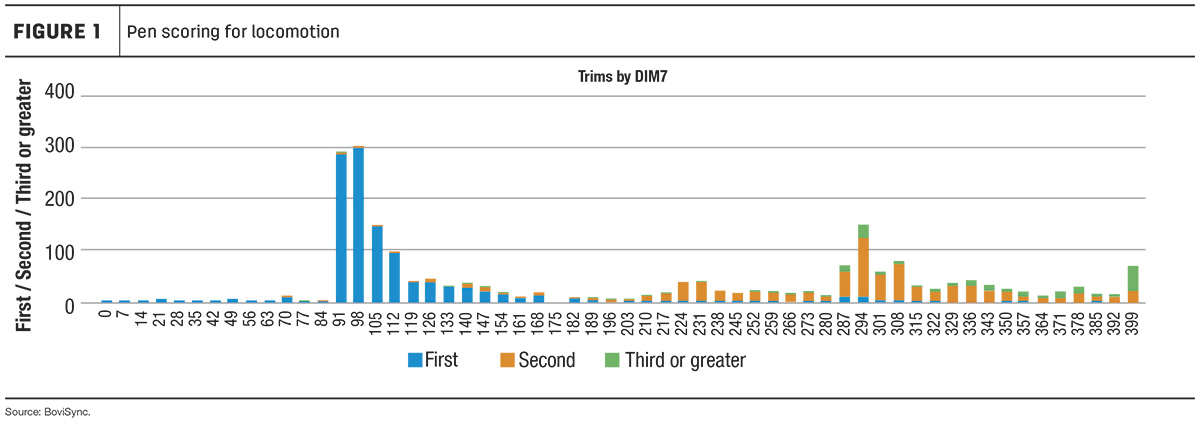
Locomotion scores are standardized to help determine herd-level lameness. Consider recruiting an adviser to conduct regular scoring to establish a baseline indicator of lameness. Pen scoring is a feature available to consultants and farms in certain apps that is particularly useful for recording and tracking locomotion scores (Figure 1).
Develop treatment protocols
Tailor treatment protocols to the specific needs of your herd while considering accepted standards. These protocols should include preventive measures, such as regular hoof trimming, as well as recording common hoof ailments like digital dermatitis or sole ulcers. Herd management and hoof-trimming apps often have standardized methods for recording information. Avoid reinventing the wheel.
The Dairyland Initiative website recommends recording digital dermatitis (active and inactive), foot rot, sole ulcers, white-line lesions and toe ulcers/thin soles. Minimizing options and defining criteria will provide better information for later analysis.
Additional resources are available online for lesion recording and analysis as well as lesion identification.
Monitor and record data
Capture detailed data to ensure that all information is up-to-date and easily accessible. This includes identifying lame cows, the condition of the hooves, any treatments administered and the outcomes of these treatments. Hoof-trimming information is entered from an event screen designed to match the farm management. Buttons can be added and removed for specific lesions with corresponding options. In addition, options can be added to capture limbs affected.
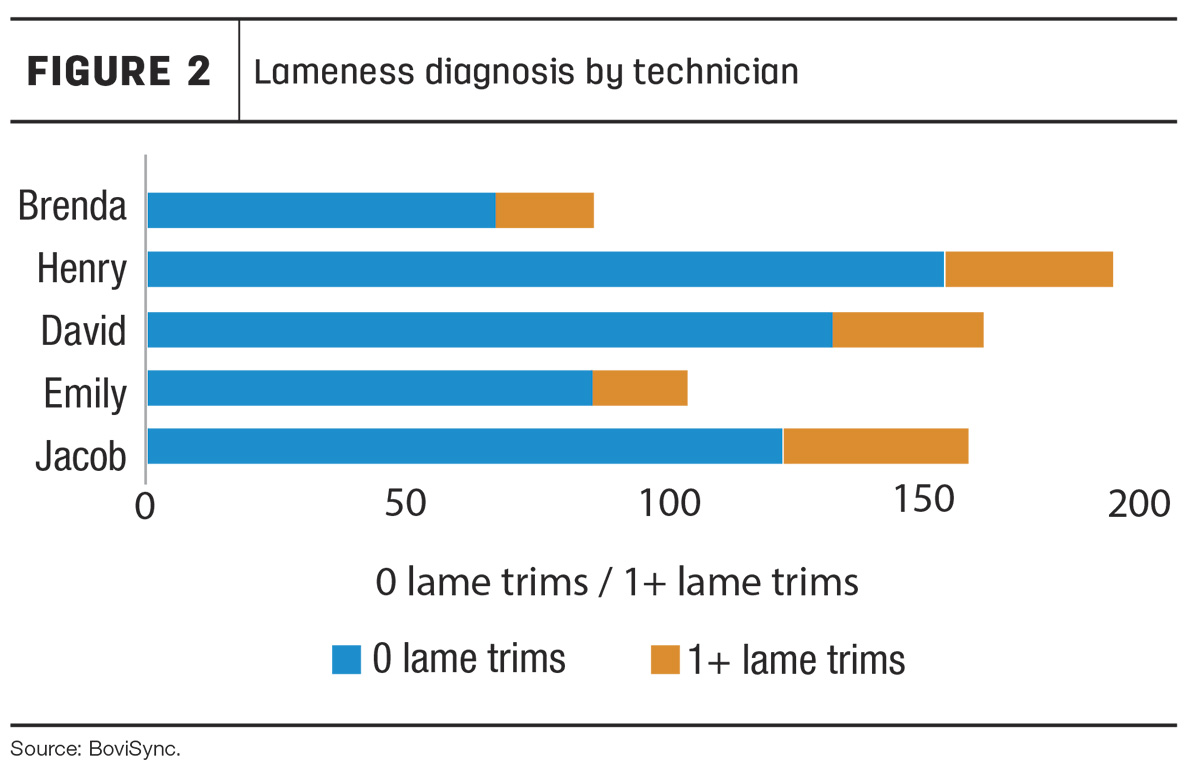
The technician of each event can be entered manually or preferably tied to a device assigned to each user (Figure 2).
Analyze and adjust
Regularly analyze the data collected to assess the effectiveness of your hoof health program. Look for trends or patterns that may indicate underlying issues or areas for improvement. Adjust your protocols and treatment plans as needed based on these insights.
Train your team
Whether hoof trimming is performed by a contractor or a farm employee, training specific to your dairy is necessary. Ensure that all team members involved in hoof health management are trained in how to use an app effectively. This may include data entry, task management and interpreting reports. Use reports to provide feedback to hoof trimmers. Regular training sessions can help keep everyone up to date and ensure that best practices are being followed.
Foster a culture of prevention
Encourage a proactive approach to hoof health within your team. Emphasize the importance of early detection and prevention and use insights to support this culture. By prioritizing preventive measures, you can reduce the incidence of lameness and improve overall health.
Prioritizing hoof health through the effective use of herd management software not only safeguards cow welfare but also supports the overall productivity and profitability of the dairy operation. By utilizing the insights and tools these systems offer, farmers can implement timely interventions, reduce lameness and foster a healthier, more efficient herd.