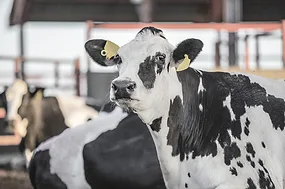
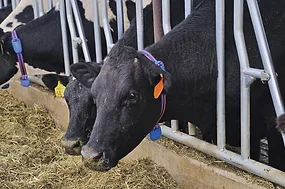
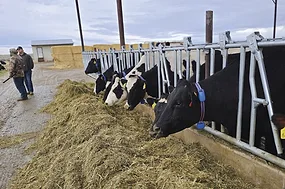
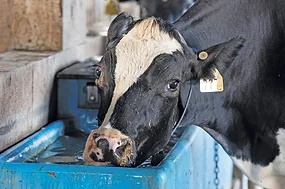
All of us who work in the dairy industry have witnessed amazing advancements in how we care for dairy cows. Animal well-being is a primary goal and therefore we’ve seen improvements in the environment for dairy cows through better resting areas and advanced cow cooling. These factors are apparent in increased milk production, better reproduction and improved hoof health.


With dairy operations expanding, new challenges arise due to larger pen sizes, longer walking distances, lock-up time for health checks, as well as time out of the pen for milking. These factors require a new approach to managing hoof health. For a positive outcome for both the cows and the dairy operation, a team approach is required. Here are six key hoof health management factors to consider and implement which will have a significant impact on animal well-being.
1. Establish a team
Management must establish a team to take ownership of all aspects of hoof health. Generate a collaborative culture among all dairy teams, ensuring the responsibility for success is shared. Together, management and the hoof health team should create a formal action plan for all aspects of hoof care designed to improve overall cow health. Ensure everyone understands and follows standard protocols. Managers, supervisors and the farm teams must become educated and use the same playbook for hoof care. From identifying lame cows to functional hoof trimming to therapeutic techniques, foster a culture of support and sharing of knowledge. Allow time each day for the team to identify lame cows and treat them within 24 hours.
2. Provide adequate training
Everyone who performs maintenance hoof trimming or lame cow care must have adequate training provided by an experienced hoof care specialist that communicates scientifically-based information in a simple and practical manner. Proper training minimizes the risk of improper trimming and improves recovery rates. Training team members about hoof care is equally important as teaching the team who is responsible for feeding cows. Commonly, the hoof care technicians are invested in cow health, wanting the best for the cows. With the support of management and proper oversight, the hoof care team will be much more dedicated and find great satisfaction in maintaining and improving a successful hoof health program.
3. Design a fully-equipped trimming area
Crucial to the success of the hoof trimming program is a well-designed and fully equipped hoof trimming area which should include the following:
- Dedicate an area of the dairy for efficiency and convenience in performing hoof trimming and therapeutic treatment of lesions. A nearby water supply is essential in keeping the equipment, tools and the area clean daily. In some climates, the ability to heat or cool the area is also necessary.
- Install a hoof trimming chute designed to safely restrain cows while also being safe for the technician. The equipment should be maintained for proper function and efficiency.
- Create a Bud box to easily direct the cows to the trimming chute in a stress-free manner (image).
- Assemble trimming tools and supplies required to trim and treat cows properly. These include trimming wheels, a rasp, quality hoof knives, hoof knife sharpener, hoof blocks, hoof block adhesives and other common treatment supplies. Maintain an organized area, adding a storage cabinet to keep supplies free of debris.
- Invest in technology to capture trimming and treatment data. The information should be transferred into the herd management software as soon as possible. This data is critically important to manage trimming schedules and for prompt follow-up of lame cows, checking the recovery status of lesions.
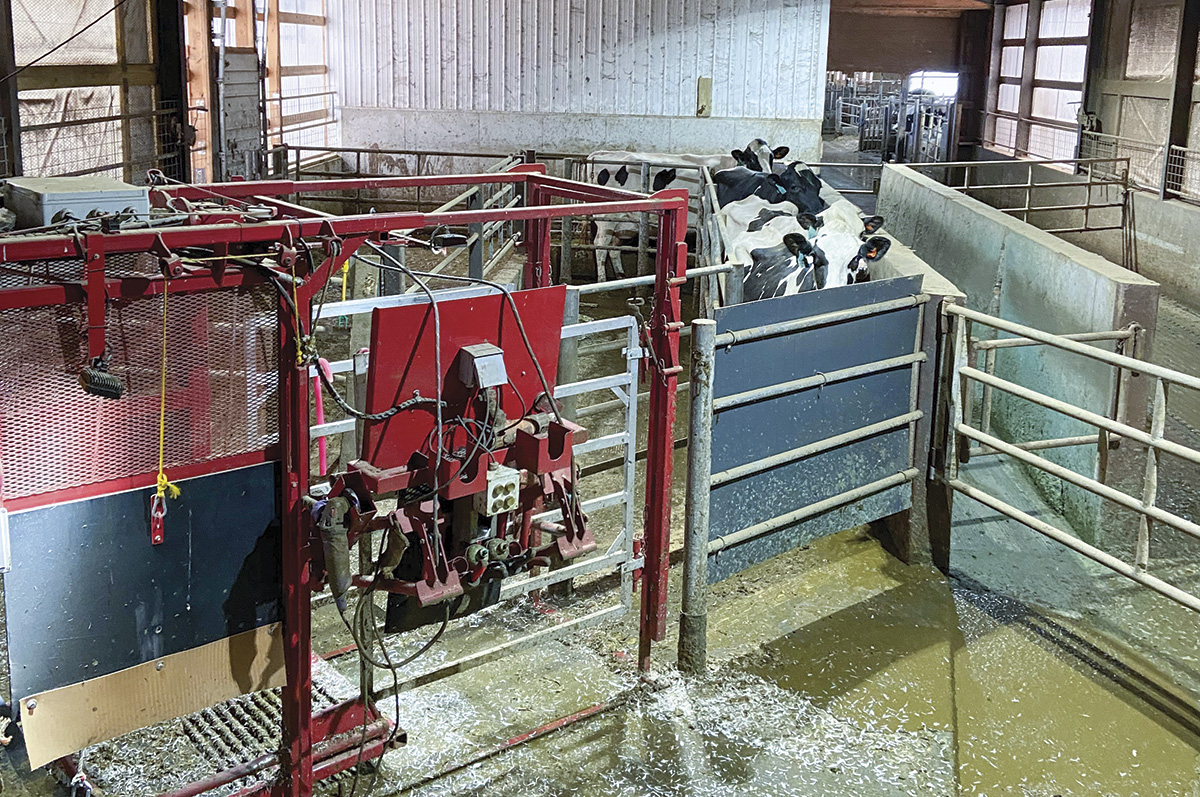
Create a Bud box to easily direct the cows to the trimming chute in a stress-free manner. Image provided by Karl Burgi.
Create a Bud box to easily direct the cows to the trimming chute in a stress-free manner. Image provided by Karl Burgi.
4. Treat lame cows
Attending to lame cows, 24 hours after identification by the on-farm staff or team member, is imperative to recovery even when hiring a contracted hoof trimmer, and is yet another reason that every dairy has more than one person who can handle initial treatment or follow-up treatments of lame cows (see points 2 and 3).
5. Accurately identify lesions
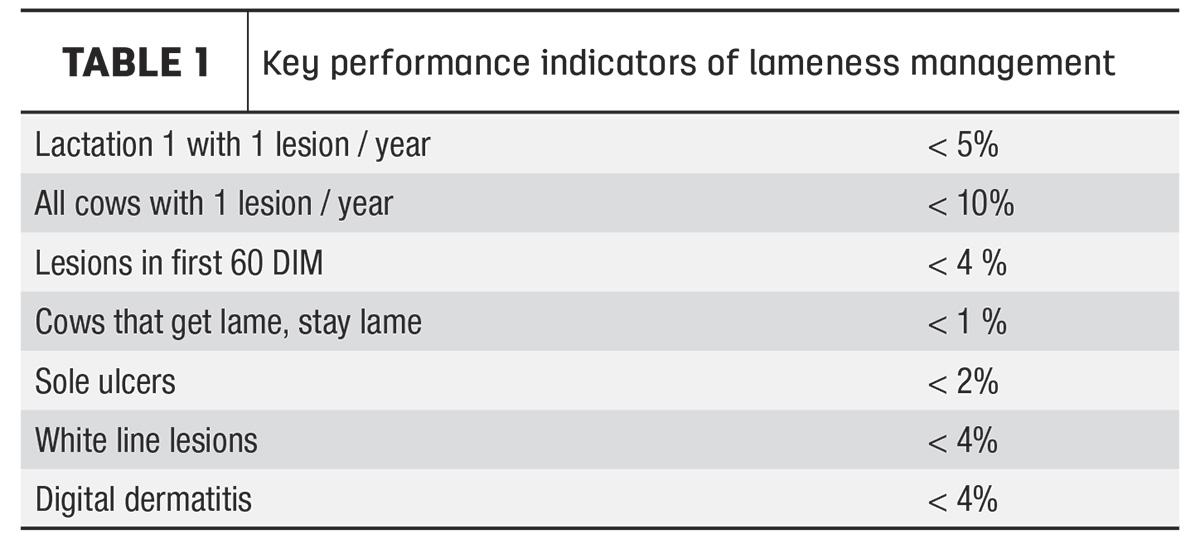
Accurate identification and classification of infectious and non-infectious lesions is vital to having reliable data in the management software. A biannual analysis for monitoring hoof health of the five main lesions using these parameters is needed to identify management issues and evaluate progress: days in milk, by season, by lactation. Managers, team supervisors, veterinarians, nutritionists, hoof trimming consultants and hoof trimming technicians must collaborate to improve key performance indicators (KPIs) (Table 1).
6. Perform routine assessments
Various factors must be considered for a successful hoof health program. Each dairy is different with respect to herd size, cow environment, type of facility, bedding type and climate. In general, the goal is to assess all animals one to three times per lactation, with the most important trimming assessment being performed in the dry period or at dry-off. Good data can assist with trimming requirements of lactation groups, high-producing cows and high-maintenance cows. In many situations, very few first- and second-lactation animals will require a mid-lactation assessment, whereas cows with multiple lactations must be assessed according to the data analysis. In addition, follow-up checks on lame cows must be a high priority to attain recovery of lesions. It is far too common that cows enter the “Get lame, stay lame” group, prompting the animals to leave the herd for slaughter.
Successful hoof health programs are the result of people choosing to invest time and resources by putting animal well-being as their overarching goal every day. Management must lead the way by carefully establishing teams, working together in the spirit of collaboration and by providing continuous support of the individuals who are the primary caretakers of dairy cows. Education, a dedicated hoof trimming area, well-maintained equipment, proper tools and supplies as well as ongoing support are key to a successful hoof health program.
Consequently, this yields gratifying results for everyone – successes to be proud of which makes for an even more dedicated team. By focusing on animal well-being, cows are healthier, more productive and stay in the herd longer while staff feel empowered and enjoy the satisfaction of making a difference. The cycle of success is established. Everyone wins.