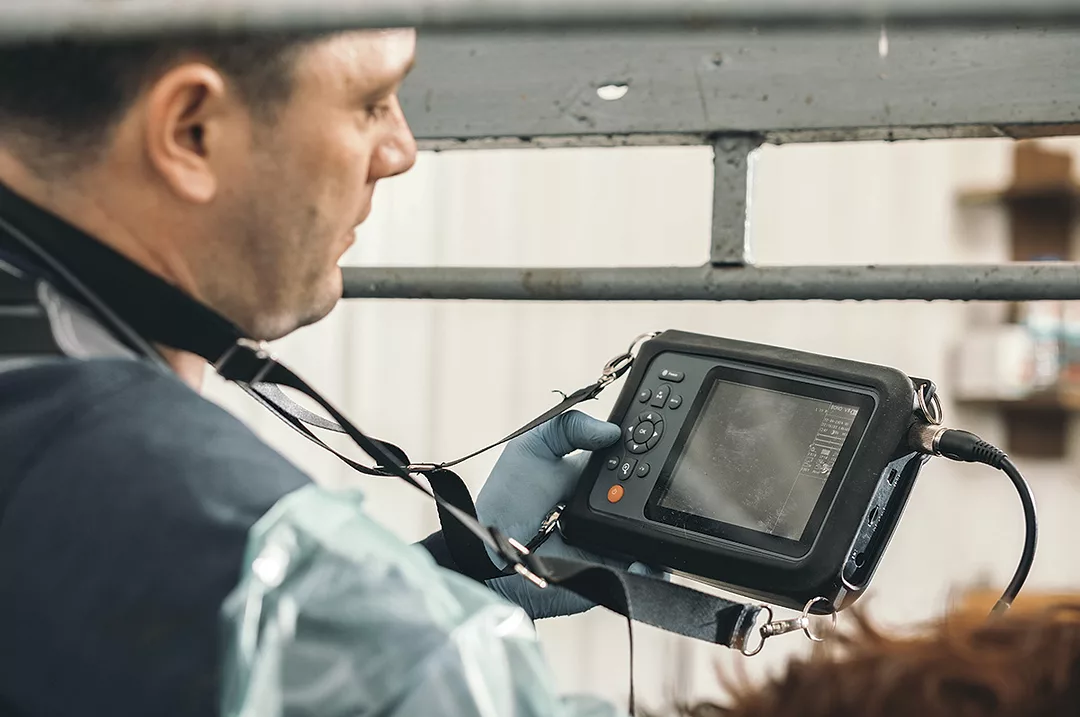
When it comes to managing a successful beef cattle operation, reproductive efficiency is key. One of the most widely used tools to monitor reproductive success is palpation or ultrasound pregnancy diagnosis, typically performed between 30 and 90 days after breeding. But even after a pregnancy is confirmed, not every cow will carry to term. So what’s a “normal” rate of pregnancy loss – and when should producers be concerned?

The role of early pregnancy diagnosis
Early pregnancy detection allows producers to make timely decisions about keeping, selling or rebreeding females. Several methods are available:
- Ultrasound: Detects pregnancy as early as 30 days and can accurately determine fetal age. For example, if you artificially inseminate heifers, they may be around 90 days gestation, while bull-bred heifers will range from 30 to 65 days.
- Rectal palpation: Effective from 35 days post-breeding to calving, with most accurate fetal aging taking place from 35 to 120 days gestation, depending on the skill of the palpator.
- Blood tests: This chuteside blood collection can detect pregnancy as early as 28 to 32 days, but results take five to seven days and do not allow for immediate sorting or staging. Blood testing may also lead to false positives, meaning cows who conceived and subsequently resorbed pregnancies may still have levels of circulating hormones that result in a positive test. It is important to note that cows and/or heifers need to be at least 73 days post-calving. This will help prevent a false positive result due to any residual pregnancy-specific protein B that has not cleared the maternal system from cows that calved less than 73 days ago.
Using pregnancy detection as early as 35 days can help producers make informed culling decisions, target different markets and help conserve forage resources. Culling criteria may include physical impairments, age, low production or weaning weights, and nonpregnant status.
Managing the herd more effectively
Ultrasound also allows producers to group cows by expected calving dates, which improves nutritional management and reduces calf health risks by minimizing age variation. This can lead to more efficient feeding strategies and healthier calves.
Both ultrasound and rectal palpation, however, require skill and experience to yield accurate and useful results. While historically improper technique in palpation or ultrasound diagnosis of pregnancy has been blamed for the observed early pregnancy loss, recent research demonstrates no differences in early pregnancy loss or rate of fetal anomalies due to technique; observations of pregnancy loss during this period are likely occurring due to things such as excessive stress during early gestation, fetal genetic anomalies, improper implantation/placental development or a uterine environment incompatible with maintenance of pregnancy – all of which can lead to embryonic/early fetal loss. Because of our ability to detect pregnancy earlier in gestation, we can track these early losses more accurately than in the past, where we simply might have only known that there was an open cow at later pregnancy palpation (90 to 120 days gestation and later).
What research shows
Pregnancy loss is a natural part of cattle reproduction. Early embryonic loss (before day 30) can be as high as 30% to 40%, but this typically occurs before any pregnancy diagnosis is made. Once pregnancy is confirmed – usually around day 30 to 45 – the expected loss rate drops significantly. Studies show that pregnancy loss between day 30 and calving ranges from 2% to 8%, depending on factors like cow age, nutrition, stress and herd health. Moreover, another study indicated that heifers undergoing pregnancy checks between 42 and 74 days post-breeding experience an average pregnancy loss of 1.55%, with reported losses ranging from 1% to 3.5%.
A research group from Texas A&M recently performed a meta-analysis encompassing over 56,000 diagnostic records from 159 studies, trying to identify when and how pregnancy loss occurs in beef cattle. While fertilization rates are generally high, significant embryonic loss occurs within the first seven days of gestation, with approximately 28.4% of embryos failing to develop past day seven, with most ceasing development before day four. Most of those losses before day four were due to fertilization or initial cell division failures.
By day 32, nearly 48% of cows bred via a single insemination will not be pregnant, underscoring the importance of early pregnancy diagnosis to identify open cows and make timely management decisions.
From day 32 to 100 (the late embryonic/early fetal period), pregnancy loss averages 5.8%, aligning with previous estimates of 2% to 8% loss after confirmation. The study also found that:
- Bos indicus cattle had higher early embryonic loss than Bos taurus.
- Primiparous (female that has given birth for the first time) cows experienced greater early embryonic loss than nulliparous heifers or multiparous (two or more births) cows.
- Nulliparous (never given birth) heifers had slightly higher late embryonic/fetal loss than older cows.
These findings reinforce the need for strategic reproductive planning, especially in younger or high-risk animals, and support the use of ultrasound and other diagnostic tools to guide decisions on culling, rebreeding and resource allocation.
Why pregnancy loss happens
Several factors can contribute to fetal loss. Some research has noted that heat stress, low body condition score and disease can be major contributors to pregnancy loss, particularly in the first trimester. Additionally, other factors that may contribute to loss include nutritional deficiencies (especially in energy or trace minerals) and stress (including handling or transport). Shipping cattle shortly after insemination – within the first one to four days – is the safest period, as the embryo remains in the oviduct and is less affected by stress. Transporting cattle between days five and 42 can reduce pregnancy rates by around 10%, due to the embryo's vulnerability to changes in the uterine environment. After day 45, the embryo is more stable and attached to the placenta, making shipping less risky, though a small risk of embryo loss (about 6%) still exists up to day 60. Furthermore, it is also important to maintain a region-specific health and vaccination program, developed through a relationship with your local veterinarian to meet the specific needs of your herd and environment.
Final thoughts
Pregnancy loss, while disappointing, is a normal part of reproduction. But with early and accurate diagnosis, producers can make proactive decisions that improve herd productivity and profitability. If losses exceed the typical 2% to 8% range after confirmation, it may be time to consult a veterinarian.
There’s nothing quite like peace of mind that comes from knowing when your cows or heifers will calve. Sometimes, that knowledge is priceless.