When it comes to any disease treatment, it’s imperative to match the drug to the bug – or in other words, use the correct class of antibiotic to control the disease-causing bacteria at hand. The same holds for anti-infectives used to treat bovine respiratory disease (BRD).

Four major classes of anti-infectives used for BRD treatment
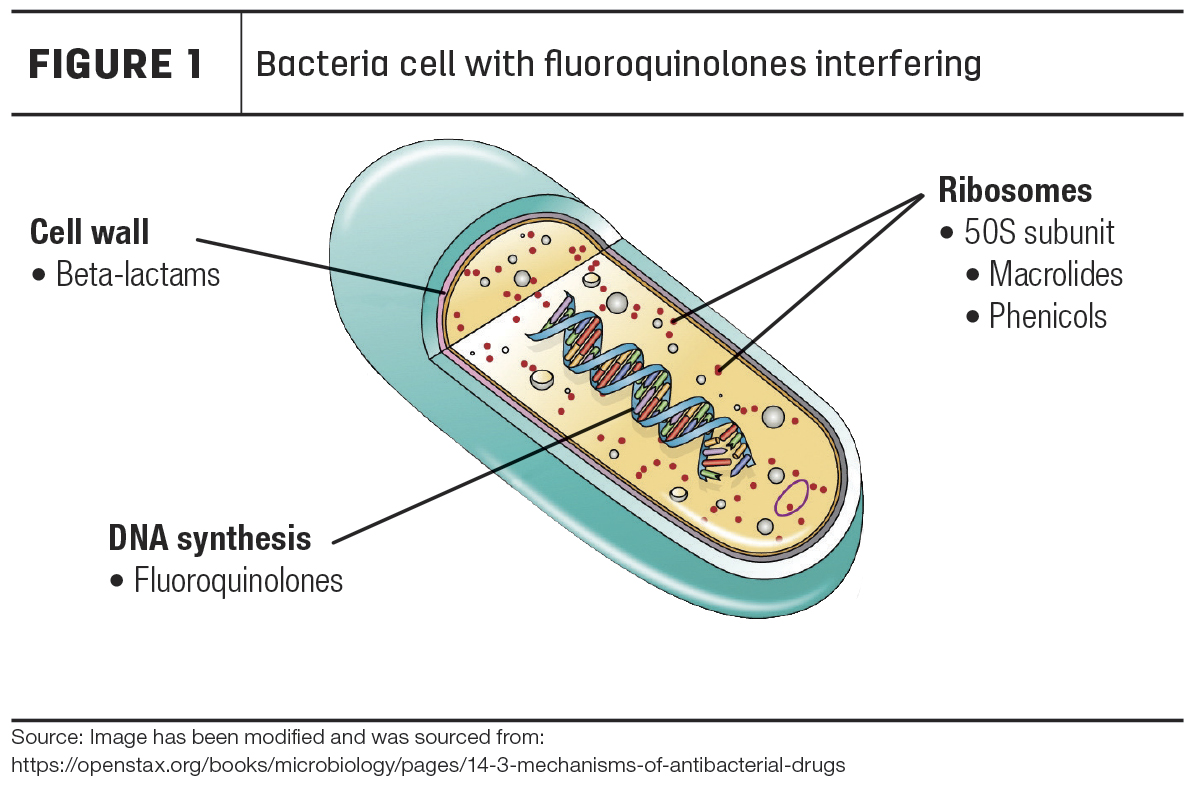
Currently, the four most common classes of anti-infectives used in cattle treatments are macrolides, beta-lactams, phenicols and fluoroquinolones. When it comes to controlling bacteria, each of these major classes of anti-infectives has a slightly different mode of action (MOA).
Macrolides interfere with protein synthesis by reversibly binding to the 50S subunit of the ribosome and appear to bind at the donor site, which prevents the translocation necessary to keep the peptide chain growing.
- Common active ingredients: Tilmicosin, gamithromycin, tildipirosin and tulathromycin
- Works well against: BRD-causing bacteria such as Mannheimia haemolytica, Pasteurella multocida and Histophilus somni. In some cases, this class also may be effective against Mycoplasma bovis.
Beta-lactams impair the development of bacterial cell walls by interfering with transpeptidase enzymes. These enzymes are associated with a group of proteins in both gram-positive and gram-negative bacteria called penicillin-binding proteins, also called PBPs.
- Common active ingredients: Penicillin, cephalosporin
- Works well against: BRD caused by Mannheimia haemolytica, Pasteurella multocida and Histophilus somni
Phenicols work similar to the macrolide class and affect protein synthesis at the 50S ribosomal subunit of the bacteria cell.
- Common active ingredient: Florfenicol
- Works well against: BRD caused by Mannheimia haemolytica, Pasteurella multocida and Histophilus somni
Fluoroquinolones interfere with DNA synthesis within the bacteria cell, which prevents cell replication (Figure 1).
- Common active ingredients: Danofloxacin, enrofloxacin
- Works well against: BRD associated with Mannheimia haemolytica, Pasteurella multocida and Histophilus somni
What does this mean for BRD treatment?
As you can see, all the major BRD-causing pathogens can be controlled with one or more of the four major classes of anti-infectives listed above. However, there are a few key instances in which choosing the right antibiotic class can make or break respiratory disease treatment outcomes. These include:
- Re-treating cattle. The current paradigm in BRD therapy is to switch classes of anti-infective if an animal needs to be re-treated after metaphylaxis or initial treatment. This makes it important to know which anti-infectives are in which class and their MOA – because you don’t want to use the same MOA in both treatments.
- Treating BRD caused by M. bovis. Because M. bovis bacteria lack a cell wall, and beta-lactams work by attacking the cell wall, this class of anti-infective will be ineffective against BRD caused by M. bovis.
With the complex nature of BRD, choosing an anti-infective with the right MOA can be a contributor to better treatment results. However, this information sometimes is not available immediately when an animal, or set of animals, becomes ill. Your veterinarian can help you diagnose and execute a treatment plan of action based on MOA, evidence-based medicine and clinical response. This can mean more successful first treatments of BRD, fewer doses of antibiotics, more responsible use of antibiotics and economically significant savings on your operation in both money and time.
Animal husbandry plays a significant role in treatment outcomes, too
It’s important to remember that respiratory disease is a complex disease system – and there are many outside variables that can negatively affect treatment outcomes. Work to establish sound prevention practices that limit the risk of BRD in the first place.
Best practices for BRD prevention include but are not limited to:
- Implementing a vaccination program that protects calves against the major BRD-causing pathogens, both viruses and bacteria
- Minimizing commingling where possible and segregating groups based on age, sex and arrival date
- Providing good ventilation and avoiding overcrowding
- Maintaining proper sanitation of equipment and pens
- Providing adequate nutrition with fresh feed and clean water
- Using low-stress cattle-handling techniques
- Providing adequate shelter and avoiding dusty environments
Work closely with your herd veterinarian and local animal health representative to establish strategic prevention and treatment protocols specific to your operation.