Doyle Sanders didn’t go to Turkey in 2016 with cattle on his mind. Well, that’s probably not entirely true; Sanders – who owns Dbl D Bar Ranch in central Texas and is a tireless advocate for the Beefmaster breed – is likely to have bovine on the brain at any given point in time. But, ostensibly, his 2016 trip to Turkey was for his other job as a pipeline engineer.

As Sanders traversed the plains along the western edge of the Caucasus Mountains, he saw several herds of local cattle, usually accompanied by teams of herders shepherding them from one grazing plot to the next. The locals told him that the majority of the cattle were dual-purpose animals, used for both beef and dairy production. Sanders smelled an opportunity.
At the time, the practice of breeding dairy cows to beef bulls was beginning to really take hold in North America. Sanders believed Beefmasters offered myriad traits to improve Turkish dairy and dual-purpose herds. Sanders got in touch with USDA representatives at the U.S. embassy in Turkey, who helped him get an audience with government and industry officials to promote his ideas. Within a year, Turkey’s Ministry of Agriculture and Forestry approved the importation of Beefmaster embryos from the U.S. In 2025, the first crop of Turkish-born and -raised Beefmasters are providing embryos and semen for the creation of the country’s Beefmaster herd, with semen earmarked primarily for use by dairy and dual-purpose producers to improve feed efficiency and weight gains.
Sanders’ experience in Turkey was made possible by work he had previously done to introduce Beefmaster genetics across the globe with Beefmaster Breeders United (BBU). In 2014, he spearheaded BBU’s effort to introduce the breed to beef and dairy herds in Poland and Italy. He had earlier worked closely with the USDA, U.S. Livestock Genetics Export and producers in Thailand to improve carcass traits in their Bos indicus-dominated herds with U.S. Beefmaster genetics. He has been involved in multiple studies to gauge the efficiency of calves sired by bulls of various U.S. beef breeds in beef-on-dairy applications in Europe. Sanders maintains close relationships with beef and dairy producers around the globe, regularly sharing stories and tricks of the trade, and has even aided in the development of a European herd book for the Beefmaster breed.
“My approach is not to go in and tell people to replace their whole herd with a new breed,” Sanders says. “For example, if I have a customer in Bulgaria who loves his Angus herd, I’ll recommend that he not harvest his family’s favorite cattle, but to use some Beefmaster semen to cross those beloved Angus, and with the hybrid vigor get many more pounds of beef to sell. We’re not trying to displace any other breed. For Beefmasters, heterosis is the key concept that we’re trying to sell. And these Beefmasters have proven adaptability and parasite or disease tolerance.”
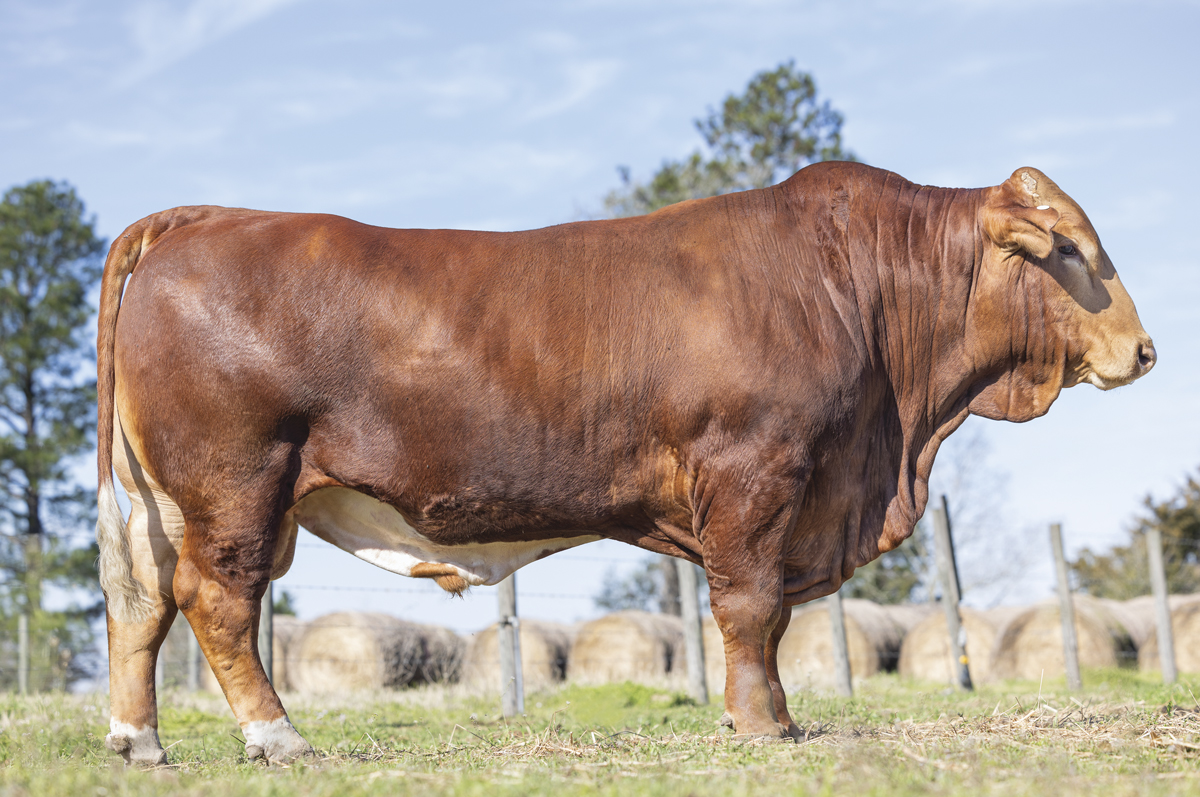
EZ Top and Guzz are active herd sires on Dbl D Bar Ranch in Texas. These foundation genetics are helping improve beef cattle in both the U.S. and abroad. Image provided by Doyle Sanders.
While beef-on-dairy has become common practice in the U.S. dairy industry over recent years, many are still getting used to the idea, and both the beef and dairy industries are still working out some of the kinks in the production system.
In Europe, the concept caught on among producers a little more quickly, at least from a cultural standpoint.
“When European producers see a Beefmaster cross calf standing next to the same age or older continental Angus, Charolais, Limousin or other dairy cross feeder calf, they want some of that,” Sanders says. “When our Italian breeder took several Beefmaster cross calves from his beef- and dairy-crossed cows to a feedlot, he soon got a phone call from the owner, who complimented those calves’ progress and feed efficiency.”
Concerns about environmental sustainability now drive many market and policy decisions around the world, not just in livestock production but across industries. The push toward sustainability is a particularly high priority to the European Union (EU) and national farm organizations across Europe. The EU is requiring farmers and ranchers to either develop approved sustainability plans by the end of 2025 or begin reducing herds by as much as 40% by 2030. All this has compelled beef and dairy producers to look beyond their own borders and traditional gene pools to meet sustainability objectives on their farms.
Beefmasters – Sanders’ true passion – is a quintessentially American breed and offers obvious traits that overseas herds haven’t experienced, largely due to the significant feed efficiency they bring to the table. In fact, a 2017 study by the USDA’s Meat Animal Research Center reported that Beefmaster-sired dairy calves in Europe were significantly more feed-efficient than their Angus, Hereford, Charolais and Simmental counterparts. At the same time, the University of Bologna’s evaluation of Beefmaster benefits concluded that the Beefmaster hybrid design proved to offer the highest bovine heterosis among beef and dairy cattle worldwide.
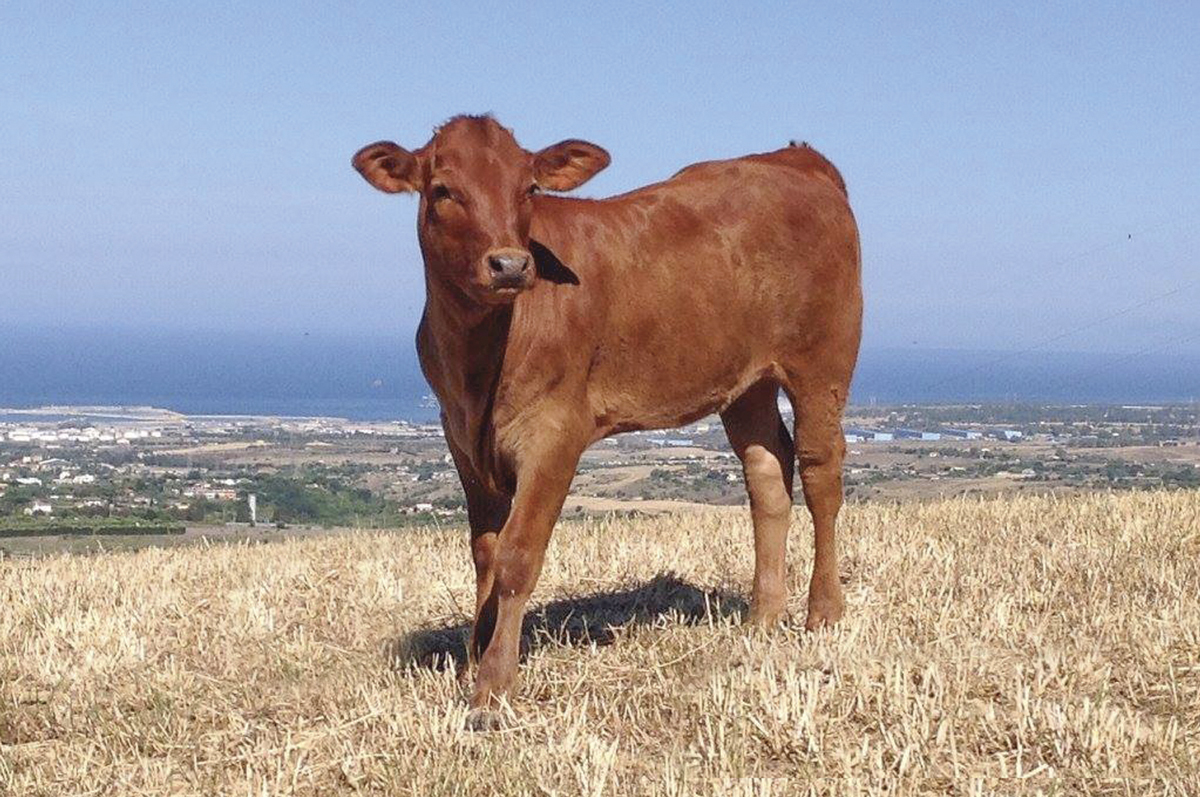
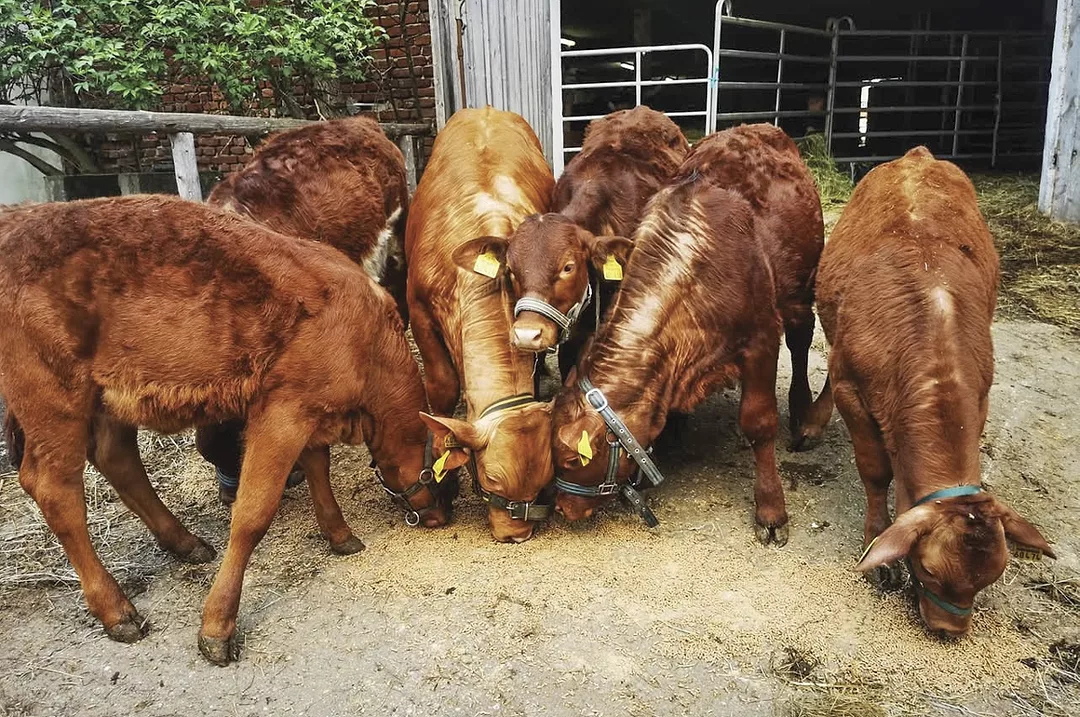
Angelina, the first purebred Beefmaster calf born in the EU, was born in 2016 to an ET recipient mother of the heirloom Maremmana breed in Civitavecchia, Italy. Angelina remains a highly productive female in that herd. Image provided by Doyle Sanders.
That doesn’t mean there’s not similar opportunity for other breeds. The bulk of the North American beef industry has been built on British and continental breeds. But few, if any, experienced producers would contend that Angus, Limousin, Hereford, Charolais and Simmental cattle west of the Atlantic are the same as their brethren in Europe – not to mention those in Asia, South America, Australia or Africa. For decades now, U.S. and Canadian breeders have prioritized beef tenderness and eating experience far more than anyone else in the world. Those carcass traits, among other things, are a major point of interest for a lot of potential export markets.
Could other American seedstock breeders and breed associations apply the lessons learned from BBU’s international efforts? Sanders thinks so, but he cautions that it’s essential to know your market. For example, the EU requires all imported livestock semen to be “EU-certified,” which is a difficult bar to clear, even for the most advanced and conscientious American producers. In fact, embryos are often easier to export to the EU than semen. In 2024, the USDA and EU revised protocols for import and export of genetic material, limiting the avenues for producers to leverage American genetic potential in European cattle markets. Those revisions came at a time when American genetics were just picking up steam in the European beef-on-dairy market and left many breeders, genetic collection companies and shippers wondering what their next steps were.
What laws govern import and export of live cattle and genetic material? How are different regions and specific producers trying to improve their beef herds? These are questions that need to be asked and answered before diving in too deep. The demand certainly appears to be there, but relationships need to be built with local producers and agricultural officials so both parties are properly educated about what they might be getting into. If Sanders’ experiences are any indication, the key is taking a methodical, compliant and (most importantly) collaborative approach.
There is undeniably untapped potential for North American beef genetics to make an impact around the world, particularly in beef-on-dairy applications. The question remains: Who’s going to capitalize?