The Progressive Cattle editorial staff review the top news stories from 2025.




Beef and cattle prices
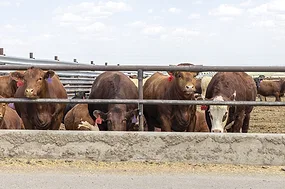
The perfect storm of a myriad of factors, including historically low cow numbers, relatively low commodity prices, decreased cattle imports and a high appreciation and demand for high-quality beef by consumers, combined to produce an unforgettable year for America’s beef producers. Packers seemed willing to continue to pay top dollar for slaughter cattle in order to keep pace with consumer demand. In response, cattle feeders kept up the torrid pace as they paid record prices for every class of calves and feeder cattle in an effort to maintain inventories to keep the machine rolling. Cow-calf producers were beneficiaries of the demand for beef and cattle as they finally found a little relief from the burden of decades of increasing production costs.
New World screwworm
Over the past year, the New World screwworm (NWS) has reemerged as a serious biosecurity concern for U.S. cattle producers. Originally eradicated from the U.S. in 1966, screwworm has been spreading north through Central America and into Mexico. In May 2025, the USDA suspended imports of live cattle, horses and bison from Mexico after NWS detections near the border. While no livestock cases have been reported in the U.S., one human infection was reported in Maryland from an individual who had traveled to Central America. The USDA is building a sterile-fly production facility in Texas and expanding surveillance at ports and border states. Latest reporting shows NWS in in Sabinas Hidalgo, in a cow in Nuevo Leon state, just 70 miles from the Mexico-U.S. border.
Exports down around the globe
U.S. beef exports faced considerable headwinds in 2025, largely in the form of high tariff rates and the ensuing trade policy fallout in key markets for U.S. beef. All export markets except for South Korea dropped in export volume, ranging from the relatively small dip of 3% in beef exports to Japan, to a whopping 47% drop in exports to China. The severe decline in exports to China is due to several factors including the ongoing tariff war and the lapse in registrations of most of the approved U.S. beef plants and cold storage facilities. With that logistical block in place, industry experts expect it will likely be a long time before exports to China resume, trade deal or not.
South Korea has been the lone bright spot on the export front, with exports up 9% from last year at 146,084 metric tons (MT) in volume and $1.39 billion value.
South America becomes a major player for beef imports
Beef imports have skyrocketed throughout 2025 due to a sustained demand for beef and the combined pressures of a lower domestic cattle supply and fewer live cattle imports from Mexico due to NWS. Imports of live cattle from Canada increased by 8% in reaction, and most notably, beef imports from Brazil jumped 91% compared to 2024, with Australian beef imports increasing by 35% as well.
In October, President Donald Trump announced plans to import beef from Argentina as part of a trade deal. Livestock industry groups and politicians alike objected to this proposal and urged the president to “let the free markets work,” warning that such a push is not likely to positively impact cattle prices, while Argentina’s history of issues like foot-and-mouth disease, if spread to the U.S., would decimate the already-low herd numbers.
New administration makes waves
On Jan. 20, President Donald Trump was inaugurated for a second time, and his administration wasted little time in making its presence felt. Trump fulfilled campaign promises by imposing stiff tariffs on many of the U.S.’s trading partners almost immediately, igniting months of on-and-off negotiations, most notably with Canada and Mexico.
Brooke Rollins was confirmed as secretary of agriculture on Feb. 13, becoming the second woman to hold that office. She spent much of the year on a world tour to engage in trade talks with officials in Vietnam, Japan, India, Peru, Brazil, the United Kingdom, Hong Kong, the Dominican Republic, Taiwan, Côte d’Ivoire and Mexico, among others.
“We travel into these countries to get a fair deal for American family ranchers and farmers and to reassert what this great country has to offer,” Rollins said in April. “We know how important it is to expand market access for our farmers and ranchers.”
The livestock industry has kept a particularly close eye throughout the year on the administration’s responses to such issues as immigration, New World screwworm and trade policy.
One Big Beautiful Bill becomes law
Six weeks after its initial passage in the U.S. House of Representatives, President Donald Trump signed the One Big Beautiful Bill Act (OBBBA) into law on July 4. The sweeping budget reconciliation legislation includes changes to tax policy, energy production, immigration and adjustments to programs like Medicaid and the Supplemental Nutrition Assistance Program (SNAP). Several ag stakeholder groups praised the bill’s passage, notably the American Farm Bureau Federation and NCBA.
Importantly for agriculture, the OBBBA authorizes $66 billion in funding for farm programs and extends the 2017 Tax Cuts and Jobs Act and the 45Z biofuels tax credit, originally set to expire, respectively, at the end of 2025 and 2027.
The legislation aims to increase producer payments through the Price Loss Coverage (PLC) and Agriculture Risk Coverage (ARC) programs, allowing for a 30 million-acre increase in enrolled acres, along with cutting insurance premiums and providing additional funding for ag research and trade promotion.
The OBBBA provides for 100% reimbursement for livestock lost to predation, 75% reimbursement for livestock lost to weather or disease, and includes indemnities regarding losses of unborn livestock.
ICE raids hit agriculture
Tighter enforcement of immigration laws in the country led to a significant growth in the Immigration and Customs Enforcement (ICE) agencies. Arrests in major cities and urban areas soon moved over to the agricultural communities. ICE raids pursued dairies and crop farms in California, Oregon, New York, Vermont and eventually a meat-packing facility in Nebraska.
Officials made appeals to Trump to apply more lenience to farmers and ranches in June after the arrest of 76 workers at an Omaha, Nebraska, packing plant. But that was short-lived as ICE policies continued, and aided by the passage of the One Big Beautiful Bill, ICE became an industry with $170 billion for the next four years.
Ag and livestock industry officials continued to express concern over immigration policies and its impact on production.
Saga of DOGE cuts
The Trump administration started its year relying upon Elon Musk as a special employee of the Department of Government Efficiency (DOGE), to cut areas of waste, fraud and abuse in the federal government. Many programs targeted were in agriculture and were headed to cutbacks and work force reductions.
DOGE initially pushed for 100 USDA offices to close, a number later reduced to 49. Food safety inspection services were targeted for cuts, as well as the U.S. Meat Animal Research Center, the National Centers for Animal Health and specialists working on highly pathogenic avian influence (HPAI). Several were rehired weeks later.
One key controversy erupted around 1,300 staff cuts to the National Weather Service (NWS) and National Oceanic and Atmospheric Administration in February. The country eventually suffered intense storms in the Southwest and Midwest, including one Texas flood killing 135 people, putting the DOGE cuts under intense scrutiny.
Musk left his position in June, and some 770 NWS forecasters, hydrologists and scientists were to be rehired in August.
Beef processing plants close
The downturn of the cattle cycle and national herd numbers took its toll on key processing plants in the country during 2025. The biggest closure happened in Emporia, Kansas, where Tyson Foods, which announced its plans in late 2024, ceased operations officially in June 2025. Tyson let 800 workers go in its notice to Kansas Department of Commerce in February before its final closure. The facility processed ground beef and marinated beef.
Johnsonville closed its Momence, Illinois, packing facility that employed 300 workers, and the Cimpl’s Meats facility in Yankton, South Dakota, closed in March with nearly 250 workers let go. In early August, the L&H Packing Co. processing plant in San Antonio closed, affecting 325 workers.
Commodities
Over the course of 2025, U.S. grain markets have reflected a broadly bearish supply outlook, with large crops and abundant stocks pressuring prices. For the 2025 season, the USDA projects a record corn harvest, driven by the largest planted acreage since the 1930s. Soybean planting declined in acres amid weak export demand, especially from China, resulting in lower production expectations and higher ending stocks. Wheat prices have slid with ample global supply and slower export momentum. Current cash bids show corn around $4.23 per bushel, soybeans about $10.28 per bushel and wheat about $5.06 per bushel. Hay prices have varied throughout the year based on availability. Some regions received ample rain to support a quality growing season while others experienced drought. Additionally, rainfall enhanced grazing conditions in major beef-producing states, such as Florida, Missouri and North Dakota, leading to good-to-excellent pasture and range conditions.