In the dynamic world of animal nutrition, the challenges facing livestock production are no longer just about maximizing output. Today, producers must navigate a complex web of sustainability goals, regulatory constraints, consumer expectations and animal welfare concerns. This shift has transformed animal production from a predictable, clockwork-like system into a complex, interconnected environment – one that demands equally sophisticated solutions.

Phytotechnology, the science of using plant-derived compounds to support animal health and performance, offers a powerful and timely answer. But to unlock its full potential, we must move beyond the traditional view of phytogenics as antimicrobial replacements and instead focus on supporting the animal, not targeting the pathogen. Plants, with their vast biochemical compounds, are uniquely suited to this task. They produce hundreds of thousands of specialized metabolites, many of which have evolved to help them survive and adapt. These compounds can be decoded by animals through receptors in the gut, enabling a form of integrated intelligence between species. These signals can influence immune function, metabolism and stress responses – often in ways that are subtle, multifactorial and not yet fully understood.
Mode of action: Signal transduction pathways
The key to understanding proprietary phytocomplexes lies in their true mode of action. Rather than killing pathogens directly, these compounds interact with receptors on the intestinal lining, triggering, blocking or modulating signal transduction pathways that influence immune function, gut integrity and metabolic processes.
These host-mediated mechanisms allow us to support the animal’s natural defenses. For instance, actives found in clove oil do not kill bacteria in the gut. Instead, they strengthen the mucosal barrier, preventing pathogens from adhering to the intestinal wall. Another example is turmeric, known for its immunomodulatory properties. In trials, turmeric-containing phytocomplexes increased antibody levels in sow and cow colostrum and improved vaccine responses in poultry. These effects are mediated through conserved receptors that span species, allowing plant compounds to influence animal physiology in meaningful ways.
The art of precision in phytotechnology
Another critical, and often misunderstood, aspect of phytotechnology is the relationship between dose and effect. Unlike many conventional feed additives, plant-derived compounds rarely follow a linear dose-response curve. This means that increasing the dose does not necessarily amplify the benefit. In fact, the opposite can occur.
At low inclusion levels, plant molecules can trigger beneficial physiological responses such as improved digestion, immune modulation or anti-inflammatory effects. These effects are mediated through subtle interactions with receptors in the gut. However, as the dose increases, these positive effects may plateau, diminish or even reverse. At higher concentrations, the same compounds that once calmed inflammation may begin to provoke it. This phenomenon is known as a biphasic or hormetic response, and it’s well documented in both plant and pharmaceutical sciences.
A helpful analogy is the bee sting. In small, controlled doses, bee venom can be used in immunotherapy to desensitize allergic individuals, training the immune system to tolerate the allergen. But a full-strength sting in a sensitized person can trigger a severe allergic reaction. The same compound – bee venom – can either heal or harm, depending on the dose and context.
Plant bioactives behave similarly. Take carvacrol, a well-known compound from oregano. At low levels, it may act as an anti-inflammatory agent, calming the gut and supporting mucosal integrity. But at higher levels, it can irritate tissues and even promote inflammation. This is why more is not always better in phytotechnology. The goal is not to flood the system with actives but to send the right signal at the right strength.
Understanding and respecting the dose-response relationship is essential for effective application. It also underscores the importance of precision formulation, rigorous testing and consistent quality control.
Not a cure, but a preventive strategy
It’s crucial to understand that phytotechnology is not a treatment. Phytocomplexes are designed to support robust physiological functions and resilience, especially when used preventively.
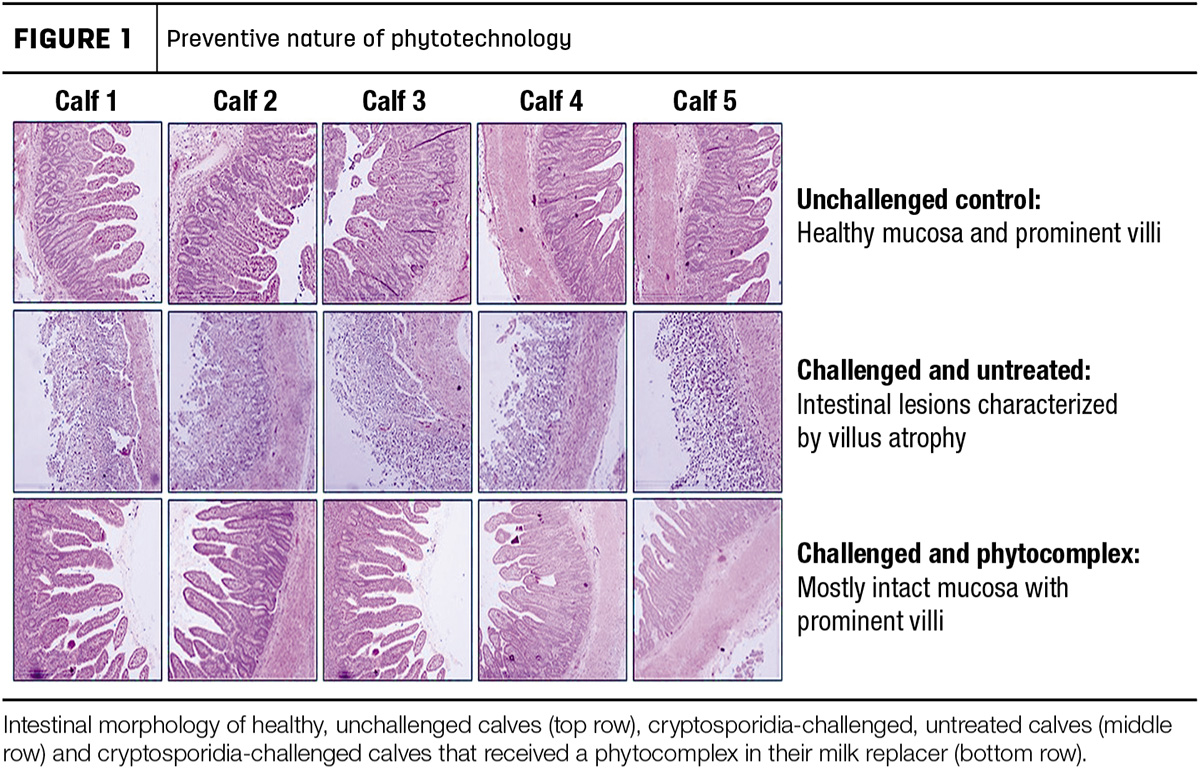
A powerful example of host-focused phytotechnology comes from a recent development project aimed at supporting calves during early-life challenges, particularly those related to gut health and resilience. In this case, researchers explored the effects of a proprietary phytocomplex on calves exposed to Cryptosporidium parvum, a primary cause of calf diarrhea. Interestingly, in vitro studies showed that the phytogenic formulation did not directly affect the parasite – it neither killed nor inhibited the oocysts. Instead, the compound worked by modulating the animal’s own immune system. Specifically, it increased the expression of interleukin-18 (IL-18) in the intestinal tissue, a cytokine known to trigger the production of antimicrobial peptides that help the host combat intracellular pathogens. This immune modulation translated into improved gut morphology and mucosal integrity, even under infection pressure. Importantly, the proprietary phytocomplex was administered before the calves were exposed to the pathogen, highlighting the preventive nature of phytotechnology (Figure 1).
This example illustrates a core principle: Rather than targeting the pathogen directly, we need to empower the animal’s physiological defenses, enhancing its ability to cope with environmental and microbial stressors. It’s not about curing the condition; it’s about building resilience from within.
Beyond antimicrobial replacement
While many phytogenic products on the market are still positioned narrowly as natural alternatives to antibiotics, the potential of phytotechnology extends far beyond this limited scope. Phytocomplexes are not merely replacements to antibiotics, but tools to unlock a broader spectrum of physiological benefits in animals. Their discovery and exploration efforts are increasingly focused on how these phytocomplexes can support key biological systems that influence animal health and performance.
For instance, phytotechnology offers promising avenues to enhance metabolic efficiency, support liver function and promote lean muscle development. It can play a role in modulating inflammation, improving calcium metabolism for better bone health and fine-tuning immune responses. In addition, regulating feed intake, supporting respiratory function, and skin integrity and barrier function are areas currently being evaluated.
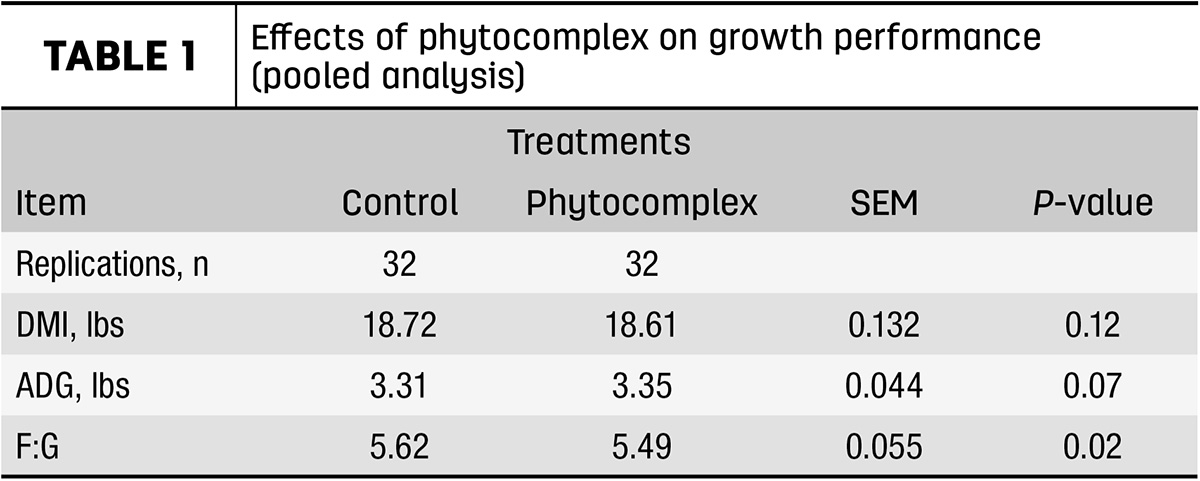
Recent work in receiving and finishing feedlot cattle has demonstrated improved growth performance by feeding a proprietary phytocomplex containing capsicum, clove and garlic in addition to existing feedlot feed additive technologies (monensin and tylosin). A four-trial pooled analysis concluded that the phytocomplex improved average daily gain by 1.33% and feed conversion by 2.24% (Table 1). This clearly demonstrates that the phytocomplex had an effect on metabolic functions that allowed for more animal growth without having to replace existing technologies.
By targeting these physiological domains, proprietary phytocomplexes provide a holistic and multifaceted approach to animal nutrition. Rather than addressing symptoms or isolated challenges, they work to strengthen the animal’s overall resilience. This shift in perspective – from treating problems to proactively supporting the animal – marks a significant evolution in how to incorporate plant-based solutions in modern livestock production. It’s about adding targeted, functional support that helps animals thrive in increasingly complex production environments.
Embracing complexity to empower resilience
As livestock production continues to evolve within an increasingly complex landscape, phytotechnology offers a science-based, forward-looking approach to support animal health and performance. By embracing the complexity of plant-derived compounds and focusing on host-mediated responses, we move beyond simplistic solutions and toward a more resilient, preventive model of nutrition.