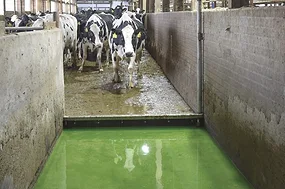
Most dairies are looking for ways to lower their somatic cell count (SCC), have fewer clinical mastitis cases and milk cows faster. There is one important way to help with all three of these areas: drying teats properly. Many dairies are in such a hurry to get the milking routine done that they overlook the importance of the drying step. I have many clients who have focused on proper teat drying, and they all have seen positive results. In fact, some of the bigger dairies have added an extra person to dry teats better, and the benefits definitely outweigh the cost of employing that extra person.

Drying teats can be done with microfiber towels, terry cloth towels and soft paper towels. There are mechanical methods of drying teats as well. The key to any of these options is to spend enough time drying the teats. Research – as well as my own experiences – has shown that the better the job of drying teats, the lower the SCC will be and the fewer cases of clinical cases you will have, and the cows will let down their milk better and milk faster.
Double-dry method
The best method of teat drying is to wipe all four teats dry with one side of the towels, flip the towel over and dry the four teats again, along with a pass over the teat ends. The double-dry method has had such a positive impact on dairies that some have shifted focus to how effectively the milkers dry the teats. Several large rotary parlor dairies have added a second person to dry the teats twice and have seen amazing results, not only in milk quality but also in faster milking. What is important is that once the teat has been wiped dry, do not touch the teat again, or you'll simply put bacteria back on the teats.
Cardinal rules
- Only use one towel per cow. The exception to this rule is if teats are really wet and dirty, then several towels per cow are used.
- Towels must be dry. In attempts to cut costs, some dairies buy washers with super-fast spin cycles, thinking this is good enough, but in my experience, it never is. Think about coming out of your shower and grabbing a towel that has only been through the spin cycle – it will not get you very dry. The same concept is applied when it comes to drying teats properly. A dry towel really means a dry towel.
- Buy three to four towels per number of cows milked. It is very important to have a system where they are washed and dried after each use. A good rule of thumb is to keep a set of towels in the washer, a set in the dryer and a set in the parlor. Be sure to rotate.
- Common problems:
- Using towels for too long: Towels are no longer fully dry.
- Filling the washer too full: Towels do not get clean.
- Filling the dryer too full: Towels are not properly dried.
- Putting clean, dry towels into a dirty container: Towels are contaminated. I see many parlors where towels are put in open clothes baskets with no cover – towels can be contaminated with manure, urine or water.
- Store clean towels in a clean container that has a lid. Clean and dry the interior and exterior of this container once per day. Illustration 1 shows how bad or good storage can make a difference.
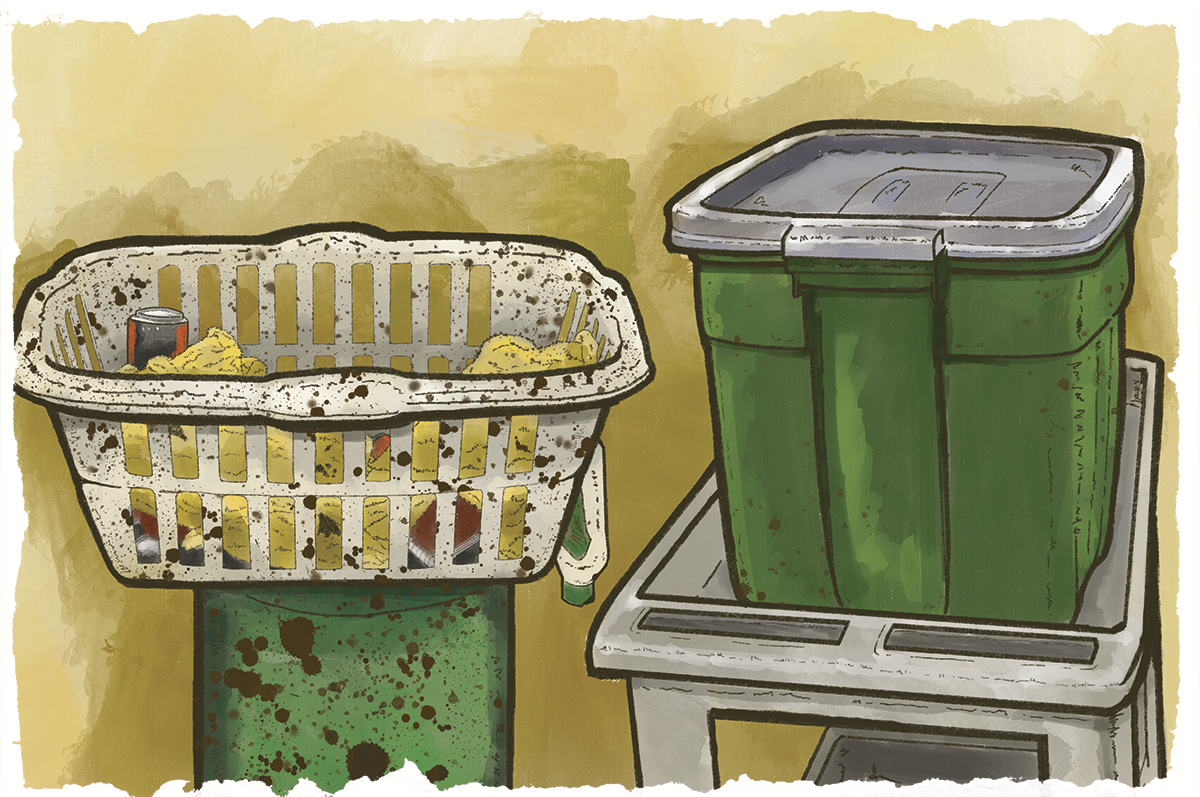
Illustration by Kristen Phillips.
Illustration by Kristen Phillips.
Microfiber towels
The most common towel used in our dairy industry is microfiber towels because they tend to last much longer than other towels. The key with microfiber towels is proper washing and drying protocols. Too much heat can damage the plastic fibers in the towels, making them harsh to teat skin and decreasing their ability to dry teats properly. When washing microfiber towels, the water should not exceed 200ºF (93ºC), and you should never add fabric softener or chlorine to the wash. Drying temperature should not exceed 140ºF (60ºC), and no fabric softening sheets should be added. Proper towel protocol can greatly extend the life of these towels and reduce costs over time.
I have consulted on dairies where they experience an increase in SCC and clinical mastitis cases, but they claim nothing has changed with protocols. When I investigate the dairy, I often find towels are so badly worn that they no longer do a good job of drying teats. On one dairy, I weighed a new towel (40 grams) and then weighed the towels being used (9 grams). On a different farm, the towels were almost impossible to use because they were damaged from being dried at too high a temperature, causing the towels to curl and making them difficult to use properly. See Illustration 2 to see a new towel versus a badly worn towel and a towel damaged due to excess heat.
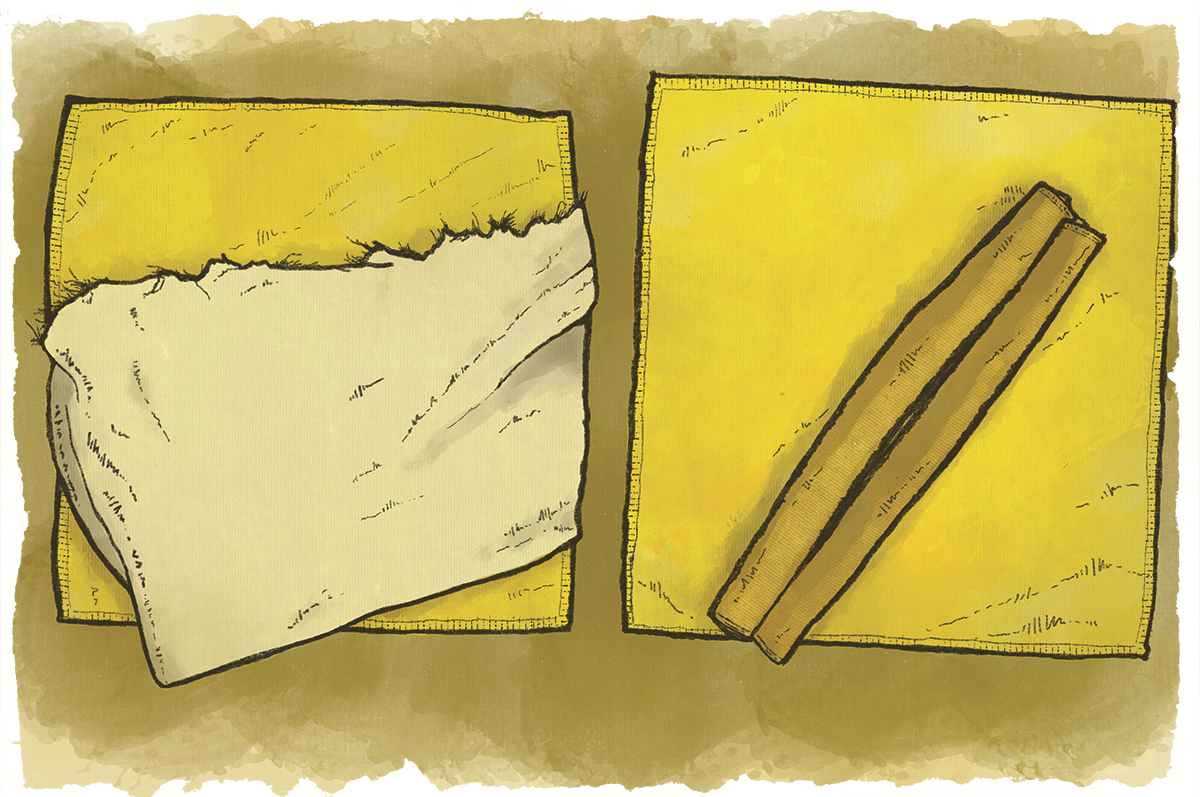
Illustration by Kristen Phillips.
Paper towels
Some dairies use paper towels to dry. When selecting a paper towel, it is important that the towel is strong, soft and very absorbent. Some paper towels are very hard and almost feel like sandpaper; these do a very poor job of drying teats. Selecting the correct paper towel can make a huge difference.
Mechanical drying
Mechanical drying is a rather new technology and, if done for the proper amount of time, works very well. The biggest issue I see with mechanical drying is an operator who is too fast and does not spend enough time to get the teat dry.
The payoff
I think the most overlooked benefits of proper drying are the impact on milk letdown and milking speed. Dairies that have changed to the double-dry method or added a second person in the parlor to dry teats have seen shorter milking durations and significantly higher flow rates.
My recommendation: If a dairy focuses on proper teat drying, benefits will triple, which definitely makes it worth the time.