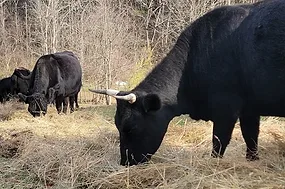
For producers in the upper- and mid-southeast U.S., cool-season perennial grasses such as tall fescue, orchardgrass and perennial ryegrass provide a lot of early grazing in spring before summer heat slows their growth. These forages often produce a large proportion of their annual growth in a relatively short window, known as the spring flush. The spring flush supports nutritional demands, especially of spring-calvers, and reduces reliance on stored forages and feeds. Although it is nice to have abundant forage during this time, rapid growth often outpaces animal demand and may quickly push plants beyond the vegetative stage, which reduces nutritive value and pasture longevity.

Tempting as it may be to turn cattle out on fresh green pastures as soon as possible, it ends up having an effect later in the season. One core principle is to avoid overgrazing early regrowth. Remember, the leaf is a solar panel that collects sunlight to replenish energy; if there is no solar panel left after a grazing event, regrowth is greatly impacted, weakening the stand. In mixed stands common in the Southeast, maintaining adequate residual height during spring fosters deeper roots and better stand persistence through summer stress.
Timing of turnout is a critical decision that can have lasting impacts. One effective strategy is to delay grazing until cool-season grasses reach a target height (typically 6-8 inches, depending on species). Delaying turnout allows pastures to accumulate leaf area that supports both grazing and rapid regrowth. While this may require extending hay feeding early in spring, the payoff can be a more resilient stand and regrowth later in the season.
Once cattle are turned out, rotational grazing or strip grazing helps balance livestock demand with rapid forage growth. Moving cattle frequently, before they overgraze a single area, promotes uniform grazing and keeps plants in a high-quality, vegetative state. It also results in less waste of forage. This can be accomplished easily with the use of temporary electric fencing.
In diverse forage systems, producers often integrate cool-season annuals (e.g., annual ryegrass and cereal grains) to extend the spring grazing window, reduce pressure on perennial stands and provide additional high-quality forage. These annuals can be grazed or conserved and help bridge the transition to warm-season growth. Similar principles of management (residual height and rotational grazing) should be followed to ensure efficient use of this rapidly growing, high-quality forage.
By actively managing grazing timing and pressure and forage allocation during the spring flush, Southeastern producers can improve forage utilization, maintain pasture health and extend the productive grazing season.