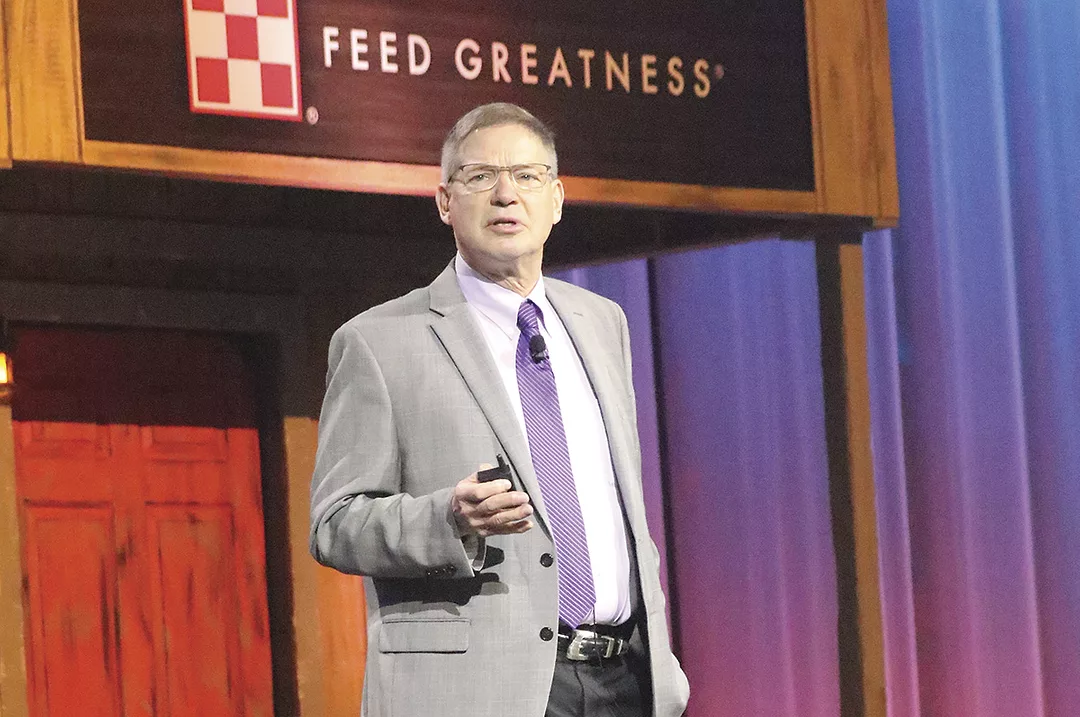
The U.S. beef industry is entering a period of historically tight supplies and record-strong demand, with shifts in both the beef cow herd and dairy sectors shaping the next several years. The beef cow herd is expected to begin 2026 about 180,000 head higher, marking 2025 as the cycle low, said Kevin Good, CattleFax, at the NCBA Cattle Con 2026 in Nashville, Tennessee.

“This past year will make the seventh year that we’ve seen some mild liquidation,” Good said, noting that the current cattle cycle has been unusually prolonged.
Weather has been a key driver, with producers cautious about expansion despite strong prices.
“We’d like to see a couple wet years back to back before really going ahead and expanding,” Good said.
The latest inventory report confirms the prolonged tightening.
“Here we are seven years of total herd that’s declined,” Good said. “So this cycle has been prolonged, number one by Mother Nature. Yet beef production has not fallen nearly as sharply as herd numbers. We are doing more with less. As we think about beef production, it continues to trend higher with less with heavier carcass weights and more fed cattle coming from the dairy industry.”
Good continued, “The disappointing part is we just have not kept enough heifers back to rebuild the herd. As a result, it does appear like this is going to be a much slower turn. Supplies will stay tighter longer because of that; it’s just going to take longer to turn the ship around.”
Looking ahead to 2026-27, the outlook hinges heavily on Mexico. Last year, U.S. placements dropped sharply when the border was closed.
“CattleFax expects that whenever the border does reopen, you will have bigger fed supplies as you move six, nine, 12 months down the road,” Good said. “Until then, the longer the border stays closed, the tighter supplies will stay.”
Carcass weights are another crucial factor. Over the last two years, weights have gone up combined 52 pounds, Good said. That’s an offset of 2 million head in harvest, all while demand stays strong.
Retail beef prices, adjusted for inflation, are also at historic highs.
“Retail prices today are the highest they’ve been going back 50-plus years,” Good said. “Since the late 1990s, our prices have gone up 2-plus percent faster than the rate of inflation. Those are real dollars that can be spread all the way back down to the cow-calf operation.”
In summary, Good said, “On the supply side, yes, we are turning the corner. It’s all about Mexico. Domestically, supplies will stay tighter a little bit longer. Demand continues to be stellar. But we do feel like we are at a point here where we’re probably pushing the consumer to some degree and will have to watch that.”
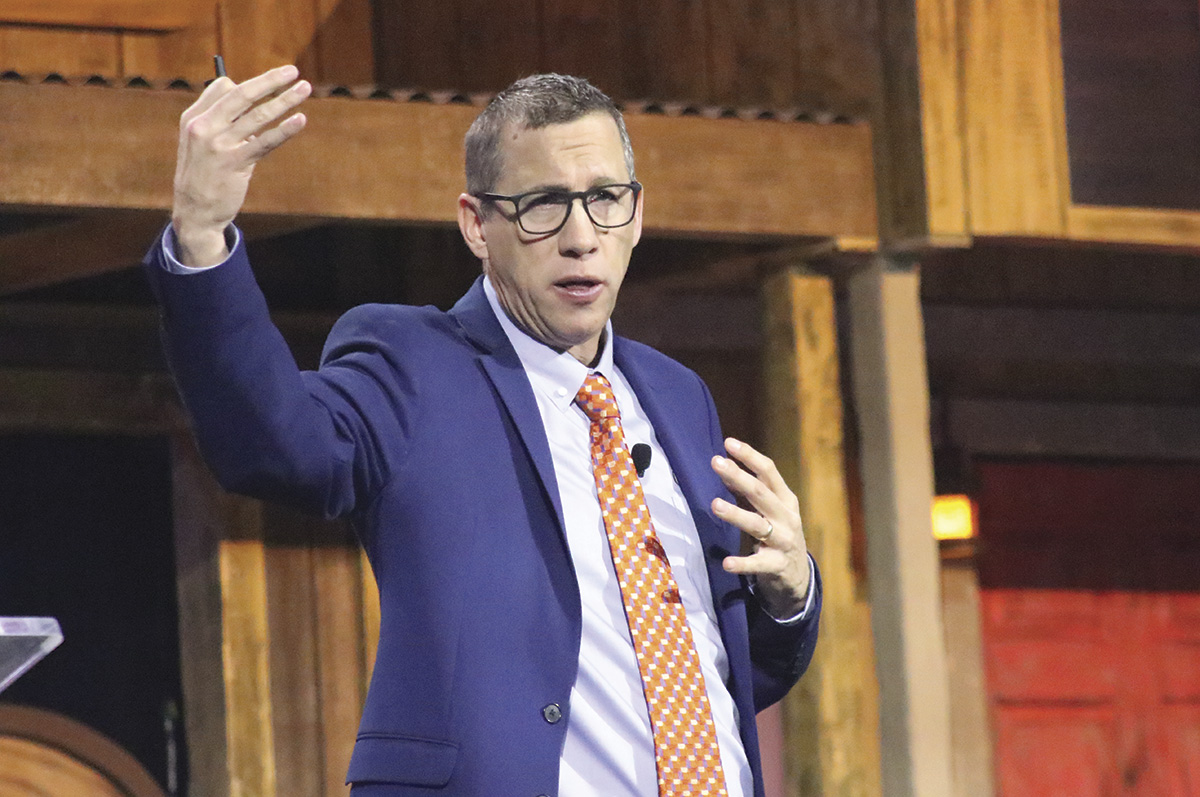
Mike Murphy. Image by Carrie Veselka.
Price outlook
Opening the price outlook, Mike Murphy, CattleFax, sharing Good’s broader market view and noted that herd rebuilding is underway but gradual.
“You look at it relative to expansion, it's certainly a lot more of a slow expansion that's taking place,” Murphy said. “The impact of the closure of the Mexican border is huge across all classes of capital.”
Despite policy headwinds, demand remains a key support.
“It was very clear that demand is very strong, but we are starting to hit that ceiling, that resistance area,” Murphy said. “However, by no means, as we look forward into 2026 or even into the end of the decade, are we very concerned about a major rollback to demand.”
For 2026, CattleFax projects an average beef cutout of $370, with a typical seasonal range.
A major focus Murphy shared was the leverage between cattle feeders and packers, especially in light of recent plant changes. Referencing Tyson’s announced closures, there is a significant shift that's taking place in terms of the leverage, Murphy said.
He quantified the stakes clearly: “A 600,000 change in slaughter is to be worth roughly 1 percent in terms of that leverage. A 1 percent change in leverage is worth almost 4 dollars to the fed cattle market.” Based on their modeling, “we're suggesting that we're going to have about a 57.5 percent leverage for this year, compared with around 61.5 percent in recent years.”
Border policy with Mexico remains a pivotal variable.
“Today, it looks like the border's going to be shut down further into the spring or even potentially into the summer time frame,” Murphy said. “As long as it stays closed, we will probably favor the leverage at the cattle feeding level, between the packing segment. But once the border reopens, there's going to be all of a sudden, another million-plus head of cattle that will be transitioned, and that's what allows for us to say this fed market will start to turn back lower.”
Murphy continued, “Looking ahead, 2026 is a great profitability year, especially at the cow-calf level. But the industry is in the process of rolling over cyclically, and you should expect those bigger drawdowns later in the decade as supply and policy conditions shift.”
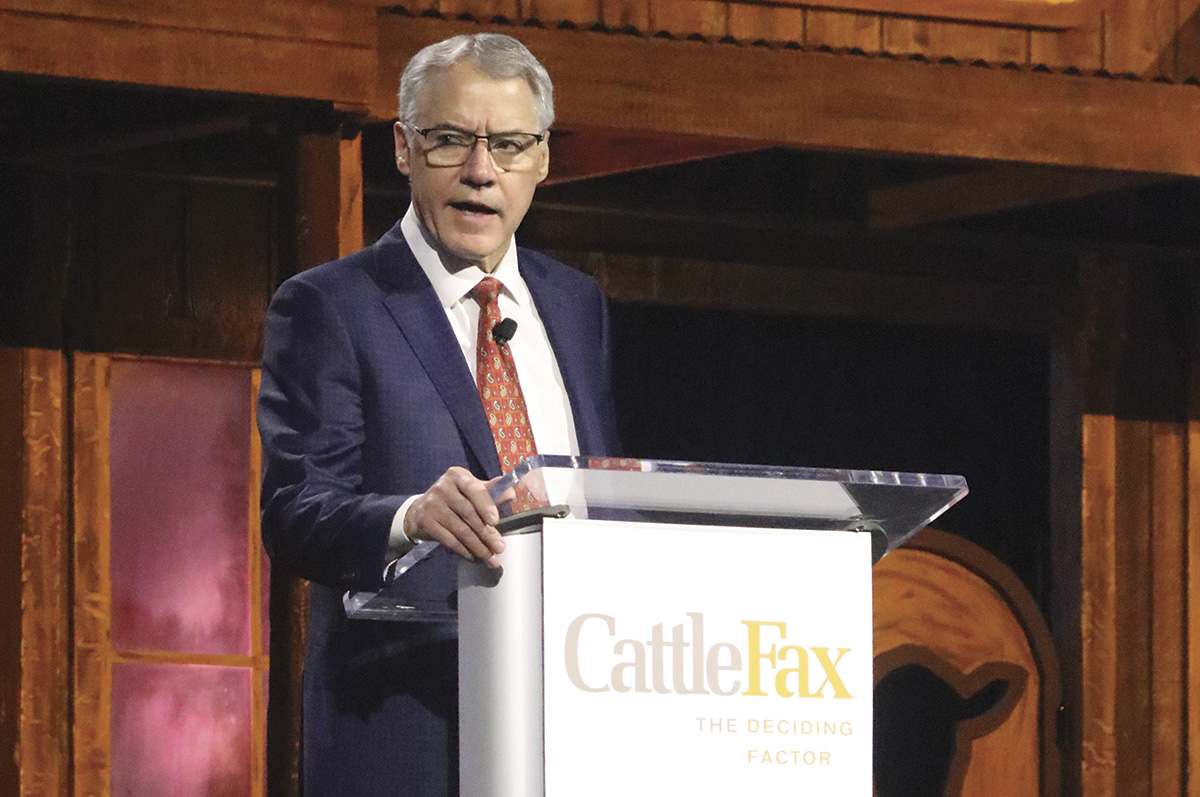
Randy Blach. Image by Carrie Veselka.
Executive summary
Finishing out the CattleFax session, CattleFax CEO Randy Blach urged producers to recognize both the strength and fragility of today’s cattle market, driven by two decades of sustained demand growth.
“In an industry that has gone from producing 55 percent Choice and Prime animals to 85 percent, this really has been the foundation of the demand growth that we’ve experienced,” Blach said. “While the CPI has risen 2.5 percent a year, retail beef prices have gone up 4.6 percent a year over the last 20 years. That shift has been worth over 1,000 dollars a head.”
Quality improvements have transformed the consumer experience.
“Remember when half the product we were producing was Select,” Blach said. “One or two out of every four steaks we produced was not a quality eating experience and y’all fixed it.”
The record profitability across feedyards, stocker and cow-calf operations can be celebrated, Blach said.
“But don’t get too complacent,” Blach says. “We are in a time and in a market that’s been heavily influenced by government policy. It’s volatile. That can be very unforgiving. So do be careful.”