Stop us if you’ve heard this before: El Nino is on its way. If you’ve been dry for the last few years, there’s moisture on its way to you.

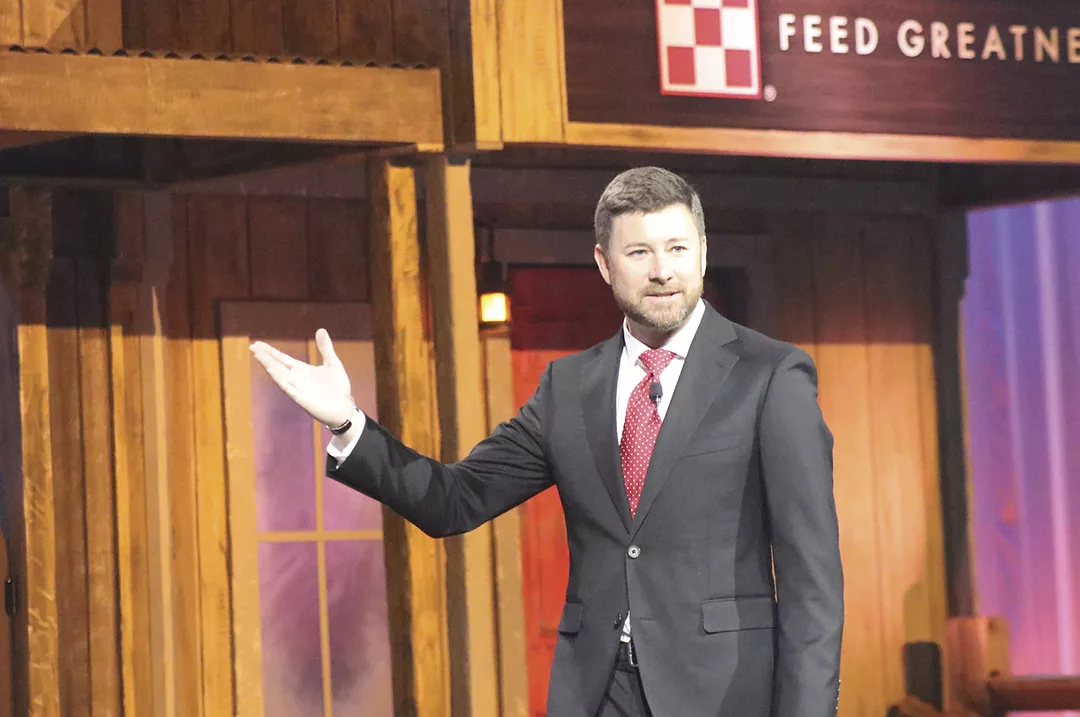
In the wake of a winter storm that hammered much of the Midwest and South in late January, meteorologist and atmospheric scientist Matt Makens acknowledged during CattleFax’s 2026 outlook seminar on Feb. 5 that the much-hoped-for El Nino conditions in 2024 and 2025 never materialized in a way that cattle producers hoped for. However, history strongly suggests – and current computer models and ocean temperatures agree – that we can expect El Nino conditions to develop into the summer and fall months of 2026. That likely means more moisture across much of cattle country.
“We’ve opened the barn door, going in the other direction, swinging toward El Nino,” Makens said. “How quickly will this happen? That’s the big question.”
Makens specifically advised producers to be diligent about keeping track of local weather patterns throughout the first half of the year, as the expected transition from La Nina to El Nino has the potential to cause wild swings in temperature and precipitation.
“If you’re calving, be very diligent in tracking those temperatures, because you’re not out of the woods,” he said. “We can get these shots of cold coming out of Canada, and that can be tremendously impactful.”
But as the year rolls on into the summer and fall, warmer and wetter conditions should be expected, at least in southern states, offering respite from years of drought in areas such as Texas and Oklahoma – though the northern Plains and Pacific Northwest may face renewed challenges.
“We’ve seen some Pacific moisture, but it’s drier than average. We’ve seen drier-than-average conditions for exceptional drought across Oklahoma, Texas and across the Southeast,” Makens reported. However, he said, as we get into the later months of the year, “We’re going to start to shrink down this drought area. [With] El Nino, this will flip across the country. If you’ve been dry, you start to get wet; if you’ve been wet, you start to get dry.”
What remains difficult to forecast is the relative strength of any expected El Nino event in 2026. A strong El Nino, Makens said, will deliver much different weather results than a weak one. Slightly more precipitation than the past few years will certainly be welcomed by many who have been navigating drought conditions, but it will take significant amounts of moisture to allow much of the country’s grazing and agricultural land to fully recover.
Looking forward to the rest of the year, Makens said that as El Nino develops, the West and South will likely see favorable precipitation conditions – particularly welcome news for producers west of the Rockies, who have to this point experienced historically low winter snowfall. He expressed concern about the Southwest and the area extending into West Texas, the Oklahoma Panhandle and western Kansas, wondering aloud whether El Nino will have its full-blown effect across the region.
“We’re still going to have to worry about drought across the panhandles, the Plains, Arizona, California,” he said.
So is this El Nino thing actually going to be for real this year? Makens certainly seems to think so. At the very least, he said, we should be leaving La Nina behind and entering into a more neutral weather phase. How quickly and intensely those conditions come remains to be seen, but producers should expect some changes in the weather as 2026 rolls along.
“What I am most stressed about this year is the speed at which this happens,” Makens said. “The speed of the transition will be critical.”