The French writer Jean-Baptiste Alphonse Karr first wrote “The more things change, the more they stay the same” in 1849. Although I can’t confirm it, I think he was writing about the American cattle industry when he penned the proverb.

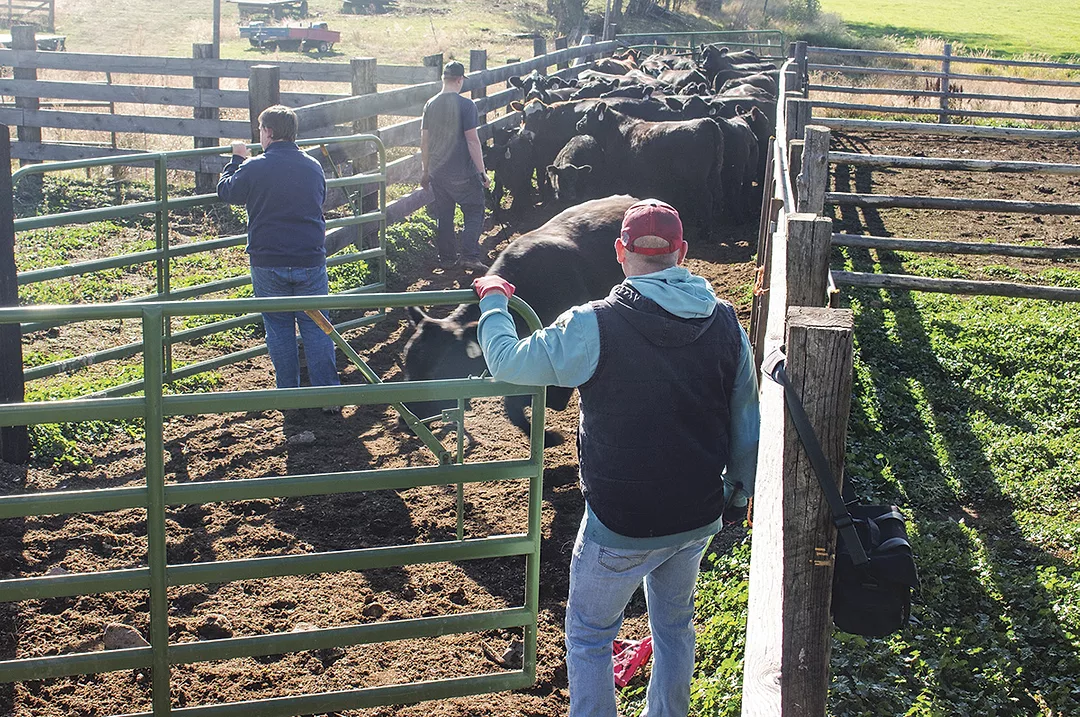
Over the coming weeks and months, ranches across the U.S. will gather their herds for the annual springtime tradition of branding. In addition to marking ownership of the year’s calf crop, cowboys will administer vaccines to young calves in an effort to curb a disease that is just as consistent as the spring ritual: pneumonia or bovine respiratory disease (BRD). Despite advances in vaccines, antibiotics, genetics and nutrition, the incidence rate of BRD has held steady at 15% for the past 40 years. In calves older than 3 weeks, BRD remains the leading cause of death.
Branding occurs just as summer pastures are ready for grazing – but also at a pivotal point in the calf’s immune development. At birth, calves ingest antibody-rich colostrum from their dam. These antibodies provide the calf’s naïve immune system with immediate protection against pathogens which could cause disease, including BRD.
Over the first few months of life, however, these maternal antibody levels wane, leaving the calf susceptible to illness if they are exposed to the pathogens. Vaccination provides controlled exposure to altered versions of the pathogen, allowing the calf to create its own antibodies in preparation for future exposure.
Another important benefit of early vaccination is that with proper response, a preweaning vaccine acts as a booster that generates an anamnestic, or memory, response. This secondary response generates higher antibody levels, and does so more quickly, than the primary vaccine response.
Since weaning time stacks numerous risk factors together toward BRD, achieving this anamnestic response is crucial in maintaining calf health. If calves do not respond adequately to their spring vaccination, they cannot mount this protective response in the fall, leaving them more vulnerable to disease.
Declining trace mineral levels
Just as maternal antibody levels decrease over the first few months of life, trace mineral levels follow a similar trajectory. While milk is known to be high in macrominerals such as calcium and phosphorus, milk does not contain adequate levels of trace minerals to meet the calf’s needs. To get ahead of this, cows will transfer large amounts of trace minerals such as selenium and copper into the calf’s liver prior to birth. While this depletes the dam’s trace mineral status by approximately 30%, it loads the calf’s liver stores up to 20 times greater than its dam.
These levels will decrease by 75% in the first eight weeks of the calf’s life. When the date circled on the calendar for branding arrives, calves may not have enough trace minerals to respond to the vaccines.
The role of trace minerals in immunity
While vaccines are designed to increase antibody levels, the vaccine alone is only a recipe for the body to follow. When a vaccine is given, an immune response is generated. This signals the body to bring white blood cells to the area to prevent infection from spreading.
Some of these specialized cells, known as antigen-presenting cells, will gather up some of that vaccine and take it back to lymph nodes. Lymph nodes are the factories where antibodies are produced. Antibodies help the immune system by remembering pathogens that have previously entered the body to more quickly eliminate them in the future.
Energy and protein are essential for this process – but trace minerals play equally critical, and often overlooked, roles:
- Selenium enables white blood cells to exit the bloodstream and reach the vaccination site.
- Copper aids antigen‑presenting cells in phagocytosis, the process of consuming the pathogen.
- Zinc is critical for producing lymphocytes – the cells that ultimately generate antibodies.
- Trace mineral‑dependent antioxidants help clean up cellular damage created during the immune response.
In order to achieve immunization and not simply vaccination, calves must have adequate trace mineral levels. A 2025 study from the California Animal Health and Food Safety Laboratory indicated 68% of post‑mortem diagnosed BRD cases also showed trace mineral deficiencies, even though many of the calves had been vaccinated.
Similar findings from Utah State Veterinary Diagnostic Lab indicated that more than 90% of summer pneumonia cases involved copper or selenium deficiencies. These studies indicate calves may not be responding to vaccines due to decreased trace mineral status, leaving them susceptible to disease later in the summer.
Injectable trace minerals: One more shot
Injectable trace minerals have shown to be very effective at increasing calves’ trace mineral status to improve vaccine response. Unlike oral drenches and pastes that must be absorbed via the gastrointestinal tract, injectable trace minerals are absorbed quickly into the bloodstream, peaking within eight to 10 hours. This rapid increase ensures the calf has the minerals needed to produce antibodies following vaccination.
In one university study, only 53% of vaccinated animals responded to the vaccine as measured by a fourfold increase in antibody titers. When the same vaccination protocol included injectable trace minerals, 80% of the animals successfully responded. Not only did those animals cross the fourfold threshold, but many had an eight- and ninefold increase in antibody titers. Follow-up challenge studies showed calves that had injectable trace minerals given at the same time as vaccination had decreased clinical signs of disease when challenged with infectious bovine rhinotracheitis (IBR) and BVD viruses.
While the benefit of change can be debated, one change most of us can agree on is decreasing the rate of BRD. Enhancing vaccine response through improved trace mineral status is a practical, research‑supported step – and one that’s certainly worth giving a shot.