Several serious livestock diseases are caused by a group of bacteria called clostridia that can produce deadly toxins. Many cattlemen are familiar with blackleg, tetanus and enterotoxemia, but some may not be familiar with redwater.

Redwater, the common name for bacillary hemoglobinuria, is caused by the bacterium Clostridium haemolyticum and affects adult cattle. Clinical signs may include red urine, blood-stained feces, yellow mucous membranes and severe depression. In many cases, you just find the animal dead due to rapid progression of the disease.
“Up until a few years ago, redwater was not considered a problem in Missouri, until a case was confirmed at our university Veterinary Medical Diagnostic Laboratory six years ago,” says Craig Payne, an associate extension professor of veterinary medicine with the University of Missouri. More cases have been confirmed since then. Payne encourages stockmen to be aware of the disease regardless of their location and feels the small number of cases confirmed at a lab do not reflect the magnitude of the problem.
Redwater is a complicated disease because there are several factors involved. All clostridium bacteria are spore-forming, and the spores can survive in the environment, in some cases for many years. When spores are ingested or enter the body through wounds, they can germinate, multiply and produce lethal toxins if conditions are ideal for growth.
With redwater, spores are ingested by cattle, go through the intestinal wall and are carried to the liver via blood circulation.
“In the liver, the spores are phagocytized by cells that engulf the spore and create a compartment around it,” says Payne. “These spores can remain dormant for months.”
If liver damage occurs, less blood oxygen to damaged tissue creates ideal conditions for spores to grow, multiply and produce toxins, which cause a cascade of events leading to redwater disease. The liver damage that triggers this growth can be any insult on liver tissue, but damage by liver flukes is often associated with redwater.
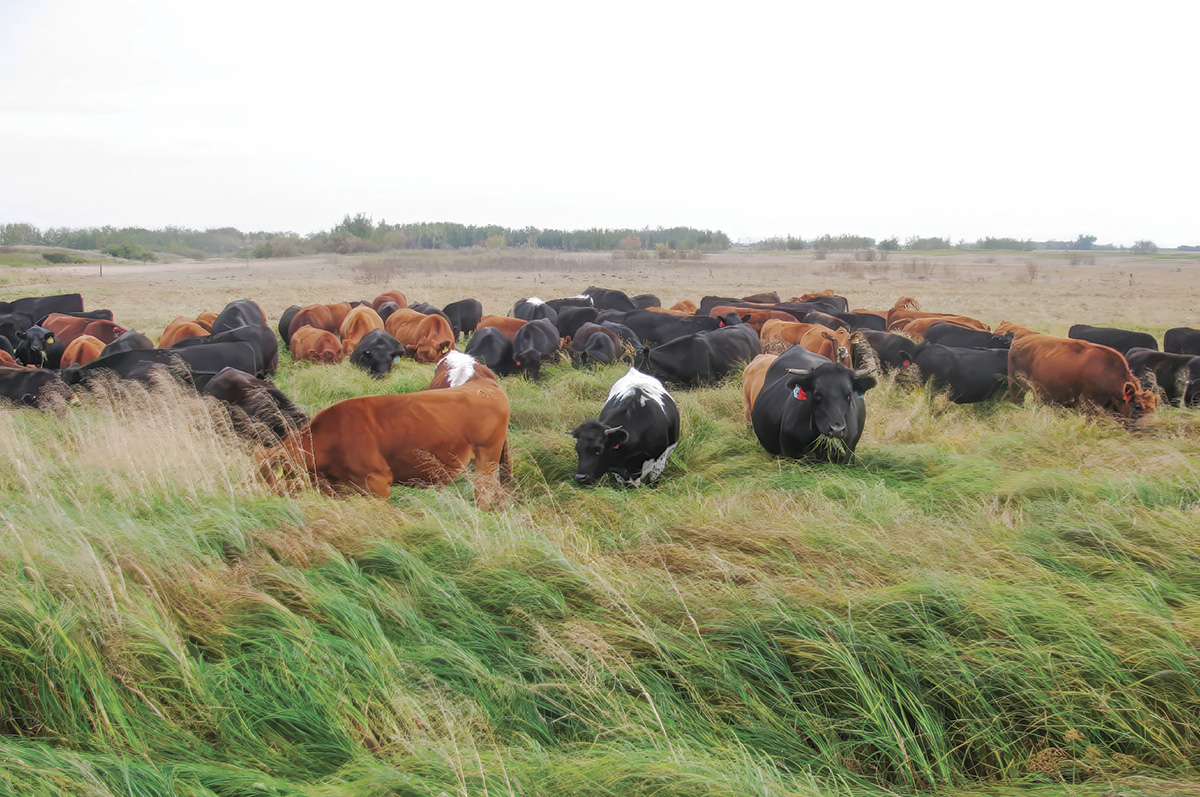
Sloughgrass patches are a common place where cattle pick up immature flukes. Image by Don Ruzicka.
“More than half the cases diagnosed at our lab had liver damage from flukes,” says Payne. This was a surprise to some cattle producers because Missouri is not generally thought of as an area where fluke populations exist.
“In locations where flukes have been discovered in Missouri, it’s usually the deer fluke (Fasciola magna),” says Payne. “The common liver fluke (Fasciola hepatica) is what most people think of regarding flukes in cattle, but the deer fluke seems to be the predominant species here.”
Flukes add complexity to this disease, but Payne reminds veterinarians and producers to not focus exclusively on the parasite when trying to control or prevent redwater.
“Not all cases of redwater are due to liver damage from flukes,” he says. “In some cases, hepatic abscesses or some other insult to the liver may trigger multiplication of the clostridial bacteria that were dormant spores in the liver. Controlling flukes, especially deer flukes, is difficult and complicated [due to a] limited choice of products, poor efficacy of products, timing of treatment and complexity of the deer fluke life cycle. Prevention of redwater is primarily through vaccination.”
Most cattlemen are familiar with blackleg vaccine. Clostridial vaccines are commonly referred to as 7-way or 8-way vaccines – indicating the number of clostridial antigens in the product. When vaccinating for redwater, the product must contain Clostridium haemolyticum and is often called an 8-way vaccine.
“Read the label and look for ‘redwater’ or ‘C. haemolyticum,’ or consult with your veterinarian to make sure you choose the appropriate vaccine,” says Payne.
Duration of immunity with the redwater component of the vaccine is only about six months. He recommends vaccinating twice annually for yearlong protection. If your area has snail habitat (where snails may harbor immature states of liver flukes), you may need more frequent vaccination.
“Since this is a disease primarily of older animals, adult cattle must be vaccinated,” Payne says. “Your herd health veterinarian can advise you on a vaccine program and work with you on fluke control if necessary.
“Consider burning or deep burial of animals that die from redwater,” he continues. “If the carcass is left to decompose, C. haemolyticum spores will contaminate the area around it, increasing the risk of exposing other animals. Spores can be spread through flooding, natural drainage, carrier animals and hay contaminated with spores.”
Movement of cattle and hay enable this disease to show up in new areas. So, Payne says, “A well-designed vaccine program will be your best defense.”
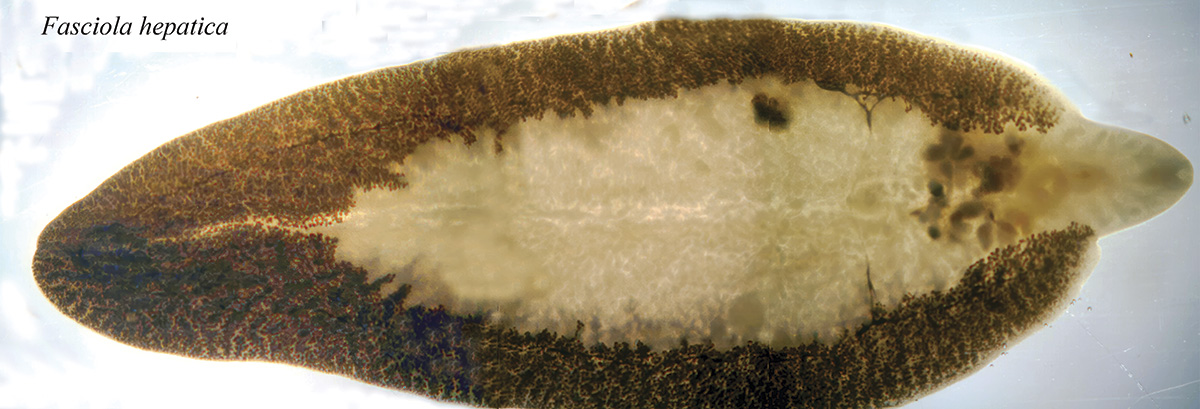
Albendazole is the typical treatment for cattle liver flukes (Fasciola hepatica), which can grow up to 20 to 30 millimeters long in the liver. Image provided by Thomas Yazwinski, University of Arkansas.
Liver flukes
These parasitic flatworms start their life cycle in tiny freshwater snails but end up in the liver of a grazing animal (cattle, sheep, elk, deer, etc.), where they grow and mature in the liver and pass eggs. Feces containing fluke eggs must land in water for transmission to snails and survival of the next generation.
When they hatch, immature flukes swim around looking for a snail. They penetrate its soft foot, get into its body and start multiplying. After they leave the snail, they swim again to find plants growing in the water and attach to those, where they can be eaten by grazers.
Cattle mainly get two types of liver flukes: the cattle fluke (Fasciola hepatica) and giant deer fluke (Fascioloides magna). Cattle are a dead-end host for F. magna because the flukes can’t pass their eggs. When F. magna flukes mature and pair up in the liver, the liver walls them off in a fibrous connective tissue capsule.
Certain areas in the U.S. and Canada have problems with cattle flukes – wherever there is habitat for the snails that are essential to the life cycle. Some regions have more problems with deer flukes because these parasites are endemic in wildlife (deer, elk, moose, etc.) and are picked up by cattle.
Veterinarian Anne Rogers at Edson Veterinary Clinic in Edson, Alberta, has seen a growing number of cases of deer fluke crossing over from elk into cattle.
“We see flukes most commonly in cattle grazing low-lying areas with marshes, since snails are the intermediate host,” Rogers says. “These flukes damage the liver, and we’ve seen everything from cattle just not doing well to cattle that die of liver failure if damage is severe.”
More importantly, however, is that these cattle can die from redwater.
With the cattle fluke, the feces can be checked for eggs. “But with the deer fluke, there’s no good way to diagnose this in the live animal,” says Rogers. These flukes get walled off in the liver and aren’t passing eggs. The problem is generally not diagnosed until the animal dies or is slaughtered and the liver checked.
Though some animals do poorly and lose weight, others appear healthy.
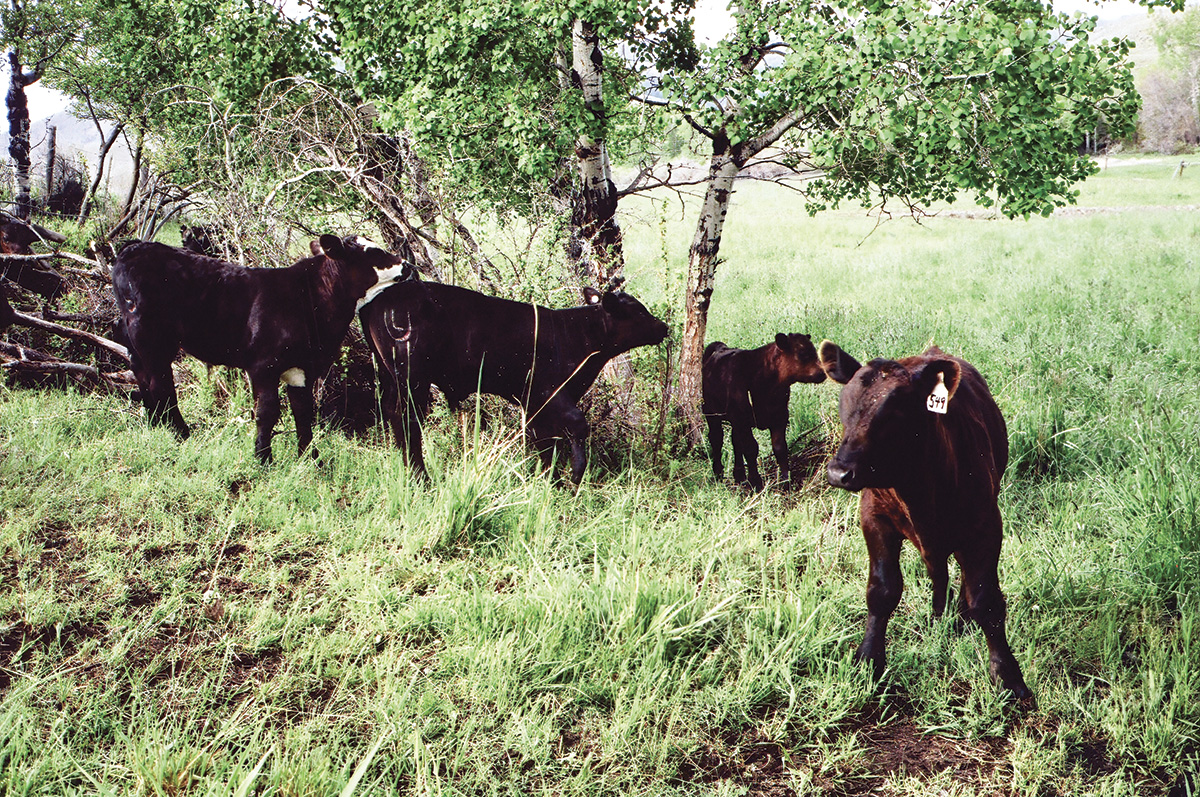
Cattle grazing in wet or swampy pastures, especially in spring, can be susceptible to contracting liver flukes from snails that live in and around these environments. Image by Heather Smith Thomas.
“We’ve found deer flukes in 4-H steers that were fat and healthy,” Rogers says. The liver will be full of flukes, but they haven’t done enough damage yet to create an adverse impact on the live animal.
“Sometimes deer flukes get mixed up, since they are in the wrong host, and migrate through the body instead of going to the liver,” says Rogers. “I’ve found them in the lungs, creating an issue there.”
Typical treatment for cattle flukes is albendazole (Valbazen), which kills mature flukes in the liver. But it doesn’t work as well for deer flukes.
“If a [cow] herd has deer flukes, we use albendazole in higher dosage,” says Rogers. “At necropsy (in treated animals), we’ll find dead flukes in the liver, so it does kill them. There is no drug labeled for deer flukes, however, so your veterinarian would have to recommend and prescribe the higher dose.”
To effectively treat flukes, work with a veterinarian regarding products, dosage and timing, since you need to treat cattle at a certain stage of the fluke life cycle.
“The flukes must be at a certain level of maturity before they are susceptible to the drug,” says Rogers. “There are some cautions about using albendazole during the first trimester of pregnancy.”
There is no real data on how prevalent deer flukes are in wildlife or how many hunters have found damaged livers in deer, elk and moose; it’s a little easier to keep track of the pests in cattle.
“With veterinarians, ranchers and butchers working together, we get a better picture of what’s going on,” says Rogers.