In today’s competitive beef industry, maximizing efficiency and productivity is crucial for profitability. While traditional methods passed down through generations might keep operations afloat, arguably, many are outdated, often stacking inefficiencies and higher costs that hamper overall performance. Fortunately, advances in technology are slowly changing how cattle are managed.

For example, companies are offering innovative solutions enabling producers to access real-time weight data directly from pairs on summer pastures. By harnessing tools like these, ranchers can make more informed decisions to support herd health and optimize production outcomes.
Benefits of knowing real-time weights
Julie Walker, a professor and extension beef specialist at South Dakota State University, believes access to real-time weights for both cows and calves allows producers to monitor their herds more accurately and identify concerns, such as needed feeding-program adjustments, underperforming animals and health concerns.
“These are excellent advantages, but keep in mind, this information is only beneficial if producers are using and checking it regularly or addressing alarms/notices when animals fall out of set parameters,” Walker warns.
Advancements like this make monitoring possible without the added stress of moving groups to permanent weigh scales. The acquired data provide accurate decision-making information to modify feeding regimens or rotate pastures.
“Knowing actual weights may also allow operations to move their weaning dates due to performance issues or changes in forage supplies,” says Walker. “This could be adjusted earlier or later to potentially cash in on higher calf prices.”
Additionally, health concerns are costly when not detected early. Sick animals won’t move to water as regularly, which could alert owners to locate and assess specific individuals.
“Producers check their animals frequently, but are they taking the time to evaluate each one?” Walker asks. “These real-time technologies could add an extra tool to improve response time in finding the sick or poor performers.”

MJE Livestock’s Cattle Worth app uses AI-powered image processing to estimate cattle weights and current market value. Courtesy image.
Cattle Worth
MJE Livestock of Kansas has been building feedyards, dairies and portable fencing for more than 50 years. In 2025, they debuted Cattle Worth, a mobile app applying artificial intelligence-powered image processing to estimate livestock weight and market value.
“Owners need only a phone and cell connection,” says Megan Elsey, MJE Livestock’s director of public relations and marketing. “Just snap a photo of the cow or calf in the pasture, and within seconds, receive weight estimates with up to 97 percent accuracy, plus real-time market valuation tied to live Chicago Mercantile Exchange (CME) data.”
The app is available for download on Apple and Android devices. For best results, users should take a clear, horizontal side photo with a single animal and minimal fencing.
With more than 4,000 subscribers, the app’s algorithm is constantly improving. Partnering with universities helps further refine its accuracy.
Elsey understands Cattle Worth may never replace mechanical scales, but she believes it helps operators make weight-based decisions on numerous questions. Many ranchers estimate their sick animals’ weights, but antibiotics and treatment protocols are expensive. More precise knowledge delivers more accurate antibiotic distribution.
“Innovations like ours also help with buying and selling decisions,” she says. “‘Should we market them, or should we wait?’ ‘What’s the rate of gain?’ ‘Are the hormone implants being effective?’ Since we track individuals in the app, we see real-time data on how quickly they’re gaining.”
MJE Livestock is actively collecting feedback from subscribers and university students to identify desirable and key features. They’re hoping to enhance the Cattle Worth app and explore further integrations to benefit farmers and ranchers.
Courtesy image.
Optiweigh
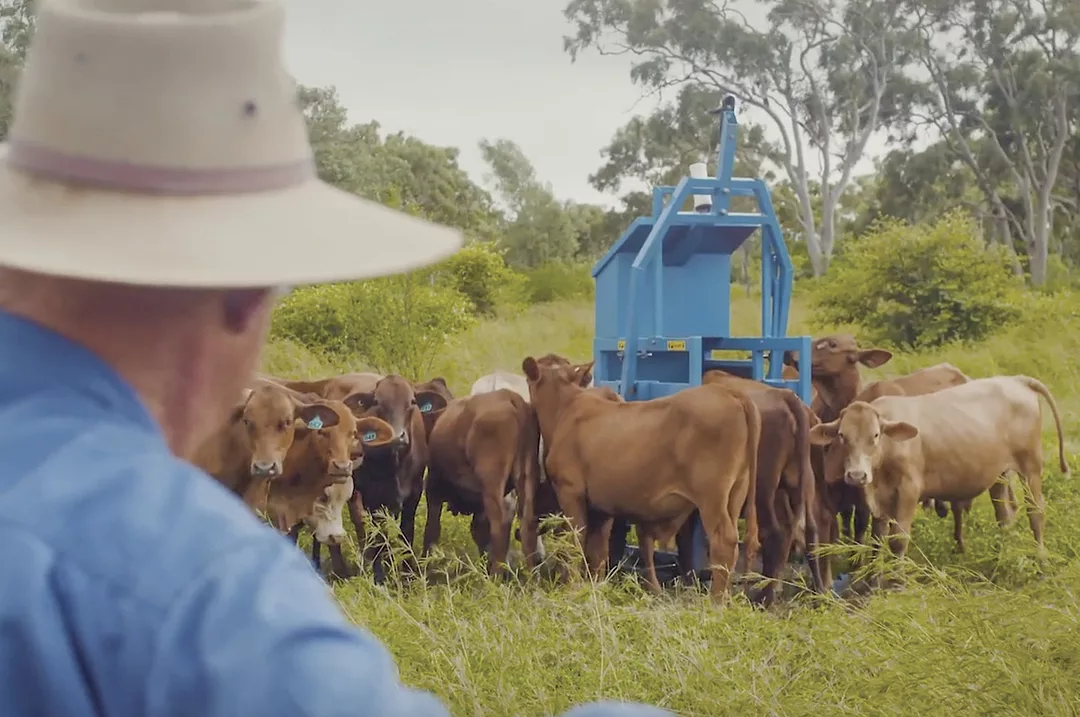
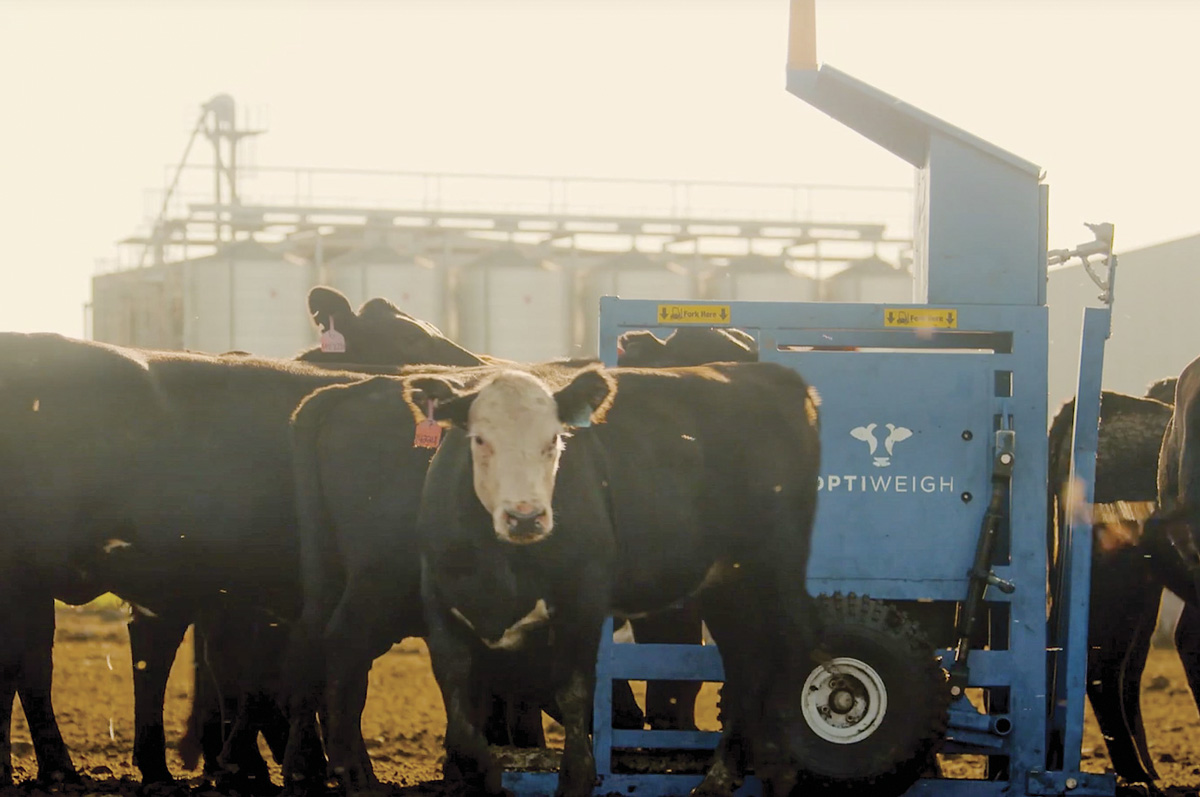
On his 4,000-acre family ranch in Australia, Bill Mitchell developed a computerized and portable front-foot weighing system.
“I had what I first thought was a ridiculous idea,” says Mitchell, Optiweigh founder. “Would it be crazy to put a weight platform in the pasture? Cattle are curious by nature, and I wondered if they would voluntarily step onto a portable scale.”
To find out, Mitchell cobbled together the frame and basic electronic components of his portable scale and placed it in a pasture. While the cattle wouldn’t put all four feet on the platform, they willingly stepped up with two, offering quite accurate readings. Prototype weights compared favorably with traditional chute-generated results. Encouraged by these findings, Mitchell sent two units to ranches across Australia to test various sizes and breeds. The data collected showed promising results, demonstrating the system’s viability.
Optiweigh has since grown to over 20 staff and built more than 1,000 units. They recently expanded operations into North America.
Mitchell says with real-time pasture weights, producers can precisely manage sales, know when their animals are finished and hit desired specifications. He explains that customers often discover unexpected insights about weight gain by tracking real-time data, like how weather, nutrition and water quality affect cattle.
“Over time, operators shift from simply appreciating the technology to actively using the information for smarter management decisions and continuous monitoring, leading to a deeper understanding of what drives weight gain,” Mitchell says.
Technology’s role in the future of cattle production
Mitchell thinks it’s crucial to incorporate advanced technologies into the future of ranching.
“We must use our science and our knowledge to create and adopt technologies that work in the real world of livestock production,” he says. “The old ways of doing things, like employing lots of staff, devoting excess time and adding unnecessary stress to all involved, aren’t going to cut it long term.”
Elsey emphasizes that technology like Cattle Worth makes real-time scale weights accessible and virtually removes the stress of moving groups to mechanical scales.
“It’s a cost-effective way to gain better herd data,” she says. “We know ranchers are using technologies and continuing to change how they grow and care for their animals, and we want to be there to support them.”
Walker believes in-pasture weighing technology can bring multiple benefits, including early disease identification, the recognition of feed issues, and time and labor savings.
“Producers face so many demands on their time,” Walker says. “While industry profits are strong now, this will not always be the case. New technologies can help spot problems early, reducing costs and improving herd health, but farmers and ranchers need support and training to use them effectively and recover the costs associated with them.”