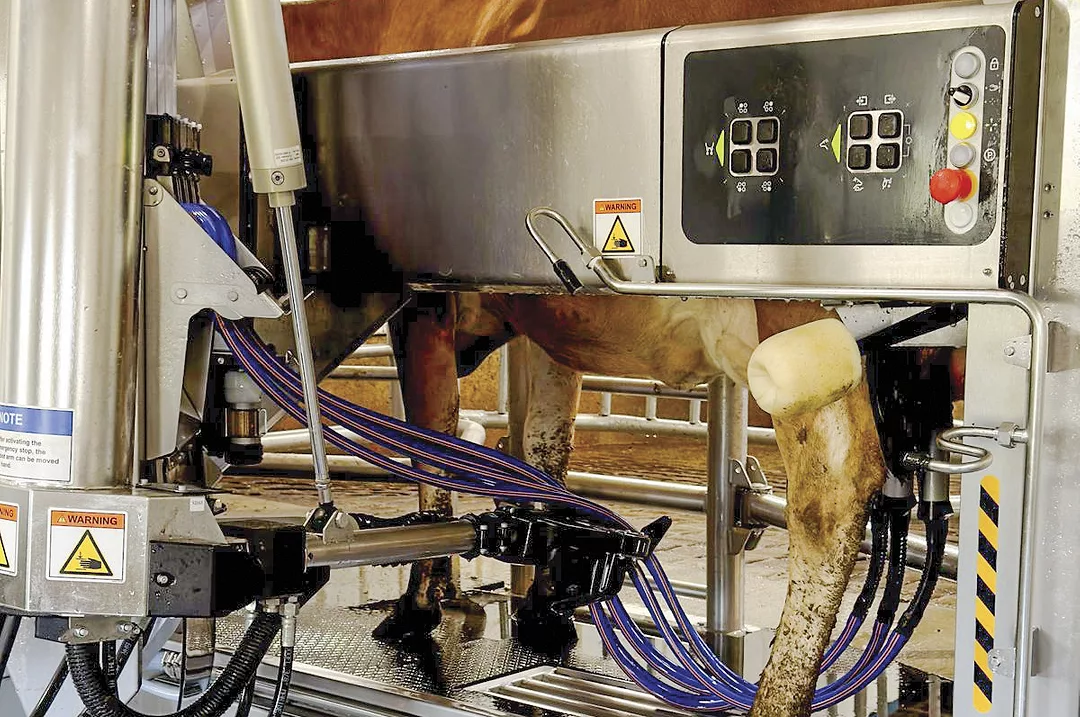
Clean, well-maintained equipment doesn’t just look better but performs better, lasts longer and costs less over time.

Think about a car for a moment. Isn’t it satisfying to step into a vehicle that smells fresh, feels organized and drives smoothly? Driving confidently is possible because there is trust it won’t break down at any moment. Now imagine the opposite: a vehicle that hasn’t had an oil change in months, running on bald tires and warning lights on the dashboard. At first, nothing seemed wrong, but over time parts begin to wear, systems start malfunctioning and, eventually, there is a costly repair that could have been avoided with simple preventive maintenance.
The cost of neglect is always higher than the cost of prevention, and the same concept applies to automated milking systems.
Preventive maintenance schedules are not random. They are carefully designed based on the lifespan of each component in the system. Rubber components such as diaphragms, gaskets, liners, short milk tubes and hoses naturally degrade over time. They become worn, pitted and less effective. This wear can contribute to higher cell counts, inconsistent milking performance and unexpected breakdowns.
Here are seven reasons why preventive maintenance is not an expense but protection from untimely, costly breakdowns.
1. The environment matters
Walking into a clean, well-ventilated and bright parlor says a lot about farm management and procedures. The same applies to automated milking systems. A robot operating in a clean, bright, ventilated environment:
- Improves working conditions for employees
- Makes service calls more efficient
- Reflects professionalism
- Reduces contamination risks
2. Cleanliness is part of preventive maintenance
Daily cleaning should be considered a core part of preventive maintenance. Why? Because cleanliness makes diagnostics easier. When equipment is dirty, leaks can be hidden. Grease and buildup can mask small issues until they become major problems.
3. Cleaning as a diagnostic tool
Entering the robot room every day to clean creates an opportunity to observe the normal rhythm of the system – how it sounds during milking, how it behaves during washing and how cows move in and out of the stall. That familiarity is powerful. Over time, this familiarity allows for quick detection when something is not quite right.
Often, problems can be heard before they are seen. For example, during the wash cycle, more valves actuate, more components move and more opportunities exist for something to sound slightly off. A small air leak, a delayed valve response and an unusual vibration are early signals that are easier to detect when consistently present.
By entering the robot room every day, automated milking operators can:
- Recognize how the system sounds when operating correctly
- Notice subtle changes in vacuum, valves or wash cycles
- Detect small leaks of milk, water, air or chemicals
- Identify buildup in hoses before it becomes contamination
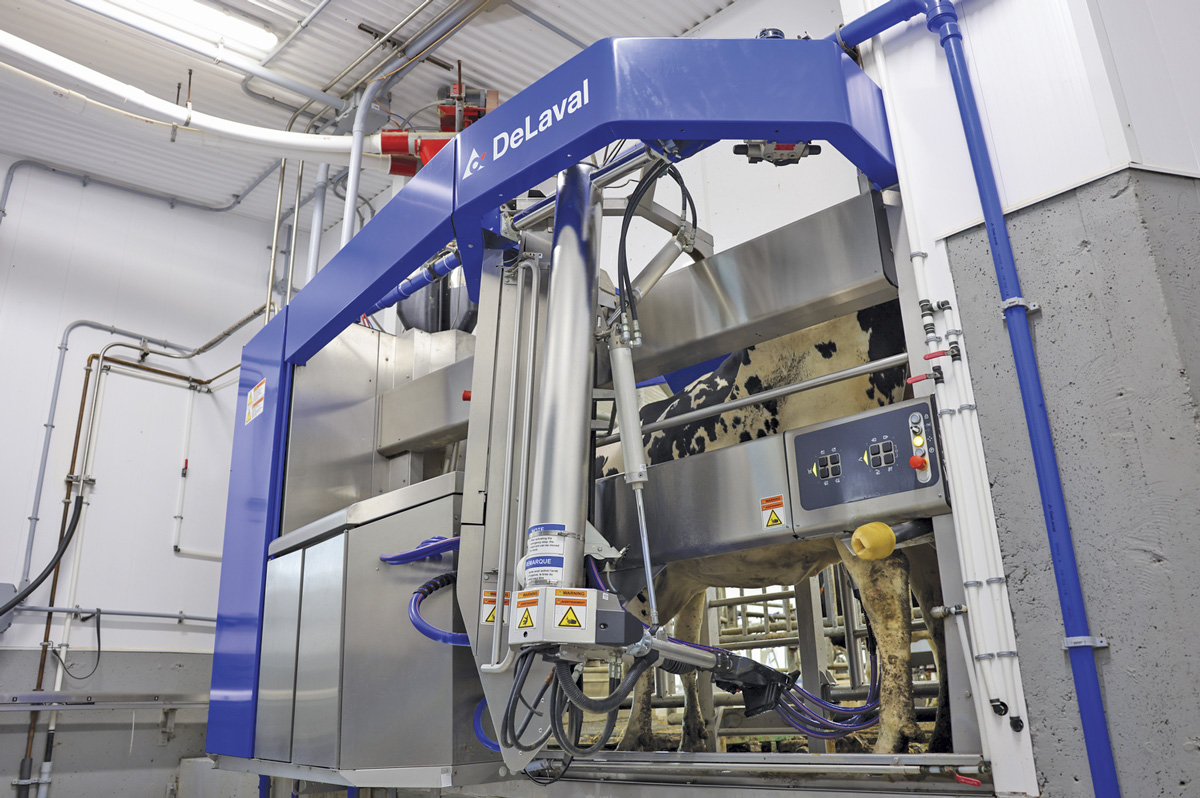
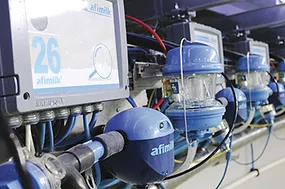
Image courtesy of DeLaval.
Cleanliness is not only cosmetic but operational too.
When technicians diagnose an automated milking system, three abilities always stand out:
- Observation – Watch a few cows go through the robot. Is attachment smooth? Is behavior normal? Small deviations can indicate early issues.
- Listening – Listen for air, vacuum and water leaks.
- Data analysis – Review chemical usage, wash water temperature, consistency of cleaning cycles, changes in milking time and alarm history.
Marking chemical barrels regularly also helps identify discrepancies in usage. Unexpected changes can signal leaks, dosing problems or calibration issues. Data tells a story, but only if we review it consistently.
4. Importance of replacing wear parts on schedule
Many preventive maintenance tasks focus on rubber components, such as diaphragms, gaskets, liners, short tubes and hoses. These parts endure constant stress. Over time, they wear, crack and lose elasticity.
The system may continue running, but performance quietly declines. Vacuum stability changes, cleaning effectiveness decreases, milk quality may be affected, somatic cell counts can rise.
Following the manufacturer’s recommended replacement schedule is not optional, it is strategic.
Replacing parts before failure allows downtime to be planned, prevents emergency calls in the middle of the night, and transforms uncertainty into control.
5. Predictable costs vs. unpredictable losses
Preventive maintenance is often viewed as an expense. In reality, it is a predictable investment.
The cost of the scheduled parts and the time required for replacement equals predictable preparation. What cannot be predicted is the cost of neglect in the form of emergency service fees, lost milk production, mastitis cases, prolonged downtime and the stress placed on the owner and employees.
Consistency in maintenance creates stability in performance and profitability. Keeping records of part replacements provides valuable economic insight. It helps determine the true cost of operating a system and identifies which spare parts should always be kept on hand. This reduces after-hours emergency calls, delays and panic.
6. Partnering with technicians
Preventive maintenance also creates an opportunity for collaboration. When dealer technicians perform scheduled service, they bring experienced eyes to the system. Their observations may reveal early warning signs that might have gone unnoticed. Owners and operators present during service visits can:
- Ask questions
- Learn more about your robot’s performance
- Gain deeper understanding of system behavior
An informed operator is always the first line of defense against breakdowns.
7. A health check mindset
Preventive maintenance will not eliminate all breakdowns or performance challenges. However, it can significantly reduce their frequency and severity and provide a clear starting point when problems occur. Think of equipment maintenance like personal health care where doctors emphasize daily habits (proper nutrition, adequate rest, physical activity and awareness of how we feel) to ensure our bodies are functioning properly.
Doctors ask these questions because consistency matters. Automated milking systems require the same disciplined mindset with one key principle: consistency.
Consistent cleaning.
Consistent inspections.
Consistent parts replacement.
Consistent observation.
When preventive maintenance and cleaning become routine rather than reactive, equipment performance improves, downtime becomes manageable and the entire operation runs with greater confidence.
Clean equipment performs better, but disciplined maintenance is what keeps it that way.