A recently published research study reinforces what many producers who practice Beef Quality Assurance (BQA) have long believed: Attention to proper cattle care and management benefits animal welfare and also leads to greater financial returns for producers.

The study, conducted in collaboration with Penn State Extension and Dr. Tara Felix, compared animal condition, mobility, carcass quality and economic outcomes between BQA-certified farms and farms without BQA training. The findings demonstrate that operations implementing BQA practices are seeing measurable improvements in both cattle well-being and carcass value.
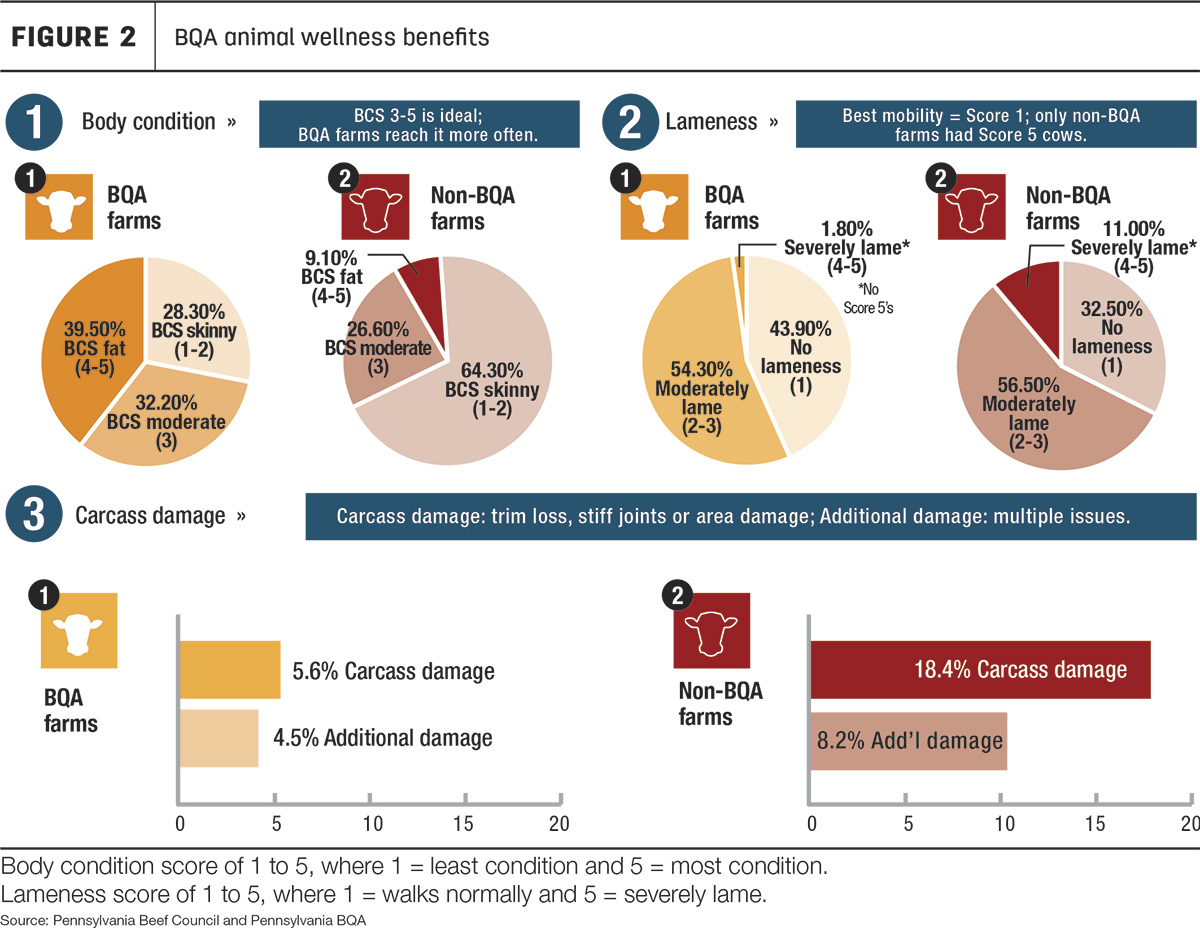
One of the key areas evaluated in the study was body condition in cull cows. Cull cows from BQA-certified farms were more likely to fall within the ideal body condition score of 3, indicating animals that are healthy and appropriately managed prior to marketing. In contrast, non-BQA farms had a much higher percentage of cows falling into body condition scores of 1 or 2, which are not ideal and reflect thinner, less desirable animals. Maintaining proper body condition in cull cows reflects good animal stewardship and supports improved carcass value and marketability.
Mobility was another important welfare indicator evaluated. Observations showed that farms with BQA training had more cows walking normally and fewer instances of severe lameness compared to farms without BQA certification. Notably, the most severe lameness scores were only observed on farms that did not have BQA training. While this does not directly reflect specific on-farm factors such as facility design or handling practices, it could suggest that adoption of BQA principles may contribute to improved overall mobility and animal care.
Carcass quality differences were also noted in this study. Cull cows from BQA-certified operations experienced significantly less carcass damage. Only 5.6% of carcasses from BQA farms showed damage compared to 18.4% from non-BQA farms, along with lower rates of additional carcass defects. Reducing carcass damage means less trim loss and greater value retained at harvest.
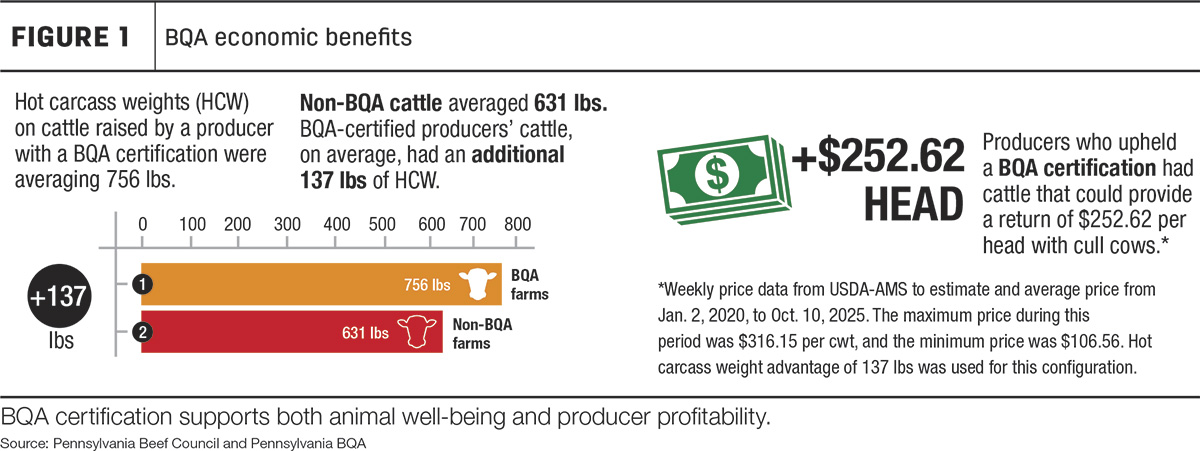
These animal welfare improvements translated directly into economic outcomes. Cull cows from BQA-certified farms averaged approximately 137 pounds more in hot carcass weight compared to cows from non-BQA farms. Using USDA pricing data during the study period, this difference represented an estimated $252 additional value per head.
For producers, the message is clear. The management practices promoted through BQA, including proper handling, thoughtful facility design, sound herd health management and attention to cattle condition, help producers care for their animals while protecting carcass value and improving returns.
This research highlights how BQA certification supports the dual goals of the beef industry by raising cattle responsibly while maintaining strong and sustainable operations.
Producers interested in learning more about the study can view the full publication online.