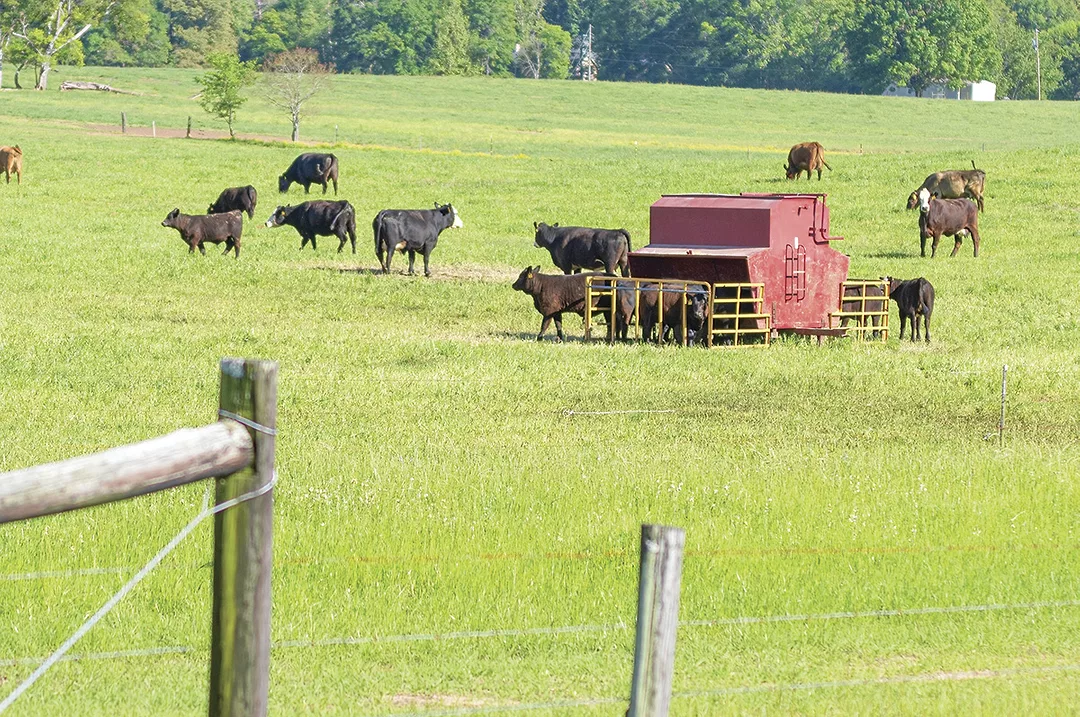
Early weaning is gaining traction with beef producers as a strategic management tool to improve forage availability, cow condition and overall herd performance. As environmental pressures and market dynamics shift, producers are taking a closer look at how early weaning, paired with precise nutrition and management practices, can unlock both short-term flexibility and long-term gains.

Drought, forage pressure and herd efficiency
Early weaning is not new, but its adoption has accelerated in recent years. Some of that momentum is tied to environmental challenges, particularly drought and limited forage availability.
When to wean is not a cut-and-dry decision. The value lies in the benefits it provides, especially when forage resources are strained. Pulling calves earlier reduces grazing pressure and allows cows to maintain better body condition. It also halts lactation sooner, significantly lowering a cow’s nutrient requirements ahead of breeding season.
Early weaning can be especially valuable for second- and third-calf heifers, as well as older cows, where nutrient demand is highest. Reducing that demand earlier helps position those animals for improved reproductive success in the next cycle.
In practical terms, early weaning can help producers extend limited forage resources, improve body condition scores in cows, support reproductive success in the next cycle and create a more uniform calf crop for marketing.
Nutritional needs: Same requirements, different delivery
One of the most common misconceptions about early-weaned calves is that their nutritional requirements fundamentally change. In reality, the requirements remain similar. What changes is how nutrients are delivered.
Calves still require the same nutrients for growth and development, but intake becomes the limiting factor. Without milk, that nutrition must be replaced, and calves are not going to consume large volumes of feed early on.
Because early-weaned calves consume less feed initially, their diets must be more nutrient-dense. This includes higher-quality protein sources, increased energy density, and balanced vitamins and trace minerals. A lighter, early-weaned calf may require a similar amount of protein as a heavier, conventionally weaned calf but must achieve that intake through significantly less feed. That reality makes diet formulation and feed quality critical.
Rumen development and feed selection
By the time calves are candidates for weaning, their rumens are functional but not fully mature. This transitional stage requires feed that is both digestible and palatable.
Low-quality forage is not suitable for a 300-pound calf. This stage demands the highest-quality, most digestible forage available. Highly digestible, palatable forages support intake while delivering the nutrients calves need during this stage. Starter feeds should also balance fiber, starch and protein to support rumen development without creating digestive challenges.
Managing stress through nutrition
Weaning is inherently stressful, and early weaning can amplify that stress if not managed correctly. Nutrition plays a significant role in helping calves maintain intake, support immune function and continue gaining. Without adequate nutritional support, the immune system cannot function effectively, increasing the risk of health challenges during this transition.
To support calves through this transition, producers should:
- Formulate diets based on realistic and not theoretical intake
- Incorporate additives that support gut health and immunity
- Prioritize highly palatable, nutrient-dense feeds
Consistency is equally critical. Feeding time, routine and overall management must remain steady to support intake and performance, particularly in the first 45 to 60 days postweaning.
Why creep feeding makes a difference
One of the most effective tools for easing the transition off the cow is creep feeding prior to weaning. The more familiar calves are with feed before weaning, the less shock there is when milk is gone.
Palatability is the top priority for early-weaned calves. If calves do not like the feed, intake will suffer regardless of formulation. While textured feed can help drive early intake, it may lead to sorting and inconsistent nutrient consumption. Transitioning to a pelleted feed over time can support more uniform intake and consistent delivery of fiber, vitamins and minerals.
Creep feeding helps calves learn where to find feed, how to eat from a bunk, and what feed tastes and feels like. Introducing feed at least three weeks prior to weaning can significantly improve intake and reduce postweaning setbacks. Monitoring intake at the bunk helps ensure calves are getting the necessary nutrients and allows producers to make quick adjustments to support calf health and performance.
Early weaning itself is not difficult, but success depends on consistently executing the small details. Nutrition strategies should align with the intended production goals. Higher-energy diets may support marbling, while fiber-based programs may promote frame growth and steady development.
When effectively managed, early-weaned calves can perform just as well as, or even better than, their conventionally weaned counterparts.
The bottom line
Early weaning is a powerful management tool, but its success hinges on precise nutrition and disciplined execution. By focusing on intake, feed quality, consistency and long-term goals, producers can turn early weaning into a strategic advantage.
When done right, it is not just about getting calves through a transition. It is about setting a foundation for lifetime performance.