Spring is an opportune time to talk about variability; after all, the bipolar nature of spring weather reminds us of nature’s love for entropy on a weekly if not daily basis. Most people, even if they're not weather enthusiasts, eventually must check the forecast to decide whether to grab a winter coat or simply wear a T-shirt for the day or week ahead. This is not so different from nutrient changes dairies see occurring on a regular basis. Also, unlike the weather, even though in many situations we can’t control the variability, there are a myriad of strategies we can implement to minimize its impact.

When considering variability, one concept that frequently goes with this conversation is the difference between signal and noise. Signal meaning true, relevant or important changes in the data, and noise being the random or irrelevant data that accompanies signal. Meteorologists use a wide array of predictive models to help forecast the weather. In this process, they must decide which models are indicative of reality and which ones are relying too much on noise to make predictions. When evaluating feed analysis, we often face the same predicament. We must decide which alterations reflect the cow's diet, and which are affected by external factors like sampling or analytical variability that the cow does not encounter.
Imagine this situation: You pull a corn silage sample, and the test result comes back with 35% starch. Now two weeks later, you take a sample from that same pile, and the result is now 30% starch. Try to think about what questions you might have regarding this substantial change in starch content. We might ponder whether this change is real or representative of the true nutrient content, if our sampling technique was appropriate, if we got a representative sample of the feed, or even wonder if there might have been lab subsampling or analytical error involved. To overcome these questions, we may rerun the sample in the lab or take a repeat sample in the field. Regardless of how we proceed, if this is a true nutrient change, these added steps represent time where cows are receiving less energy than accounted for.
The amount of variability and contributors to the nutrient variability are feed-type specific. Just knowing this alone is key in developing strategies in managing these changes in feed. For example, several studies have found that most of the variation we see in dry matter change in corn silage is due to nutrient changes in feed, with smaller amounts being attributed to on-farm sampling technique and to an even lesser extent, laboratory variance. On the other hand, variability in starch content in corn silage was affected more by on-farm sampling techniques. Having this information helps to develop strategies for not only how we interpret changing sample results, but also for how we can develop sampling strategies to minimize the impact of noise. Researchers in these studies suggested that more frequent sampling can help overcome the impact of noise around the true nutrient changes or signal.
Figure 1 shows every corn sample taken on a dairy over a three-month period, compared to each sample plotted around a three-sample average line. By plotting a three-sample average, we can more clearly see the trends and identify when starch content in this grain begins to consistently drop, indicating a true change in its nutrient content. This is critical because it not only gives us confidence in the data but makes the data actionable and allows us to adjust the ration as needed to accommodate this feed change.
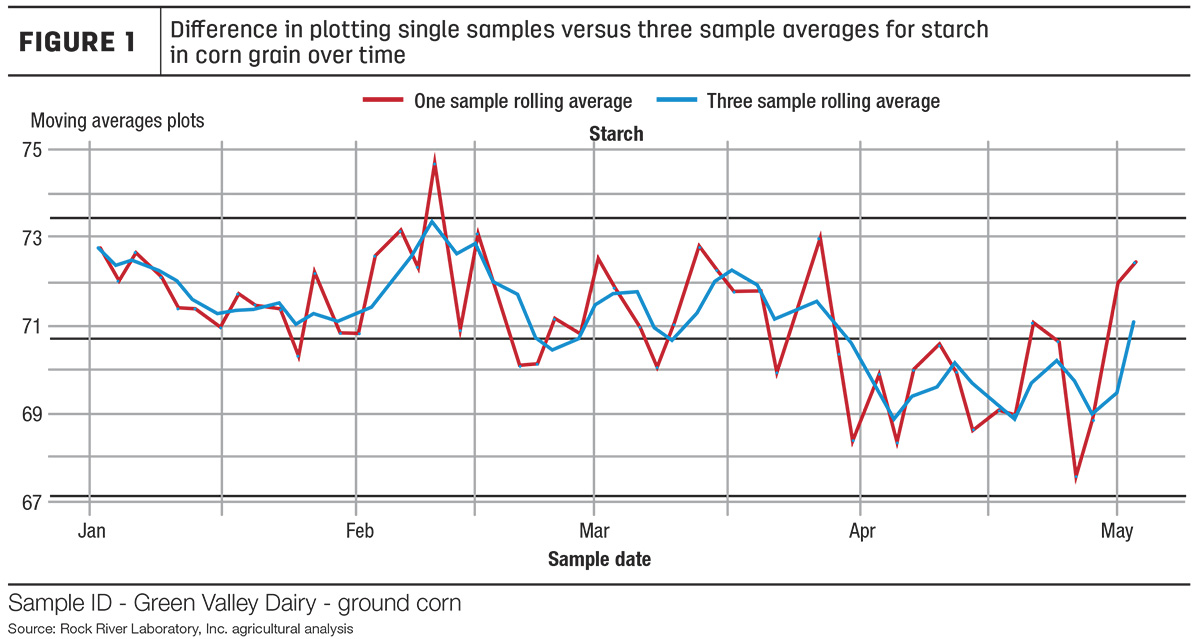
Using feed averages representing a meaningful period helps isolate the random noise from the signal of what is changing in the feed. For things like commodities, a meaningful period may be monthly; however, it can be as often as weekly or even multiple times a week. Additionally, a more frequent sampling approach can allow for further differentiation in factors that contribute to variance. It can also allow producers to take advantage of economic advantages of higher-than-expected nutrient content with confidence. On larger farms, it's important to collect forage samples weekly or even several times a week to ensure an accurate representation of the substantial feed volume used.
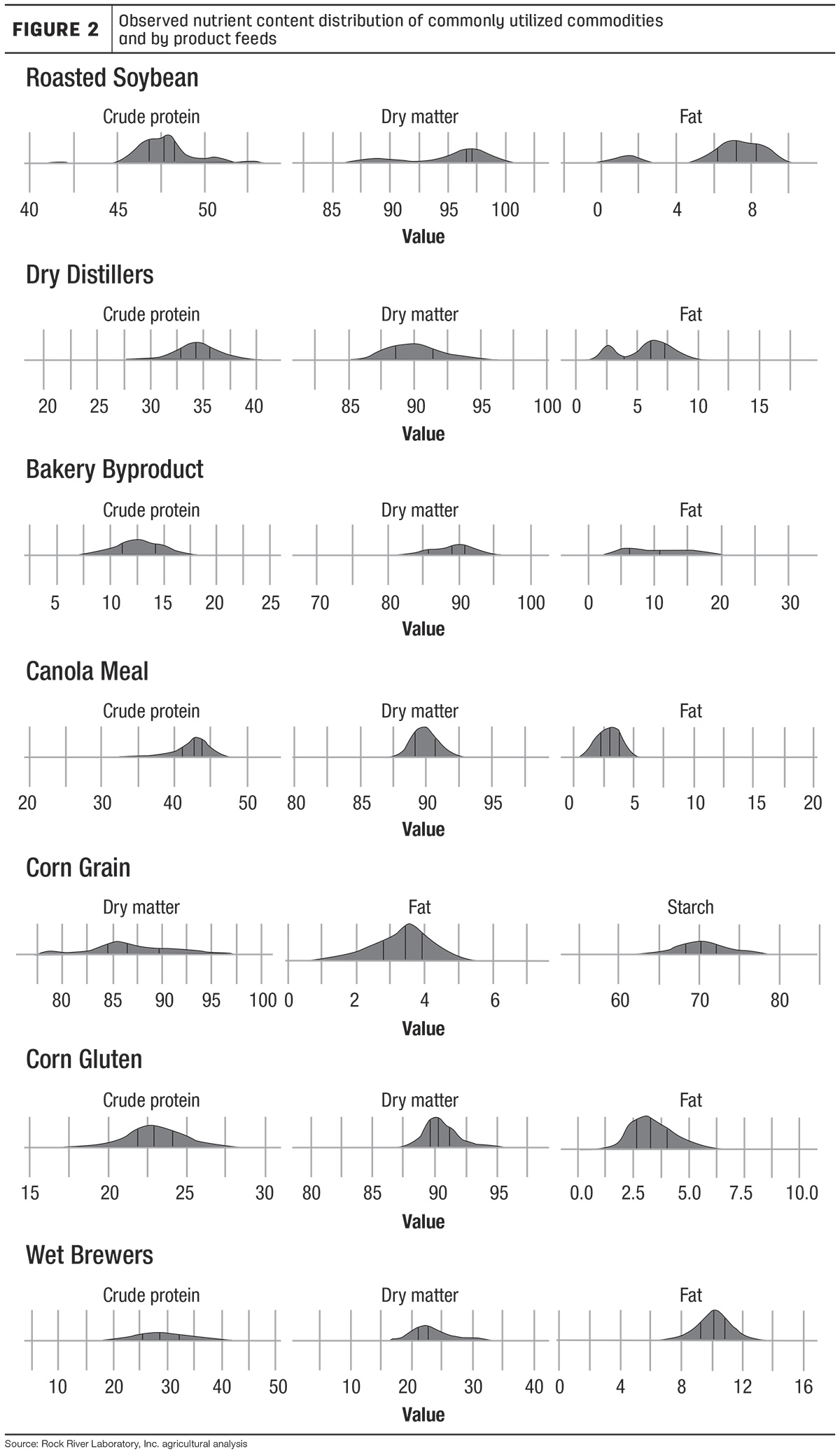
Although we typically focus attention on variability in forages, commodities are also subject to variability as well. The magnitude of variability is often lesser in things like soybean meal or ground corn but can still be economically impactful, especially in times of tight profit margins. Byproduct feeds can also be substantial contributors of variation in the diet depending on their feeding rate. Change is inevitable, but how often does it occur in feeds? Figure 2 shows the distribution of nutrient content for a variety of common feeds and analytes observed in commercial samples taken over a two-year period.
Because variability is ever-present and comes from numerous sources, it can seem like an insurmountable challenge to manage. However, taking small steps can yield substantial results. Cornell researchers discovered that the practice of regular forage sampling and using averages to adjust the total mixed ration (TMR) led to an 8-cent rise in income over feed costs, thanks to higher milk yields.
Creating robust feed datasets that allow for action in the present also creates the foundation for future development. Feed costs are the largest contributor to total costs on a farm, so identifying opportunities to optimize feed ingredients without sacrificing nutrition to the cow should garner appropriate attention. However, very few resources are available to help us check and predict feed variability. This, in part, is due to the limited availability of on-farm feed nutrient data. Creating a dataset now will empower farms to monitor changes in feed nutrient content similar to how we monitor upcoming changes in the weather.