With the improvements to cow comfort, the increasing value of beef-on-dairy calves and the continued upward pressure on replacement cow values, herd dynamics are changing, and the average age is continuing its climb upward on many farms. Milking robots are not just for the pretty young cows. The capabilities of today’s automated milking systems to provide an ideal milking for an individual cow make them an excellent tool to enable those more senior members of the herd to meet their genetic potential. Here are four reasons milking robots are a great option for older cows:

1. Enhanced udder health and milking precision
Automated milking systems offer a consistent milking experience. As cows age, their udders often undergo anatomical changes. Automated milking systems use sensors and automated arm attachments designed to align precisely with each cow’s unique teat placement, improving udder health by reducing misalignment and providing a more complete milk-out.
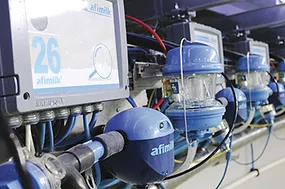
Every time she walks into the box, the procedure is the same, down to the length of time between first touch and unit attachment. The robot isn’t in a hurry to get out of the parlor; it just milks the cow in the box. Teat-level monitoring enables the system to provide the best milking experience for every cow. Perhaps cow 12804 needs a slightly longer prep time to have a perfect milking; no problem, the system recognizes her and preps accordingly. Cups go on in the same order every time; there’s no person-to-person variation for robot cows. These systems take cups off based on milk flow from each quarter, avoiding the potential for teat damage by applying vacuum to a teat that has finished milking and ensuring a complete milk-out of all quarters. These features are particularly beneficial for older cows with high milk production and sometimes less-than-ideal udder conformation.
2. Data-driven care for aging cows
Continuous data collection is one of the greatest advantages automated milking systems offer older cows. Automated systems monitor milk temperature, conductivity and somatic cell count (SCC), milk components, rumination and activity to identify health changes earlier than visual observation alone. Subtle signals – such as reduced rumination, a gradual rise in conductivity or fewer robot visits – often indicate early stages of health challenges. Early detection supports timely intervention, improving outcomes for cows with age-related vulnerabilities.
3. Individual feeding
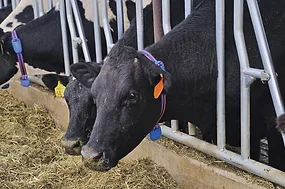
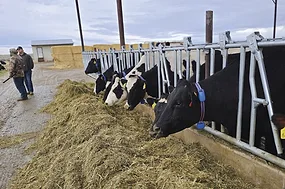
The older cows earned their spots in the herd because of production in previous lactations, meaning that many of them are your highest producers. It takes a lot of feed to support high production, and the robot allows us to tailor a ration to meet the needs of individual animals across a wide range of production levels. Rather than feed the same ration to every cow through the total mixed ration (TMR) at the feedbunk, knowing that we are overfeeding some to meet the needs of most, we can provide a customized diet for every animal based on her individual needs.
The ability to feed multiple feed types through the robot allows us to provide a fresh cow supplement for an early-lactation animal, a high-energy feed for peak producers, a low-energy option toward the end of lactation or a blend to best meet the needs of the cow in the middle.
4. Reduced physical stress and standing time
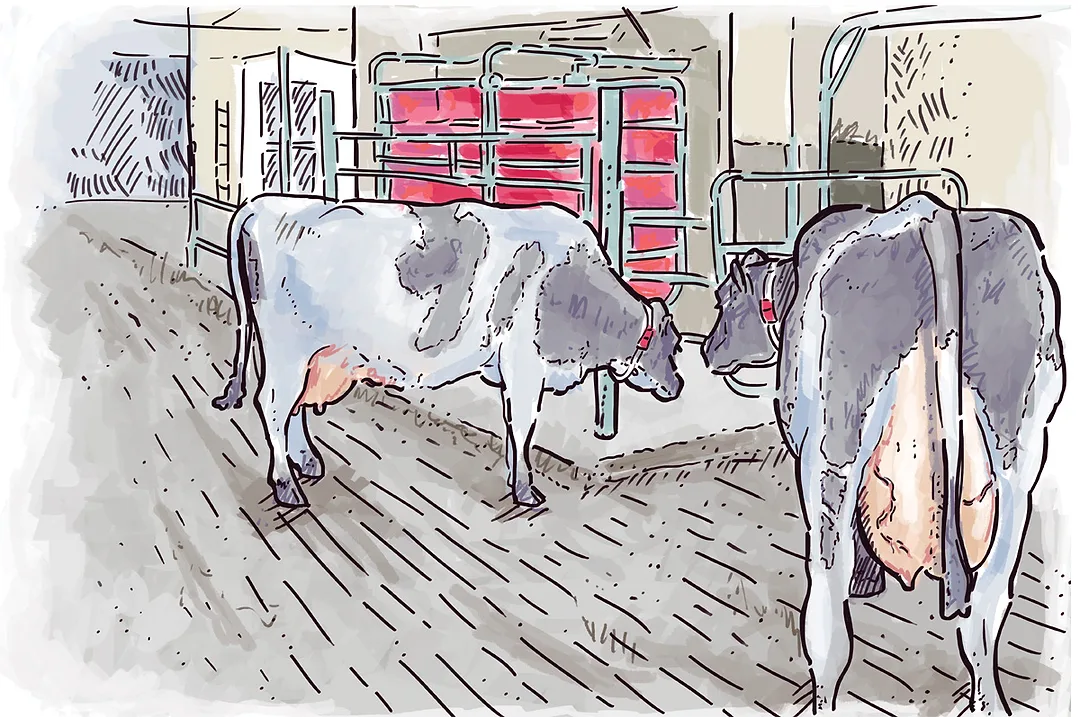
Older cows may struggle with issues such as joint stiffness and reduced mobility, which can be exacerbated by long standing times. A cow in an automated milking system moves from the stall to the feed alley, to the robot, to the waterer and back to the stall. Instead of 60-90 minutes in the holding pen, she can devote that time to having another meal or a longer rest period.
Farmers with automated milking systems usually have a story about observing a cow who laid in her stall watching the robot then got up and walked straight in when she saw her opportunity. The cow goes to the robot on her own schedule and at her own pace, reducing the risk of injury, especially for an older cow who may not be as nimble as she once was.
As dairy herd ages rise, automated milking systems provide critical, individualized care that enables older high-producing cows to thrive. Milking robots offer precise udder alignment, individualized milking, continuous health monitoring, customized nutrition and reduced physical stress for senior cows.