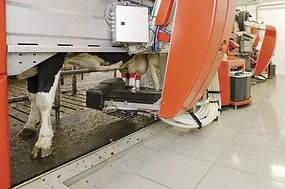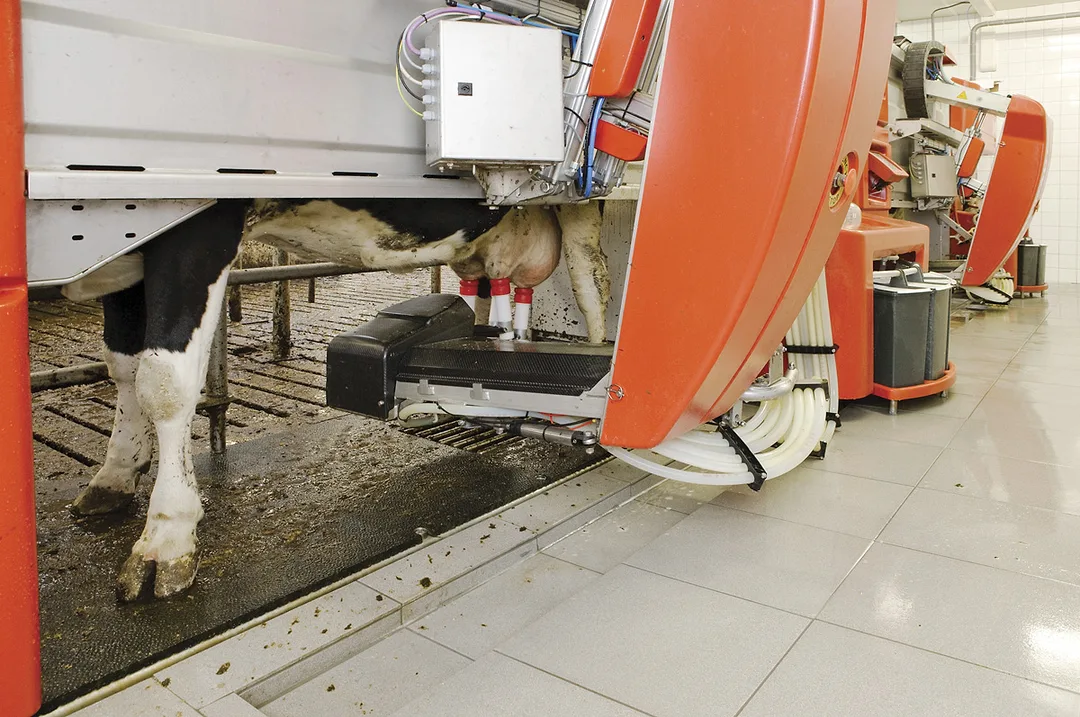
Large dairy herd expansions present both opportunity and risk. As herd sizes increase, producers face mounting challenges related to labor availability, animal welfare, consistency of milk quality and long-term cost control. Automated milking systems have transitioned from niche technology to a core component of modern dairy expansion strategies. When thoughtfully integrated, milking robots can support scalable growth while improving cow health, labor efficiency and data-driven management. However, successful implementation requires careful planning across facility design, herd management, labor structure, economics and technology integration.

Strategic fit: Why use milking robots in a large herd?
Milking robots align well with long-term expansion goals when the objective extends beyond simply adding cows to a production system. In large herds, labor can be a limiting factor. Recruiting, training and retaining skilled employees for repetitive, schedule-bound milking tasks is increasingly difficult. Automated milking systems reduce dependence on schedule-bound labor and shifts human effort toward higher-value tasks such as cow health, nutrition management and system optimization.
Additionally, automated milking supports individual cow management at scale. Each cow is milked according to her stage of lactation, physiological needs and health status rather than a fixed parlor schedule. This individualized approach often results in higher milk yields, improved udder health and better reproductive performance, which are all key advantages when expanding herd size.
Expansion models: Greenfield vs. retrofit
One of the first decisions in an automated milking-based expansion is whether the project will be a greenfield build or a retrofit of existing facilities.
Greenfield expansions offer the greatest design flexibility. Facilities can be built with robot-friendly layouts, appropriate cow flow and optimal robot-to-cow ratios. Free cow traffic designs, wide alleys, ample fetch pens and strategically placed robots reduce stress and maximize voluntary milkings. Greenfield projects also allow for future modular expansion by adding robot rooms and housing sections in phases.
Retrofits, while potentially less capital-intensive, require careful evaluation. Stall dimensions, concrete condition, ventilation and manure systems must support 24-7 automated milking operation. While successful retrofits are common, compromises in cow flow or robot placement can reduce system efficiency if not addressed early in the design process.
Facility design and cow flow
Facility design is the foundation of successful automated milking, particularly in large herds. Unlike parlors, automated milking requires cows to present themselves voluntarily and consistently throughout the day. This places cow comfort and movement behavior at the center of the design process.
Key design principles include:
- Robot-to-cow ratios typically between 55 and 70 cows per robot, depending on production level and traffic strategy.
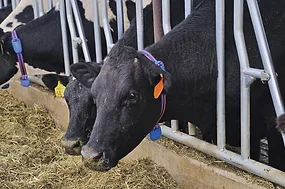
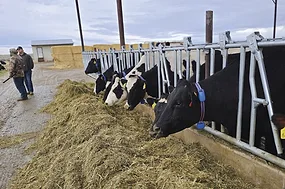
- Unrestricted access to feed, water, stalls and robots to support consistent visitation.
- Logical cow flow, minimizing dead ends, bottlenecks and excessive fetch distances.
- Separation areas for fresh cows, hospital cows and training groups.
In large expansions, grouping strategy becomes increasingly important. Pens should be sized to maintain social stability while avoiding overcrowding that discourages robot use. Fresh cow pens with lower robot loading often yield significant production and health benefits.
Labor transformation, not elimination
A common misconception is that milking robots eliminate labor. In reality, robots transform labor. Manual milking tasks are replaced by roles focused on monitoring, maintenance, cow observation and decision-making.
During expansion planning, producers should redefine labor roles clearly:
- Herd managers transition to health detection specialists using robot alerts and cow behavior data.
- Maintenance technicians become critical for uptime and performance.
- Managers must be comfortable interpreting software dashboards and performance metrics.
Training is essential, especially for large teams. Standard operating procedures (SOPs) should be updated to reflect automated milking workflows, including fetching protocols, alarm response, hygiene procedures and data review processes. A well-trained team is often the decisive factor between a struggling and a highly successful automated milking dairy.
Herd management and cow adaptation
Herd dynamics change significantly in an automated milking environment, especially during rapid expansion. Introducing large numbers of cows into automated milking systems requires a structured plan.
Heifers and purchased cows should be preconditioned, when possible, through exposure to robots or similar environments. When freshening into the system, cows need close monitoring to ensure adequate visits, milkings and early detection of issues such as ketosis or mastitis.
Fetch rates are an important key performance indicator (KPI) in large herds. While some fetching is normal, consistently high fetch rates may indicate overcrowding, poor cow flow, nutritional imbalances or robot capacity constraints. Expansion plans should include realistic assumptions about fetch labor and continuous system optimization.
Data integration and decision support
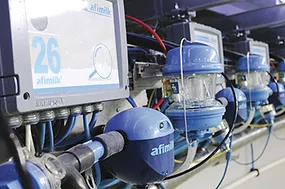
One of the most powerful advantages of milking robots is the volume and quality of data generated. In a large herd expansion, this data becomes essential for maintaining control and consistency.
Key data streams include:
- Milk yield and components per milking
- Conductivity and mastitis indicators
- Cow activity and rumination
- Bodyweight trends
- Robot utilization and idle time
To avoid data overload, management should define which KPIs drive decisions. Integrating automated milking systems data with herd management software, feed systems and genetic information allows for more precise interventions and long-term genetic and nutritional strategies.
Large herds benefit from scheduled data review routines – daily exception management, weekly trend analysis and monthly performance benchmarking against targets.
Financial planning and return on investment
The capital cost of automated milking is substantial and must be evaluated within a long-term expansion horizon. While robots often carry higher upfront costs than traditional parlors, they may deliver competitive or superior returns when labor savings, production gains and improved longevity are considered.
Key financial factors include:
- Reduced dependency on milking labor in tight labor markets
- Potential increases in milk yield per cow
- Improved cow longevity and lower replacement rates
- Scalability without proportional labor increases
- Scalability without the need for immediate large increase in cow numbers
Producers should build conservative financial models that include maintenance contracts, consumables, energy costs and system redundancy. Expansions that phase automated milking in modules often manage cash flow and learning curves more effectively.
Risk management and scalability
Large-scale automated milking expansions must account for operational risk. Redundancy in critical systems such as power, vacuum and cooling is essential. Backup plans for downtime protect both animal welfare and milk quality.
Scalability should be embedded in the design. Electrical capacity, manure handling, network infrastructure and robot room layouts should allow for additional units without major reconstruction. Successful automated milking dairies often expand incrementally, using performance data from early phases to refine later stages.
Conclusion
Incorporating automated milking into a large herd expansion is not simply a technology decision; it is a comprehensive shift in how a dairy operates. When planned strategically, automated milking systems enable scalable growth while improving labor efficiency, herd health and management precision. Success depends on aligning facility design, labor development, herd management, data utilization and financial planning into a cohesive expansion strategy. As labor availability tightens and data-driven management becomes increasingly central to dairy performance, automated milking offers a viable and forward-looking pathway for large herds seeking sustainable expansion.