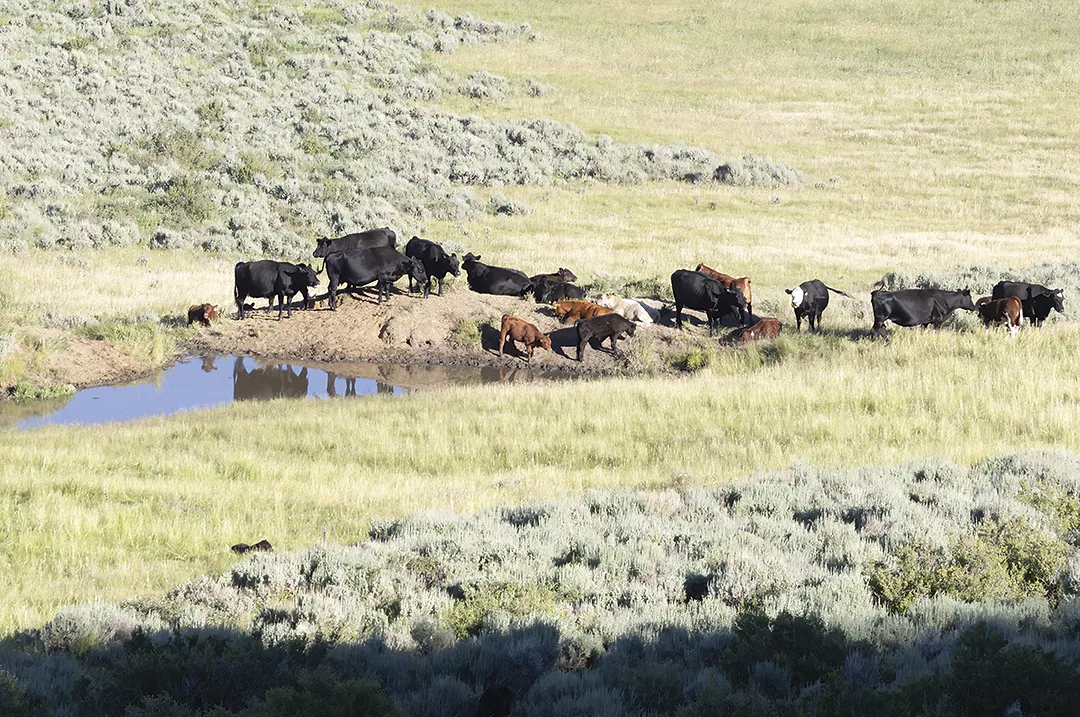
As we move into the summer months, it’s important to consider water quality and availability for livestock. The current drought map and outlook both project an ongoing drought throughout the western United States. Fresh, clean water is a daily requirement of all livestock. In fact, water is the most essential nutrient for livestock health and production. Animals need water to help them regulate their body temperature, digest feed, lubricate their joints, grow muscle and carry out almost every other biological process in their bodies.

Water quality may be negatively impacted by contaminants such as salts, excessive nutrients or bacteria, which can become more concentrated during drought as water sources dry up. Most contaminants will cause animals to drink less water, which, in turn, causes them to eat less, negatively impacting health and production. However, if livestock water (or feed) contains a high amount of salt, animals may drink more water because salty water doesn’t fully quench thirst. This is why collecting water samples for a livestock suitability test can be crucial in determining if water intake will be impacted.
Water samples can be sent to commercial labs to analyze for parameters such as total dissolved solids (TDS), sodium, calcium, magnesium, chloride, nitrate-nitrogen, pH, iron, copper and conductivity. TDS is a common concern for livestock producers, as it is a measure of the total concentration of minerals, salts, metals and other ions dissolved in water. Increased concentrations of TDS can cause aversion to the water source and/or illness, but TDS does not indicate the specific dissolved solid that may cause additional issues.
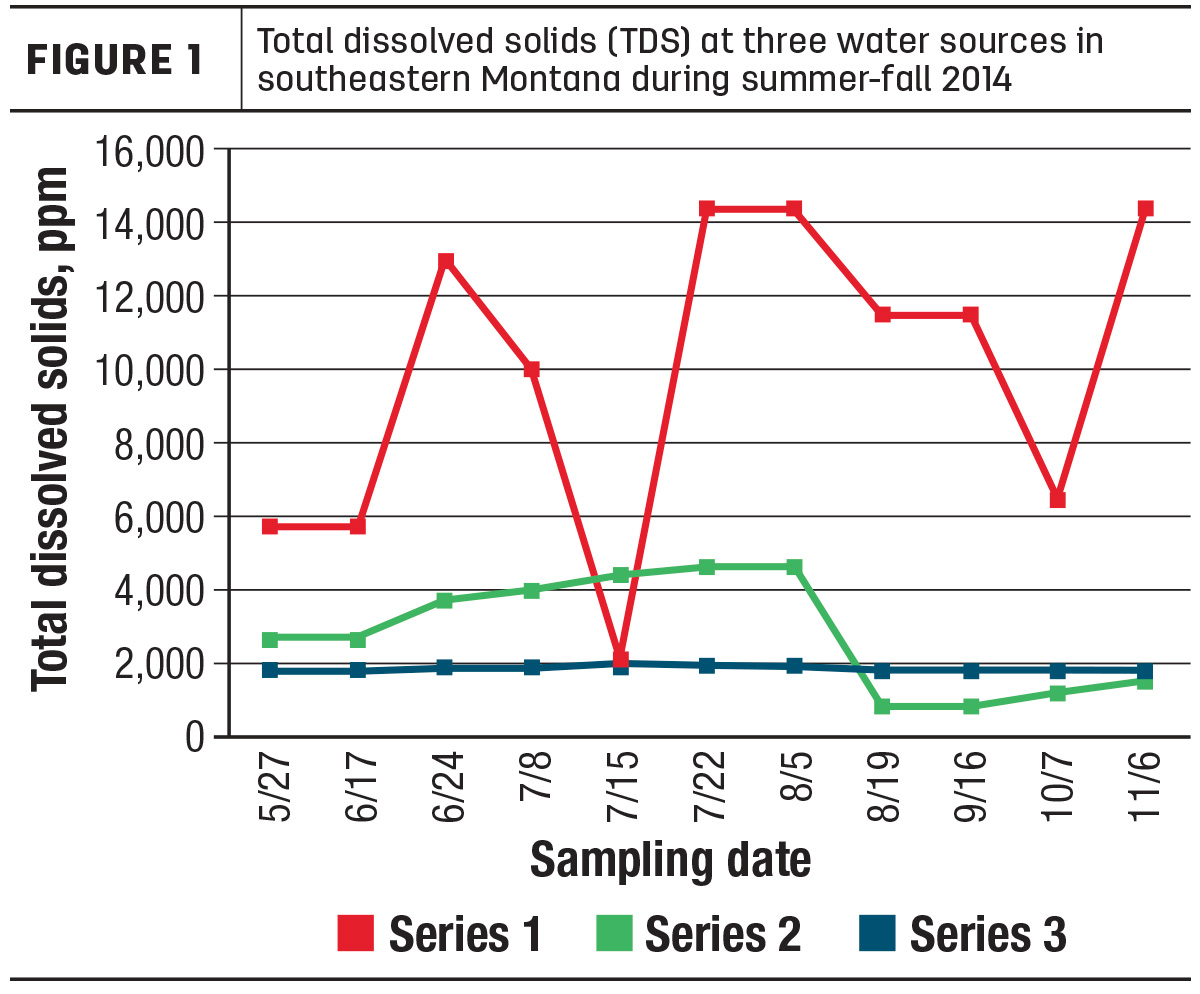
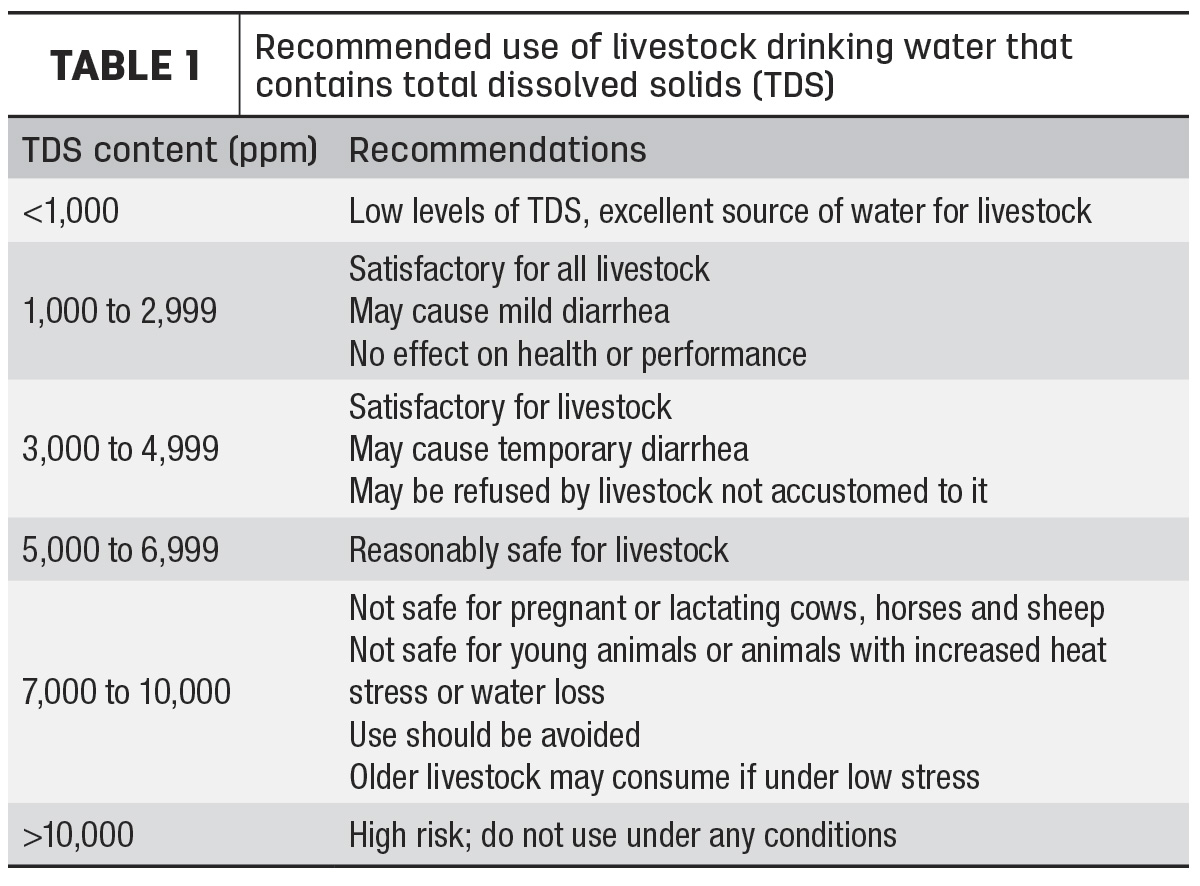
Concentrations of TDS may change throughout the year. Figure 1 demonstrates the fluctuations in TDS levels in three water sources in southeastern Montana. Based on these results, water source number one would not provide suitable livestock drinking water during most of the summer and fall. The variability of the results throughout the summer and fall also illustrates the importance of testing water sources immediately before and during livestock use. TDS can be estimated in the field using a simple meter that measures specific conductance. These meters can be purchased for as little as $20. More complex meters are also available for purchase at an increased cost. Table 1 lists the effects of increasing TDS concentrations in livestock drinking water.
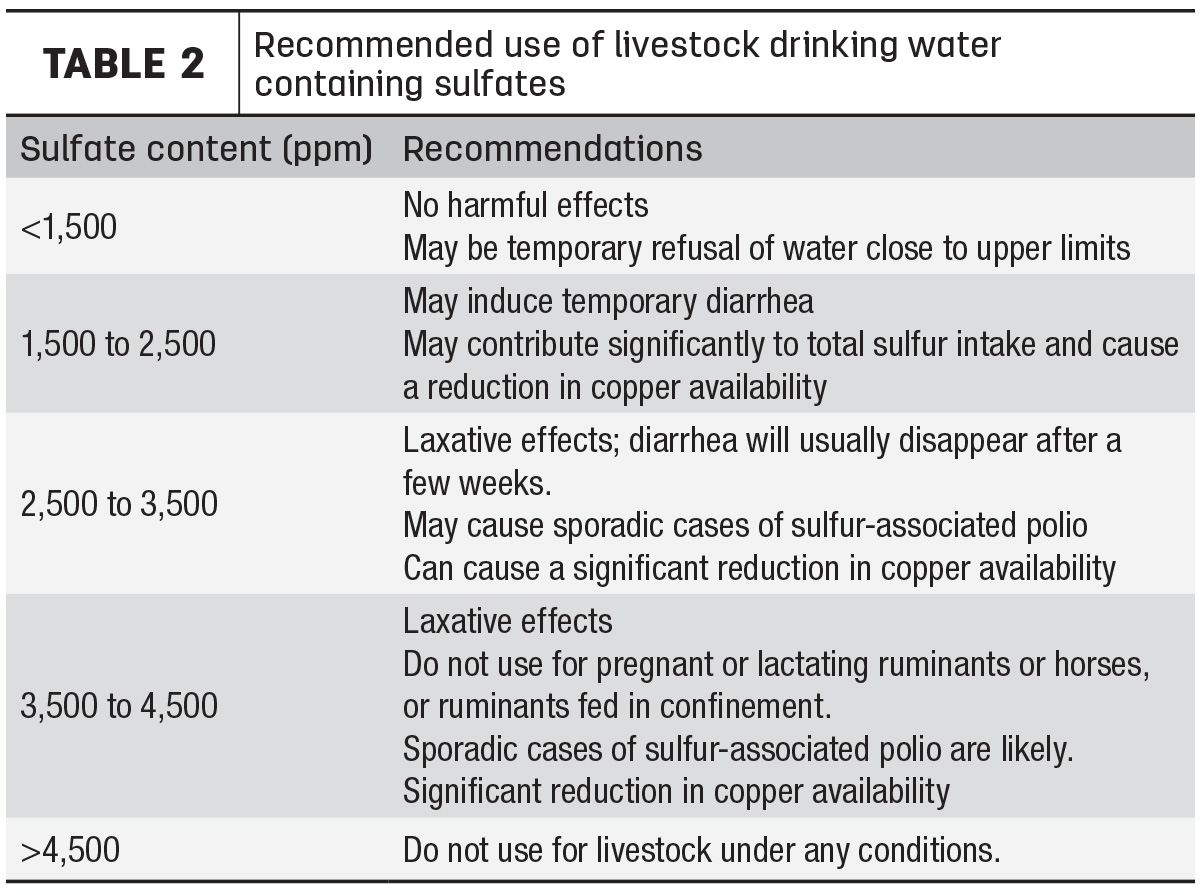
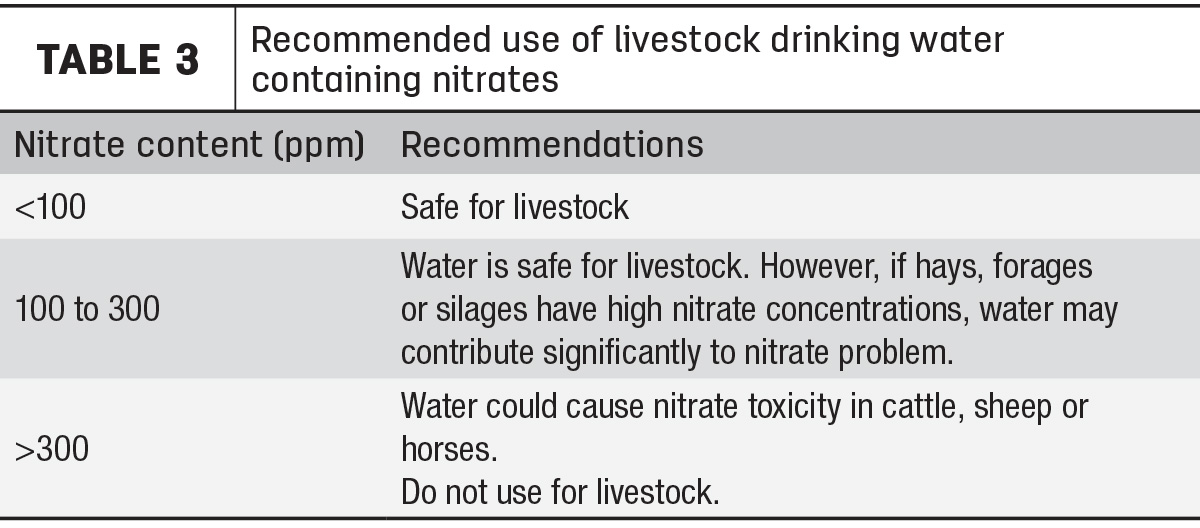
Water with high TDS may also have high concentrations of sulfates or nitrates. High-sulfate water tastes bitter and may cause livestock to drink less water than they need to remain healthy. High sulfate concentrations in water can also lead to polioencephalomalacia (polio; PEM). Livestock owners should be especially aware of water sulfate concentrations when feeding high-sulfur feedstuffs, such as distillers grains or corn gluten feed, because the combination of sulfates in the water and sulfates in the feed may be toxic to livestock, similar to high levels of nitrates in water and feed sources. High-sulfate water is also a concern when livestock are consuming feeds that contain the trace mineral molybdenum due to potential tie-up of copper in the rumen. It may be necessary to supplement cattle with copper when they are consuming feed high in molybdenum and sulfur and drinking water high in sulfates. Tables 2 and 3 provide the impacts of increasing sulfate and nitrate levels in livestock drinking water, respectively.
Water quality is crucial to maintaining livestock production and health. Water quality differs throughout the year, even from the same source, and is greatly impacted by weather events, such as drought or heavy rainfall. Information gained from periodic water tests for TDS, sulfates and nitrates can help livestock owners be good livestock stewards.