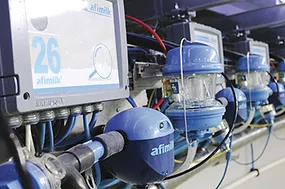
Milking parlors are the drumbeat of a dairy – fast-paced, dynamic environments where small changes make a big difference. Whether you’re focused on optimizing production, improving cow comfort or keeping things running smoothly, the parlor is where it all comes together. But it’s also where efficiency can quietly slip away.


Actively reviewing your parlor performance reports can ensure you’re not leaving any milk on the table. The most successful farms treat the parlor like any other critical system that demands regular check-ins, real-time feedback and a strategy for continuous improvement. That’s where data shines – offering clarity and accountability while helping you improve day after day.
With the right herd management software, daily parlor reports can become a powerful tool for spotting inefficiencies, strengthening team performance and driving consistent gains in milk quality and production.
What defines a great milking parlor?
Think of milking like a well-rehearsed dance. Everyone – both the cows and the parlor crew – knows their part. Cows walk in calmly and willingly. Prep procedures are carried out with precision. Units attach and detach like clockwork. The team moves smoothly, confidently and with care.
It is not about high output or the latest equipment. It is about harmony. When cows are comfortable and engaged, they letdown faster and more completely, leading to better production. This level of performance doesn’t happen by chance. It is built on a foundation of consistent handling, routine monitoring and a culture of continuous improvement.
How to catch common inefficiencies
Even in well-run parlors, performance can fall out of sync.
Small deviations in parlor routines can throw off the whole tempo. It often starts subtly: A prep routine is rushed; a technician begins cutting corners or maintenance tasks get pushed down on the to-do list. The most common issues include inconsistent prep, poor cow flow due to handling or layout problems, misgrouped cows, equipment inconsistencies and a lack of technician training and accountability.
These inefficiencies can be easily missed during walkthroughs but are often highlighted within the data. Left unchecked, these small slips can snowball into significant losses in milk yield, compromised cow health and growing employee frustration.
That is where daily reports become game-changers. These reports combine real-time data from milking equipment to highlight issues and trace their causes. Here is a look at the most helpful reports herd management software can create:
- Prep summary: Tracks milk letdown in the first two minutes. This is one of the clearest indicators of cow comfort and teat preparation quality. Strong two-minute milk numbers highlight employee compliance and usually point to calm cows, effective stimulation and good timing from the milking team.
- Pen summary: Breaks down performance at the pen level. This report summarizes milk per cow, start and finish times, average milking duration and average flow rate – for each pen and overall. It can track performance trends or identify outlying issues in specific pens.
- Stall summary: Flags stalls or meters malfunctioning or reporting abnormal data. Even one inaccurate meter can skew records and mask actual performance. Reviewing this data after every milking helps ensure equipment reliability and accurate decision-making.
- Error summary: Surfaces specific issues, such as no letdown, early falloff or reattaches and their timing. These issues are signs that something may be off, whether a timing issue, inconsistent prep or equipment-related.
- Wrong pen detail: Captures instances where cows were milked in the wrong pen, which is often a symptom of disorganized cow flow or team communication breakdowns.
You get the most value out of these insights by reviewing them after every milking. Assign this task to a team member, whether they are your lead technician, herd manager or parlor manager. Regular reviews help catch issues early and address patterns before they affect production.
On farms that use this approach daily, teams often develop a healthy sense of competition. Milkers take ownership of the numbers, discuss results during shift changes and become more engaged. When a stall is flagged for poor performance two milkings in a row, someone knows to check the short air tubes or inspect for a cracked liner. If two-minute milk is lower in one pen than the last, it may trigger a refresher on prep protocols.
These reports only drive improvement if they are used consistently, thoughtfully and with follow-through.
Empower your team with data
To improve in the parlor, farm employees need to see and understand the data. Make the data visible, easy to interpret and part of daily routines. Post printed reports in places where employees will see them, such as breakrooms or parlor entrances.
One effective method is highlighting key performance indicators (KPIs) using green, yellow and red. Green signals a win, yellow a watch-out, and red needs immediate action. This simple visual system helps the team quickly see what is working and what needs attention.
More importantly, data should be used for training, not blame. When milking teams are brought into the process and see their progress, they gain a sense of ownership. Real-time feedback also helps technicians adjust quickly and feel supported.
For example, a dairy we worked with trialed new processes and prep routines for a single pen. By reviewing data alongside the team, they could immediately see the improvement. The routine was later expanded across the herd, with strong employee buy-in fueled by visible results.
Data creates clarity, too. Connecting prep quality to milk letdown makes it easier to coach new habits and reinforce good technique. Over time, celebrating improvements builds a culture of consistency and care. When your employees know you care, they are more likely to care.

Employees must see and understand the data to improve. When milking teams are brought into the process and can see their progress, they gain a sense of ownership. Image courtesy of VAS.
Compete with yourself
Every dairy is different. Parlor design, equipment brand, cow movement, team dynamics and herd size vary, making it nearly impossible to compare one milking parlor to another. That is why the smartest benchmark is your own performance.
Start with one small change. Use the parlor reports to track your baseline and uncover hidden efficiencies. Stick with it for a week or two. Once it is consistent, make another adjustment. Then another. Don’t try to fix everything at once. Progress is more sustainable and easier to measure when changes are implemented incrementally.
Ultimately, milking performance is always evolving. But like any great dance, it gets better with practice, feedback and fine-tuning. With the right tools, a committed team and a focus on continuous improvement, you can keep improving – and keep the rhythm strong, milking after milking.