To minimize the economic impact of infectious disease in our cattle, it is important we work together with our veterinarians to develop well-designed preventive health programs. Essential components of those programs are the vaccines we select and the schedule we utilize. We should carefully consider which vaccines we use as we set up the vaccination schedule. The vaccines represent a significant investment in our effort to prevent the many diseases that threaten the welfare of our cattle with potentially devastating economic losses. Failure to handle vaccines correctly may jeopardize their efficacy and even safety, resulting in wasted time and money.

As we consider how to best handle and use vaccines, we need to look at the entire process of obtaining, storing and utilizing the vaccines. All types of vaccines require special care in shipment, storage and administration. As biologic products, we should consider them a bit fragile.
Temperature – shipping and storage
Good temperature control for vaccines is essential. They should always be maintained in a specific temperature range of 35ºF to 40ºF.
If you are ordering vaccines to be shipped, overnight delivery is strongly recommended to minimize possible temperature fluctuations while en route. The vaccine should be shipped in well-insulated containers with ample ice packs included. Similarly, if you are picking up your vaccines from your veterinarian or animal health supply store, it is best to take along an insulated container and some ice packs to carry it home.
Temperature is an important consideration for the vaccines you are using at all times, not just during shipment. Storage in a refrigerator that has a well-controlled temperature range is crucial. Temperature fluctuations should be avoided and, ideally, a thermometer should be placed in the refrigerator.
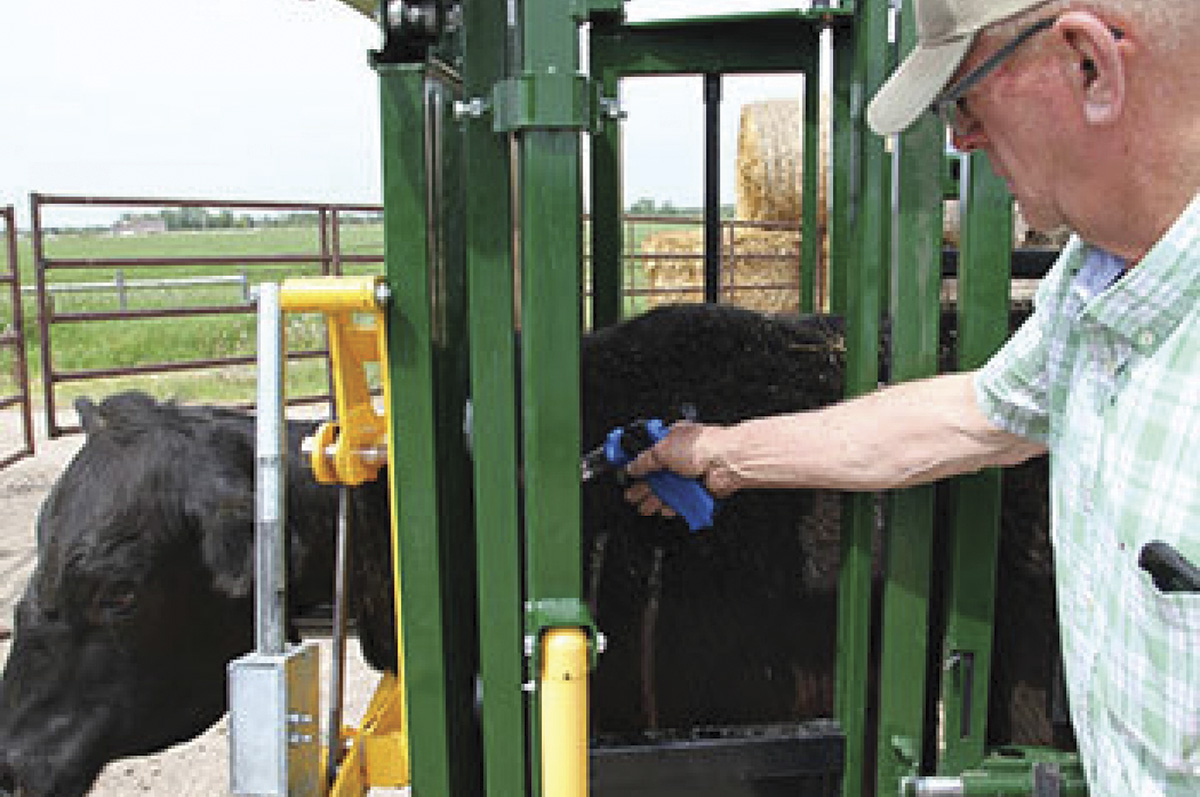
Image courtesy of Vaxxinova.
Storing vaccines at significantly higher temperatures, above 40ºF, can allow the product to degrade more quickly and potentially affect the efficacy. It is even more important to prevent the product from getting too cold and freezing. Freezing of adjuvanted bacterins and killed vaccines causes the adjuvant emulsion to break down. This may render the vaccine or bacterin useless, and injection of a product with a “broken adjuvant” may cause an injection site reaction. Freezing may also rupture the bacterial components of a bacterin, releasing endotoxins from the cells into the product. These free endotoxins can be dangerous to the animal, potentially causing a serious reaction.
Preparation for use
Syringes should be thoroughly cleaned after every use. Syringes used for killed vaccines or bacterins may be cleaned using soap and disinfectants, but they should be thoroughly rinsed to remove any residues before use. Syringes intended for administration of a modified-live vaccine (MLV) should not be cleaned with a disinfectant but with very hot water.
It is important to read the label in its entirety to make sure it is the product you intend to use. Check the dose, age of cattle for which it is intended and the proper route of administration. Double-check your syringes to confirm they are set for the correct dose and are dosing accurately.
Some killed vaccines and bacterins may tend to settle out and “layer” over days and weeks. It is a good idea to gently roll the vials back and forth a few times to make sure the product is homogenous.
It is important to use a clean, sterile needle when drawing the vaccine out of the vial to fill the syringe, to avoid contaminating the contents. Once you have filled the syringe, be sure to remove any air to ensure accurate dosing. Air compresses in the syringe when making an injection and may result in underdosing.
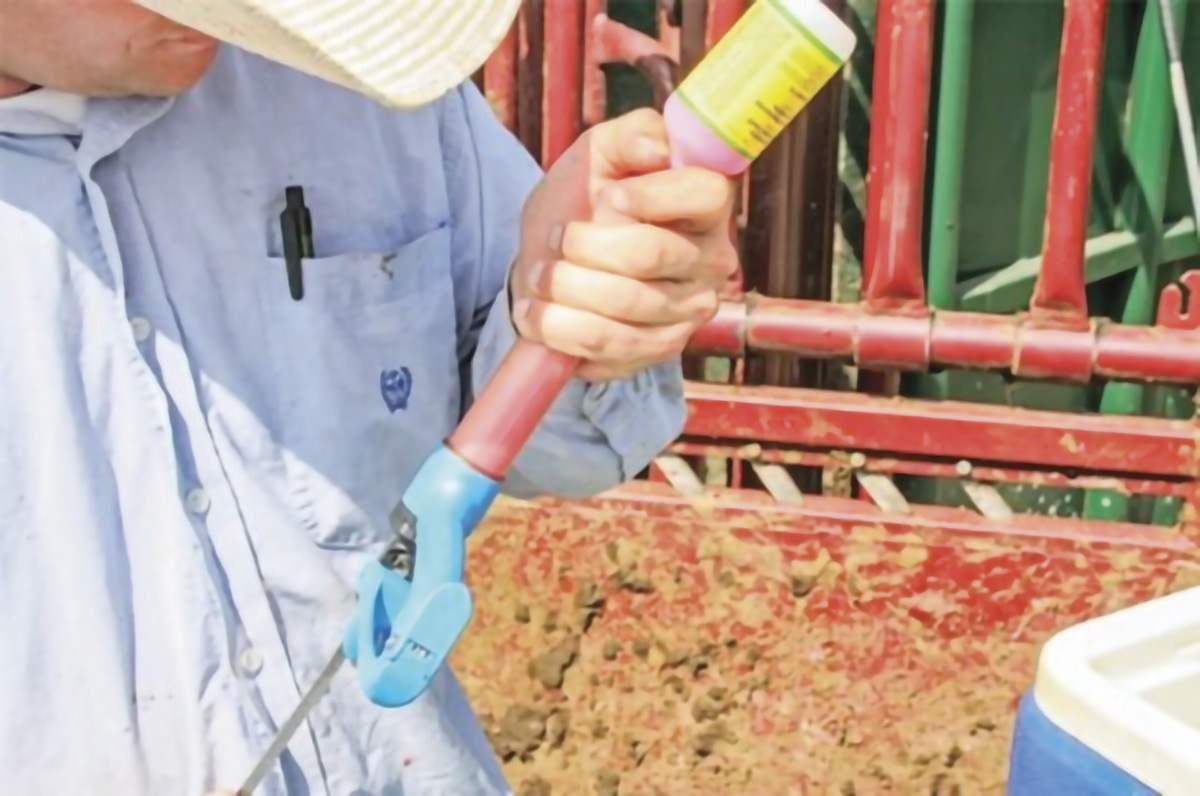
Image courtesy of Vaxxinova.
Modified-live virus vaccines
When reconstituting (mixing) MLVs, use a clean transfer needle. The MLV in these products has a limited “lifetime” once reconstituted, so it is important to not mix the diluent with the dried “cake” until just before beginning to process the cattle. It is recommended that you reconstitute only enough vaccine to use in 30 to 60 minutes to maximize the viability of the MLV components. If you have several hundred head of cattle to work, do not mix up all the vaccine required for the whole group. It is important to reconstitute the MLV as you go, allowing for unexpected delays in processing such as chute breakdowns, cattle escaping, etc.
When mixing the diluent (liquid) with the dry cake of freeze-dried vaccine, use a gentle swirling or rocking motion. Do not shake the product aggressively. Labeling syringes is a good idea, since it is important to not confuse them when processing. We want to avoid putting an MLV product in a syringe that had just been used for a “killed” vaccine or bacterin. The residues from those inactivated products could be detrimental to MLVs. Similarly, you should never deliberately mix different vaccines if they are not labeled to do so.
Temperature control while processing cattle
Temperature control of the vaccines from the time you take them out of the storage refrigerator until they are injected is also important. During hot weather, we need to make sure the vaccine vials, as well as the syringes containing product, are kept cool. MLVs are especially susceptible to harmful effects of heat and ultraviolet (UV) light. Therefore, we should keep the filled syringes cool and out of direct sunlight.
A great way to accomplish both objectives is the use of a specially designed and manufactured ice chest with openings for the syringes. These are commercially available from various companies, or regular ice chests can be modified using a hole saw and PVC tubing.
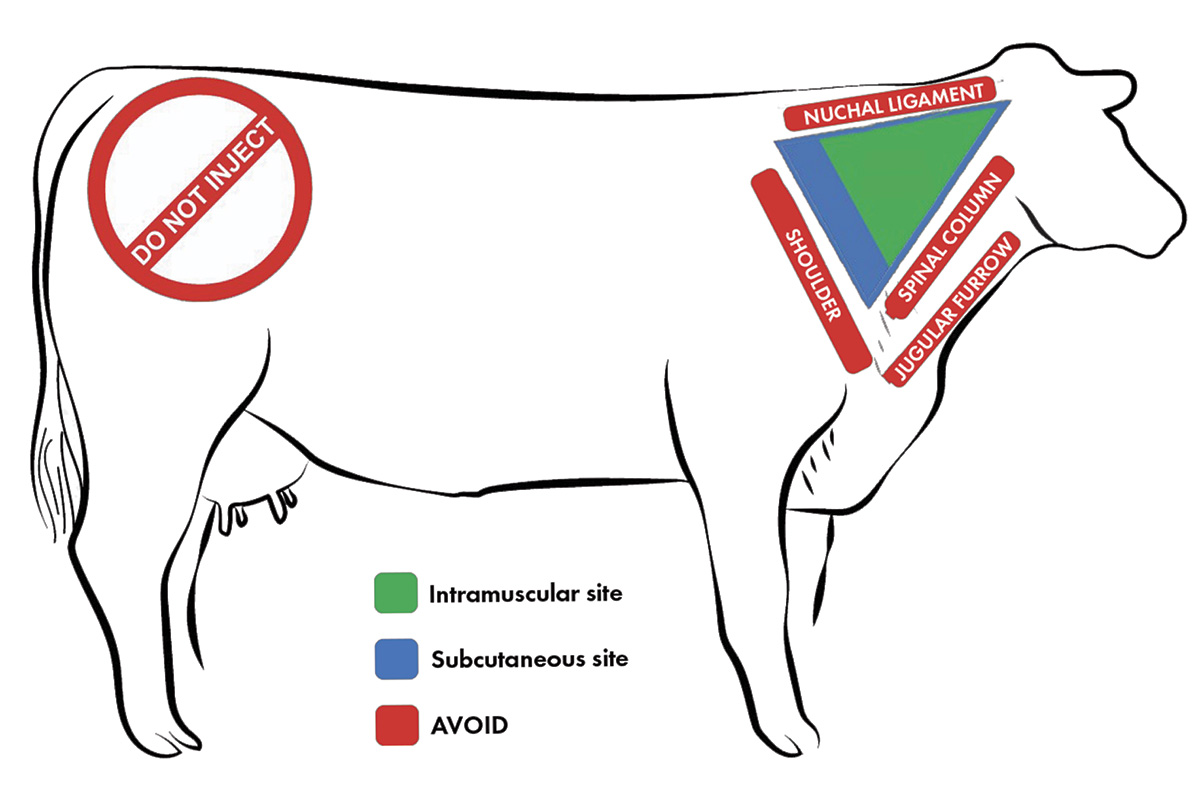
Image courtesy of Vaxxinova.
Administration of vaccine
When administering the vaccine, be sure to use the recommended route and site, noted on the product label, as well as the correct needle length and gauge. For subcutaneous (subcu or SQ) injections, it is recommended to tent the skin. Beef Quality Assurance (BQA) and Dairy Quality Assurance (DQA) guidelines provide important information.
Always inject the animal in a clean, dry site to minimize the chance of contamination. If the preferred injection site is wet, or covered with manure, use an alternative location, perhaps the other side of the animal.
Needles should be changed every 15 to 20 injections, or at a minimum when the syringes are refilled. And again, use a clean, unused needle to fill the syringes. If a needle is barbed, bent or burred, or is noticeably contaminated, replace it immediately with a new one.
When the job is completed, properly dispose of the unused portions. This is strongly recommended for all products including killed vaccines and bacterins, due to the risk of contamination of partial vials containing unused product. Using leftover bottles from the previous day or week is false economy.
Conclusion
We depend on the vaccines we administer to reduce the impact of economically important diseases in our cattle. Proper care and handling of the products help to optimize their effectiveness. Following the guidelines above will help to protect your investment in the vaccines as well as your cattle.